
The complete guide
Choosing A Window Catio, A Practical Buyer's Guide
The problem with a cat who wants out
Anyone with an indoor cat knows the routine. They sit at the glass, tail flicking, watching a bird they will never reach. Some of them yowl at the door. Some of them try to bolt past your ankles the second you bring in the shopping.
Letting them out solves the frustration and creates a longer list of problems. Cars, dogs, other cats, snakes, ticks, and in plenty of places local rules that say cats stay contained. Councils across New Zealand have tightened cat containment requirements over the last decade, and even where there is no rule, the vet bills from a roaming cat add up fast.
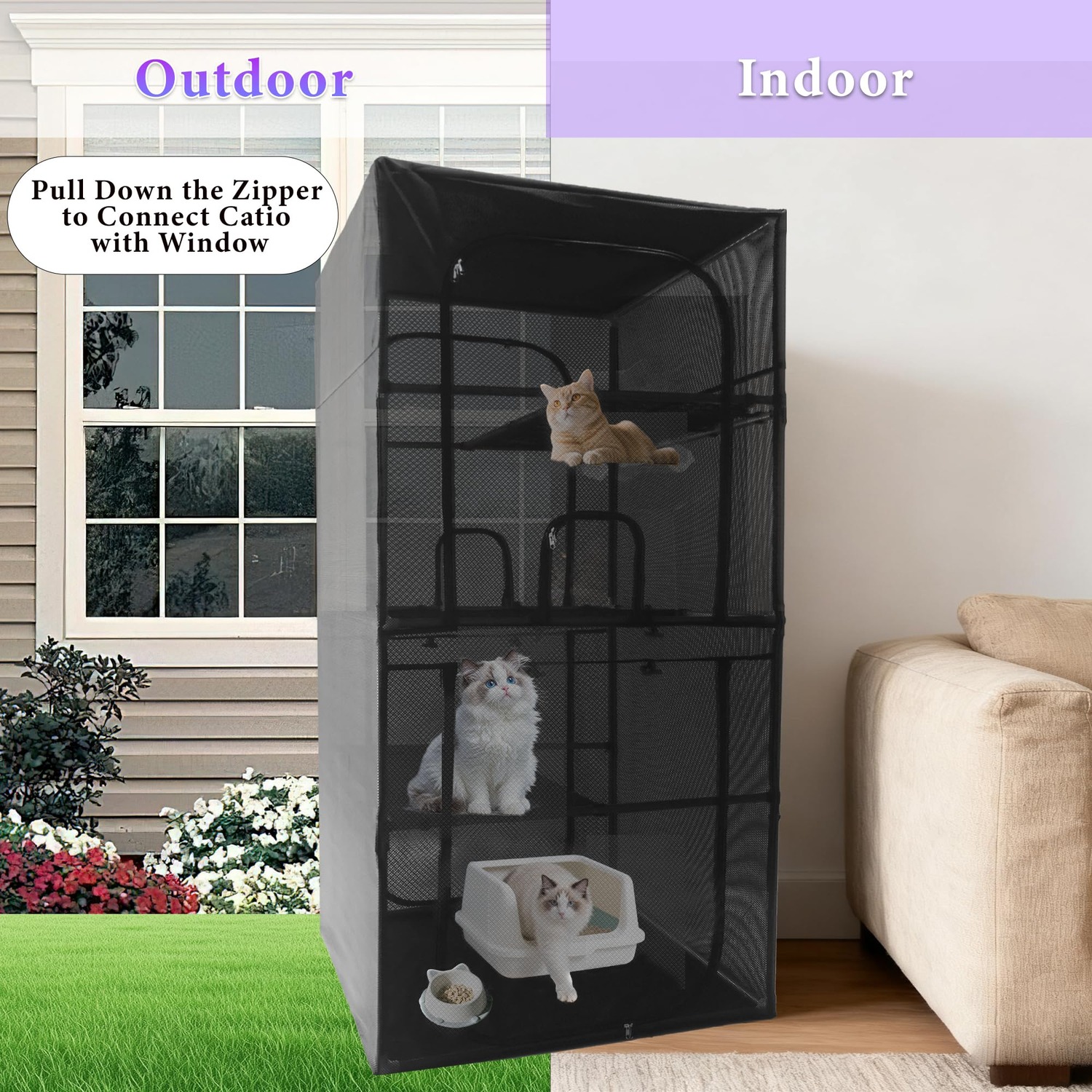
A window catio sits between those two options. It is a contained outdoor space your cat can use freely. They get air, sun, insects to stare at and the smell of the garden. You get a cat who is not planning an escape every time the door opens.
How a multi-tier enclosure works
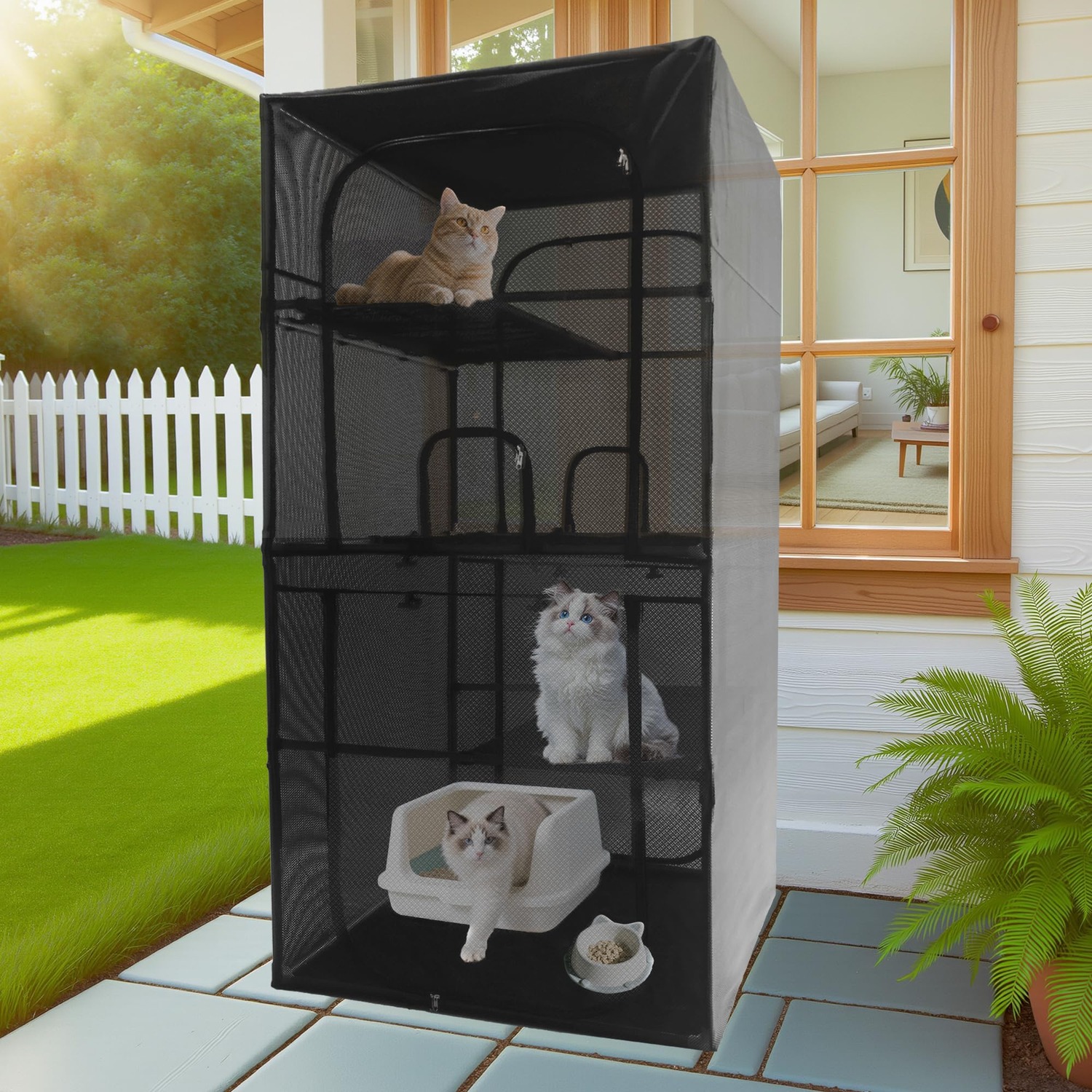
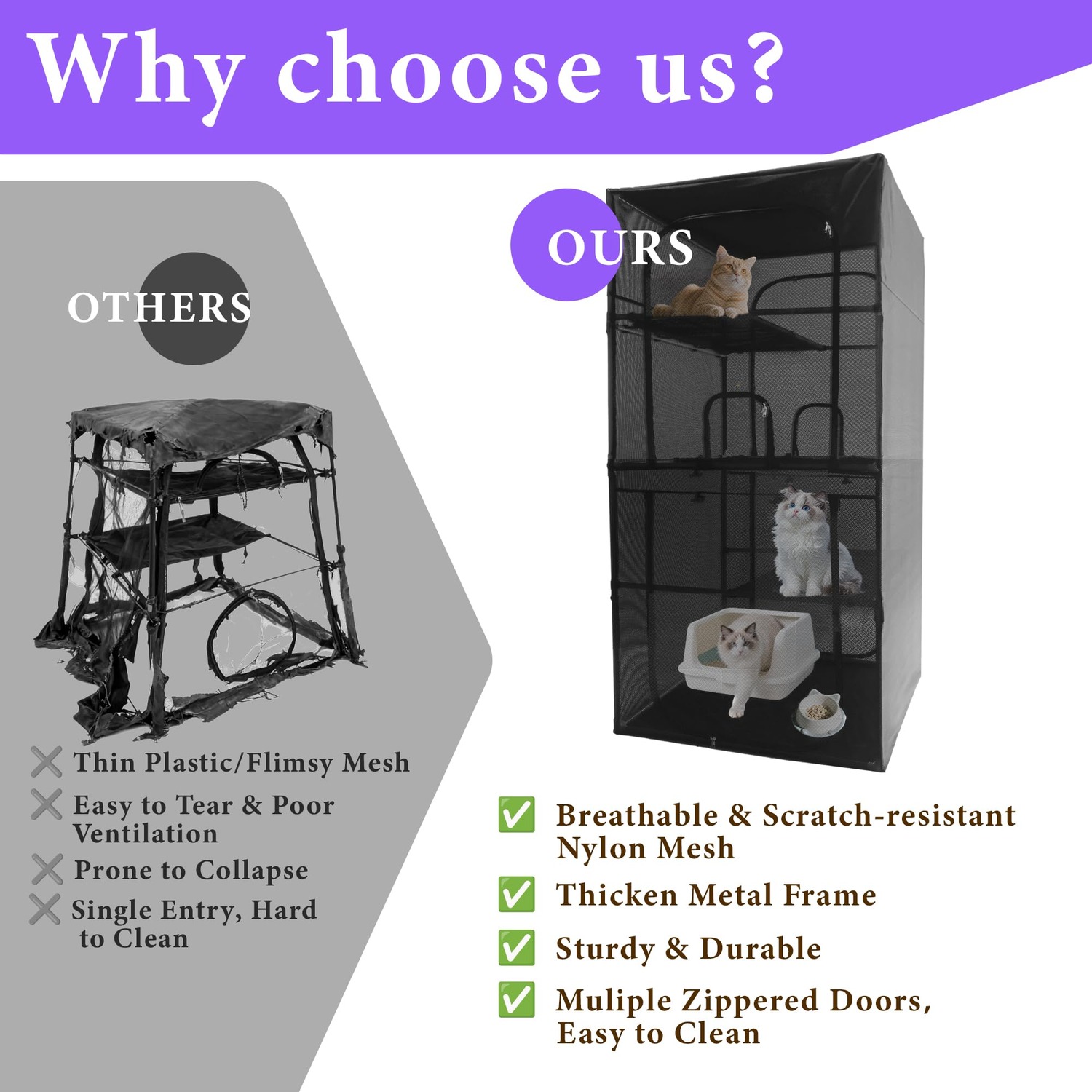
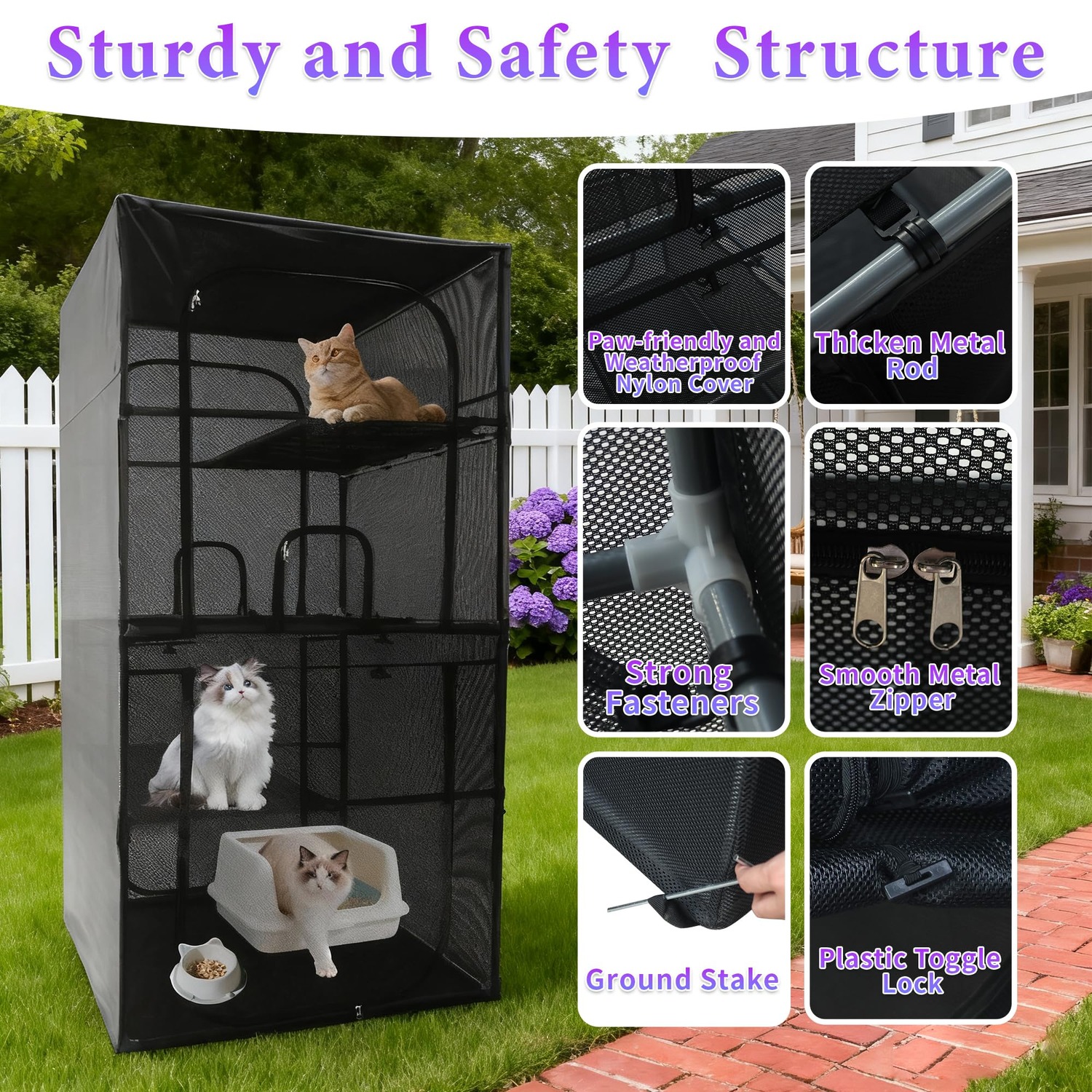
The basic idea is a frame with mesh stretched over it, shaped into a box your cat can live in for a few hours at a time. This one uses metal rods for the skeleton and nylon mesh for the walls. That combination is light, breathable and easy to see through from both sides.
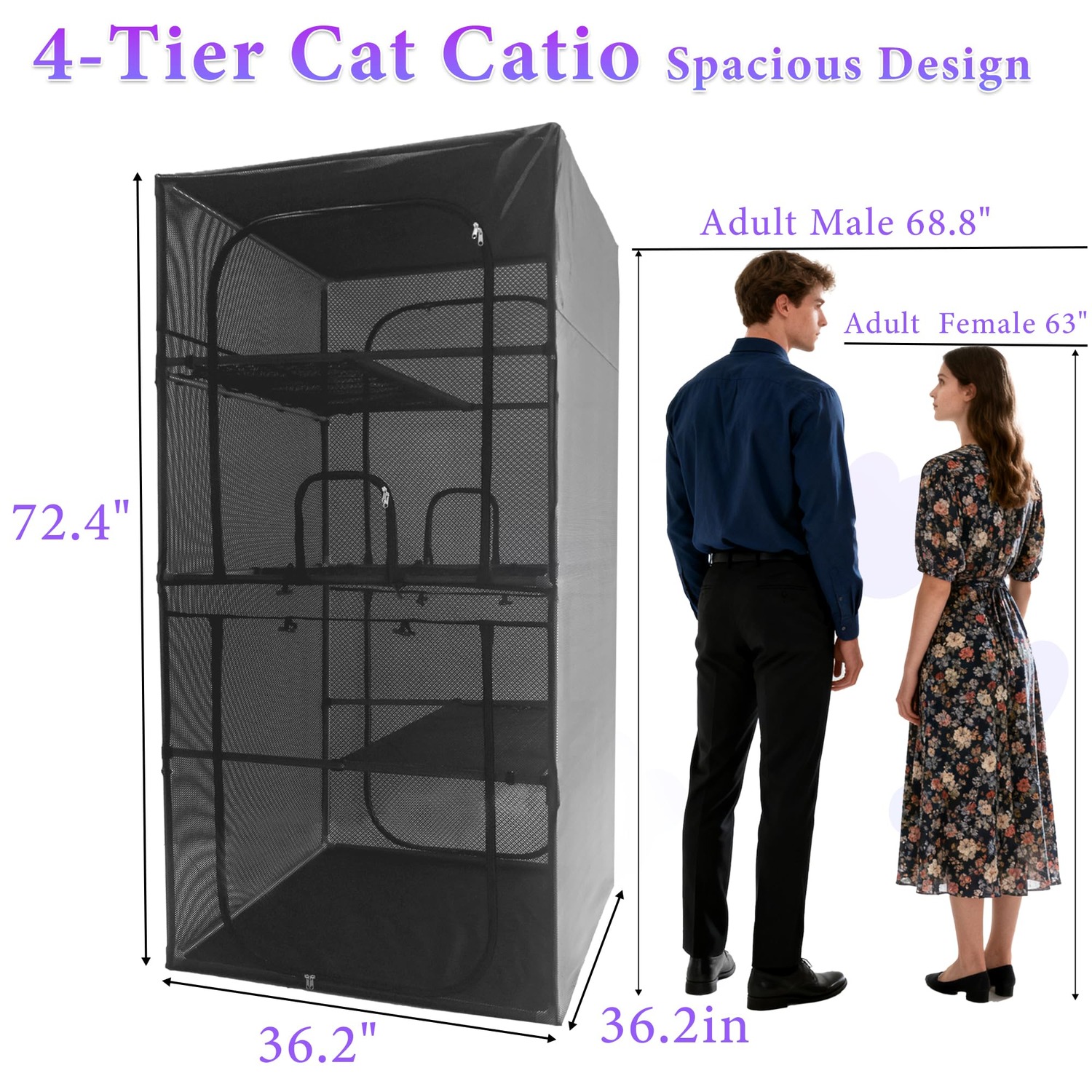
What sets this model apart from a basic pen is the height. At 183.9 cm tall on a 91.9 cm square base, it is more tower than box. Four tiers sit inside that height, each one a separate platform your cat can reach by climbing or jumping.
That vertical layout matters more than most people expect. Cats do not measure space the way we do. A room feels bigger to a cat if it has levels, because each level is a new territory with its own view. A 4 tier cat cage gives three or four cats somewhere to be without stepping on each other. The same floor area laid out flat would feel cramped.
Access comes through zippered doors. There are three large ones and two small ones. The large doors are sized for a person, which sounds odd until the first time you need to clean. Being able to crouch inside with a scoop and a cloth beats reaching through a 30 cm hatch with your shoulder jammed against the frame.
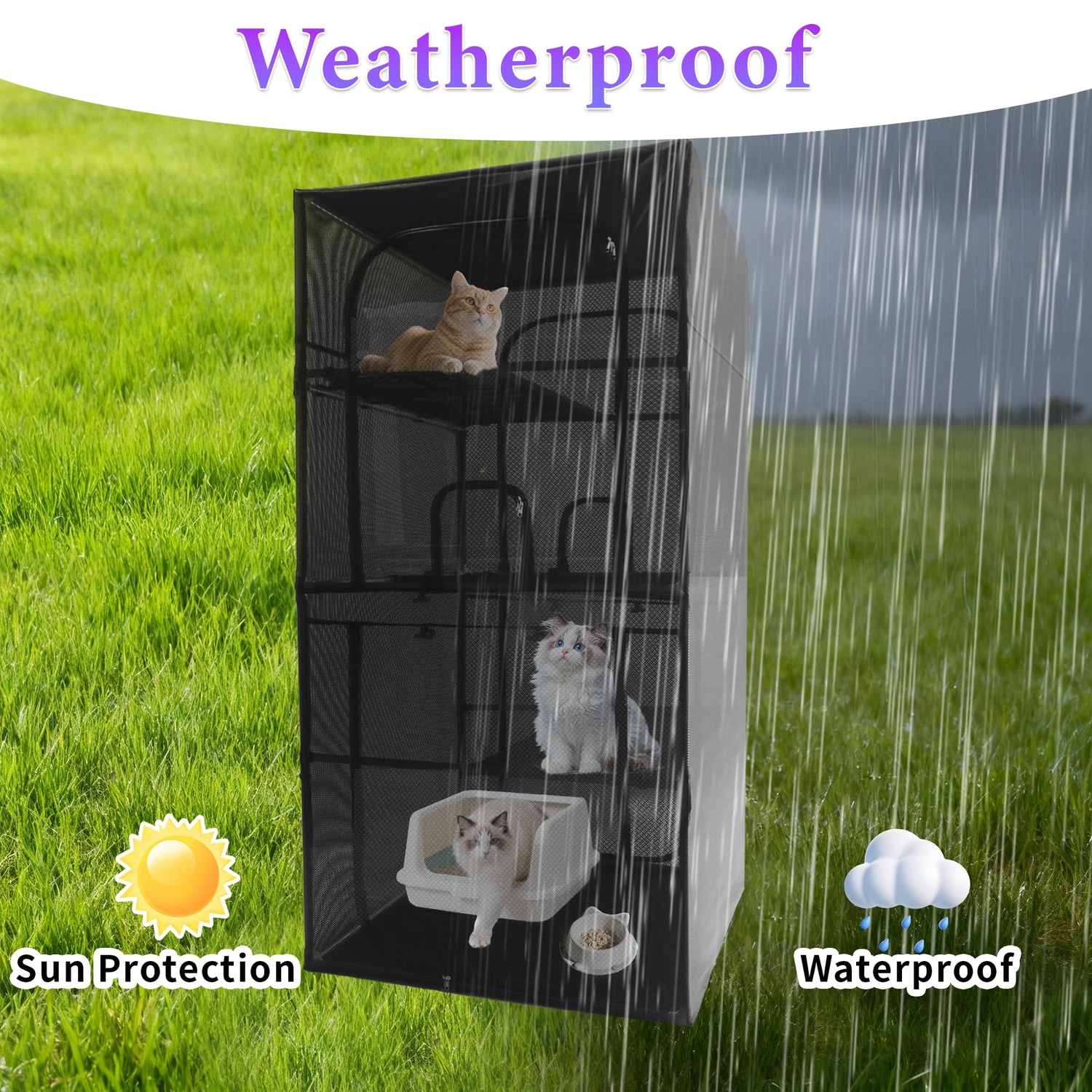
A cover comes with the enclosure and fits over the roof. It throws shade on the top tier, sheds light rain and gives anxious cats something solid above their heads. Cats settle faster when they feel covered from above, a habit left over from worrying about hawks.
Who this suits
This works well for households with more than one cat. The tiers do the heavy lifting there, letting each cat claim a level instead of competing for a single sunny patch.
It also suits people in rentals. Nothing bolts to the wall, nothing gets drilled, and the whole frame comes apart when the lease ends. If you have been looking at a balcony cat cage because a permanent build is out of the question, this is the category to shop in.
New cat owners find it useful during the settling-in period. A cat coming from a shelter often needs a few weeks of controlled space before you trust them with the whole house and yard. A metal cat enclosure gives them that without locking them in a carrier.
It is less suited to anyone who wants a permanent, year-round structure that never gets touched. Soft-sided enclosures need a bit of attention. You take the cover down before a storm, you check the zips, you pack it away if a cyclone warning comes through. If you want set-and-forget, a timber and wire build attached to the house is the other direction.
Working out what size you need
Start with your space, not the cat. Measure the patch of deck, lawn or floor you have in mind, then add 20 cm on each side so you can walk around it and get the doors open properly. The 91.9 cm square footprint here fits most balconies and small courtyards.
Then think about height clearance. At nearly 1.9 metres, this needs an open sky above it or a high ceiling indoors. A low pergola or a balcony with a roof at 2 metres will work, but check before you order.
Count your cats. One cat in a four-tier enclosure has a palace. Three cats have a comfortable share house. Beyond that, you are better off running two enclosures or looking at a larger outdoor cat cage footprint.
Consider the cat's age and mobility too. A young, athletic cat will use every tier. An older cat with stiff hips may only use the bottom two, which is fine, but it changes how much of the structure earns its keep. Adding a ramp or a step on the lower level helps older cats reach the second tier.
Setting it up well
Pick level ground. A slope twists the frame and makes the tiers sit at odd angles, which affects how confidently cats jump between them.
Think about sun. Morning sun on the enclosure is lovely. Afternoon sun in a hot climate turns it into an oven. Position it where it catches early light and falls into shade by the hottest part of the day, or move it as the seasons change. The cover helps, but it is not air conditioning.
Anchor it. On grass or soil, stakes through the base corners make a real difference. On concrete or decking, weight the corners with pavers or tie it back to a railing. Wind is the main enemy of any soft-sided enclosure.
Then make it worth being in. An empty mesh box is boring. Put a bed on one level, a scratching post at the base, a bowl of water somewhere shaded, and something to look at. A cat condo outdoor setup only works if the cat has reasons to stay. Most cats take a few days to commit, so leave a door open to the house at first and let them come and go.
Keeping it in good shape
Cleaning is simple if you do it often. Wipe the metal frame with a damp cloth and dry it so it does not mark. Spot clean the mesh with mild soapy water and let it dry completely before you zip everything up again.
Fur and litter grit collect in the corners. A quick shake-out once a week stops it building into something unpleasant. If you keep a litter tray inside, scoop it daily like you would indoors.
Check the zips every time you clean. Zips are the weak point on any enclosure, and a half-closed zip is an escape route. A dab of candle wax or zip lubricant on a sticky slider keeps it running.
Inspect the mesh for small tears, especially near the base where claws do the most work. A small tear patched early stays small. Ignored, it becomes a cat-sized hole.
When the weather turns bad, take the cover off or bring the whole enclosure in. Nylon handles sun and rain well enough, but nothing survives being rolled across a lawn in a gale.
The short version
A window catio gives an indoor cat real outdoor time without the risks of letting them roam. This one is a four-tier design, 91.9 cm square and 183.9 cm tall, built from metal rods and nylon mesh, with a cover included and zippered doors for access.
It suits multi-cat homes, rentals, balconies and anyone who wants outdoor access without building something permanent. Assembly needs no tools and the frame breaks down for storage.
Measure your space, check your clearance above, anchor it properly and give your cat a reason to stay. Do those four things and you will have a cat who spends half the day outside and still comes in for dinner.