
The complete guide
Outdoor Cat Tunnels, A Practical Buyer's Guide
The problem with letting a cat outside
Most cat owners have the same argument with themselves. The cat clearly wants to be outside. They sit at the door, they complain at the window, and they bolt the second someone brings in the shopping. But many owners would rather their cat did not roam the neighbourhood.
Keeping a cat indoors all the time is the other option, and plenty of cats make their feelings about that known at four in the morning.
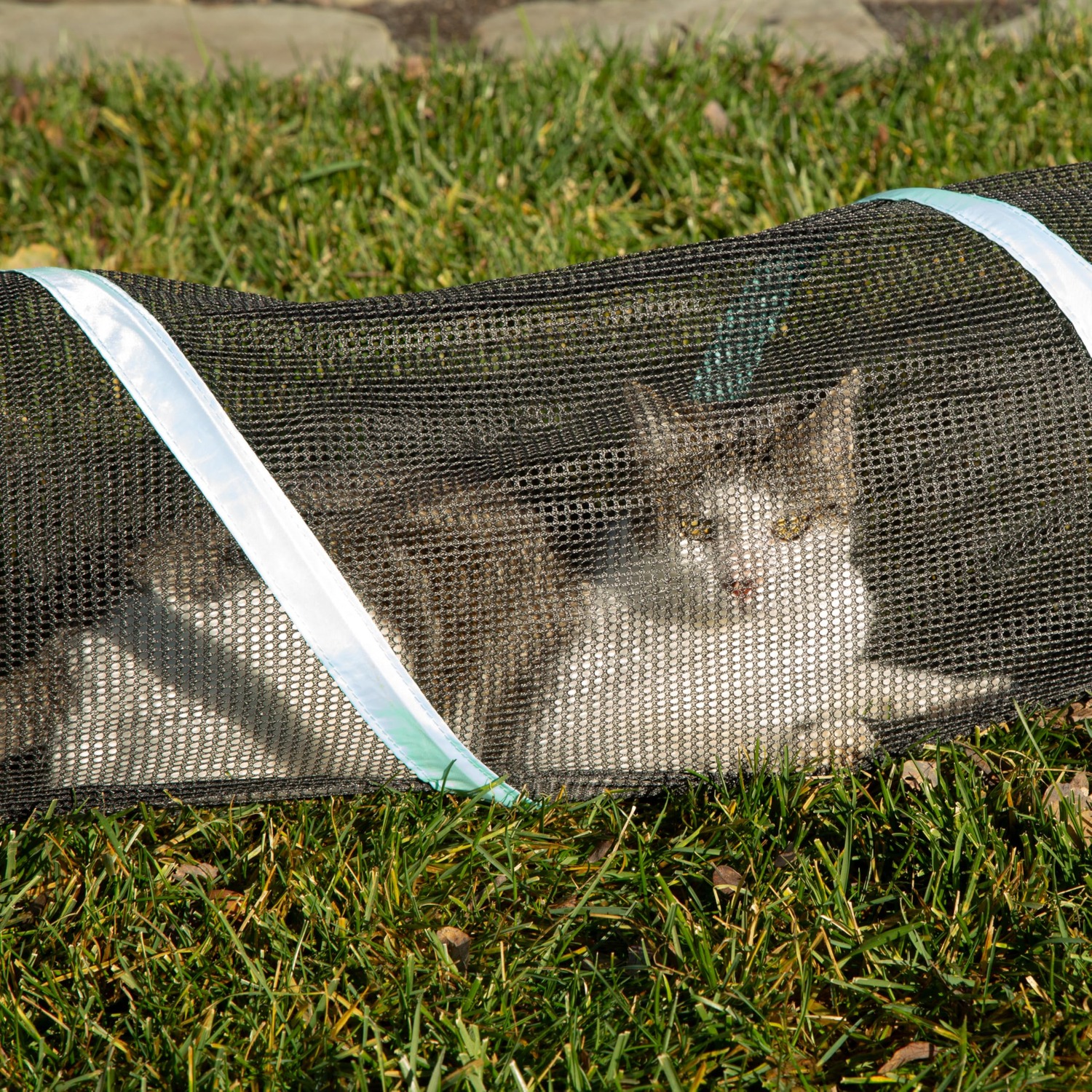
An outdoor cat tunnel sits between those two positions. It gives your cat actual outdoor time, with real sun, real breeze, and real grass smells, inside a tunnel you set up. It is not a full catio and it does not pretend to be. It is a lower-cost, portable option you can put out on the lawn and pack away again.
How a 3 metre cat tunnel works
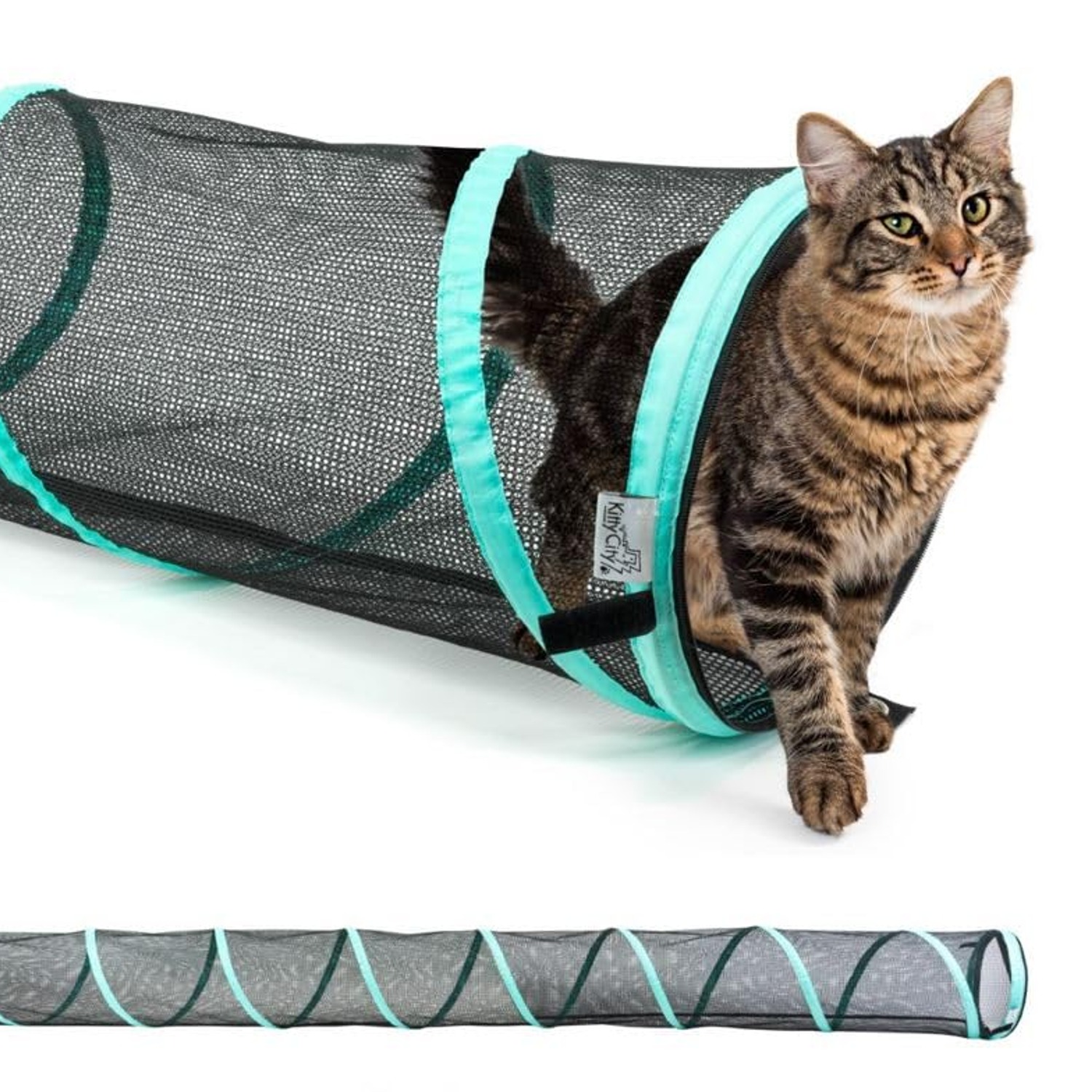
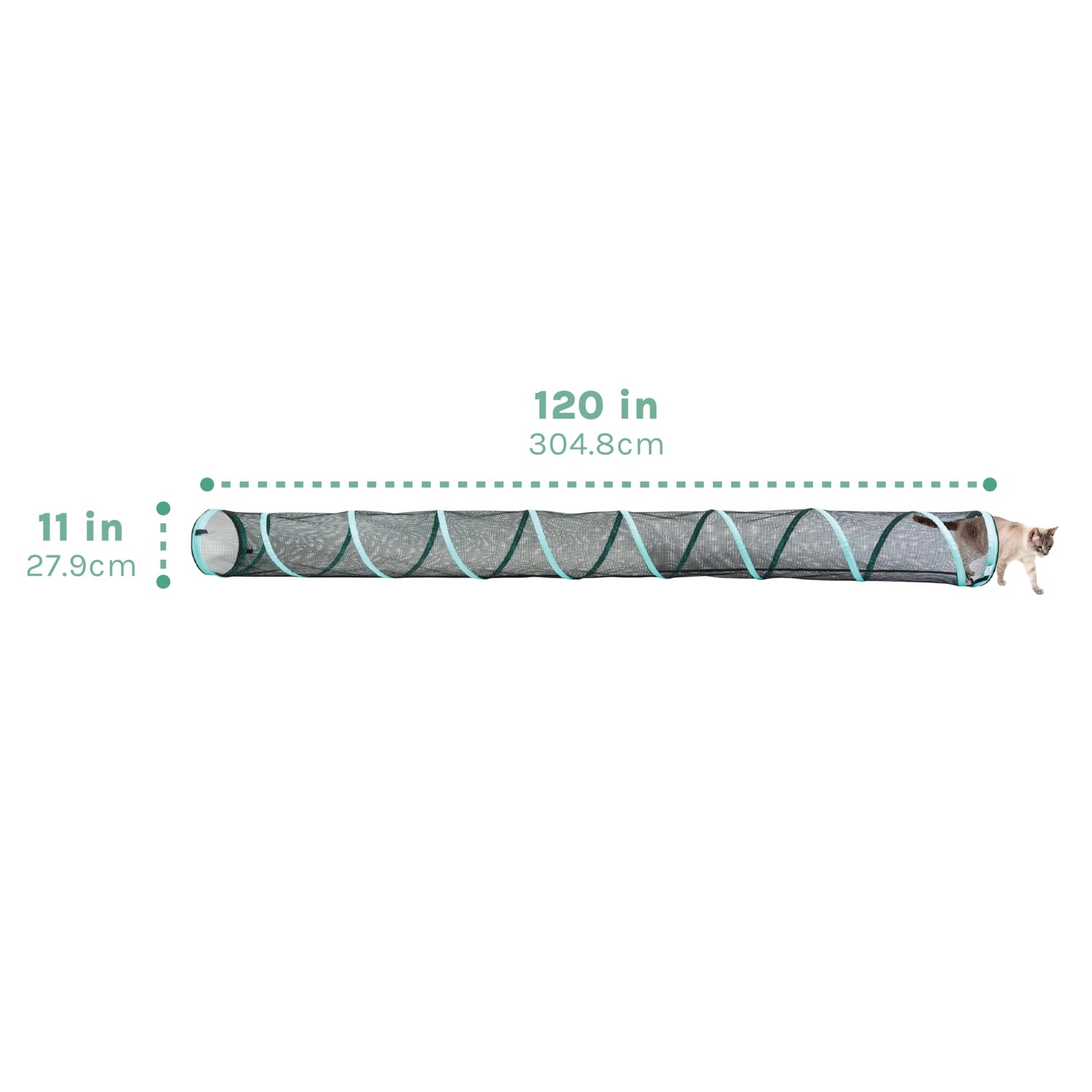
This one runs 3.05 metres long with a 0.28 metre opening. That length matters more than people expect. A short play tube is a hiding spot. Three metres is a run. Cats can build up speed in it and come flying out the other end.
Both ends zip. Done up, the tunnel is a closed loop with your cat inside it. Undone, each end becomes a doorway you can point at something else, such as a catio, a crate or a tent.
Peg the ends into the ground, or weigh them down. Without that, a 3 metre fabric tube can roll and shift when a cat changes direction inside it. The record lists the tunnel as the only included component, so check the box for pegs on arrival.
The whole thing weighs 816 grams. That matters too. You are not committing to a permanent structure in the yard. You set it up when you want it, fold it away when you do not, and nobody has to approve a building project.
Who it suits
Renters, first of all. A collapsible cat tunnel does not need screws in a wall, council approval, or a conversation with a landlord. It goes up on the lawn and comes down again.
Cats that are unsure of the open lawn, second. A tunnel has two exits and no dead end. Every cat is different, so let yours set the pace.
Multi-cat households can use it too. Cats can take turns running end to end.
It also suits anyone who travels with their cat. Holiday houses, caravan parks, visits to family: the tunnel packs down, weighs under a kilo, and gives your cat a familiar space in an unfamiliar place.
How to choose the right tunnel
Start with length. Short tunnels are toys. Anything around three metres is a run. If your main goal is exercise, go long. If your main goal is a shaded resting spot, length matters less.
Then look at the ends. Open ends are fine indoors and useless outdoors, because your cat will simply walk out. Zips are what turn a play tube into a cat run tunnel. Check that both ends close, not just one.
Think about anchoring. Pegs work on lawn and soil. They do nothing on concrete, pavers or decking. If your outdoor space is hard surface, plan to weigh the ends down with bricks or planters, or run the tunnel tight against a fence so it is less likely to roll.
Consider the material. This tunnel is polyester. It is easy to shake clean, which matters when grass clippings and dirt come inside with the cat.
Finally, think about where you want to end up. If you already have a catio, crate or tent, check that a zipped end can line up with its opening.
Getting your cat to actually use it
Cats are cautious about new objects, and three metres of unfamiliar fabric on the lawn counts as a new object. Do not carry your cat to the end and post them in. That teaches them the tunnel is something that happens to them.
Set it up indoors first if you can. Leave both ends open. Drop a few treats inside, then walk away and let curiosity do the work. Some cats go in within a day.
Once they are comfortable, move it to a doorway so one end is inside and one is outside. That halfway step can help a timid cat. After that, move it onto the lawn and stake it down.
Toys help. A wand toy dragged through the tunnel turns it into a hunt. So does a treat at the far end that they have to walk the length to reach.
Looking after it
Shake it out after every garden session. Grass, leaves and grit build up quickly and will wear the fabric from the inside.
For cleaning, a damp cloth with mild soap handles most of it. The manufacturer also allows a gentle machine wash, which is handy after a muddy week. Either way, let it dry completely in open air before folding it. Fabric packed away damp will smell, and your cat will refuse to go near it.
Do not store it outside permanently. Constant sun fades polyester and constant rain is just asking for mildew. It folds, so bringing it in is easy.
Check the zips every few weeks. They are the part that does the real work, and a zip that sticks is worth sorting out before it fails with a cat inside.
A note on supervision
A soft tunnel is containment, not security. A very determined cat, given enough unsupervised hours, can work at fabric. Weather also changes faster than you expect, and a staked tunnel is not a storm shelter.
Treat it as supervised outdoor time. Put the cat in while you garden, read, or hang the washing. That is the use it suits.
The short version
A 3.05 metre outdoor cat tunnel is a simple way to give an indoor cat outside time without the cost or commitment of a built enclosure. The zips close both ends, pegs or weights hold it steady, and at 816 grams the whole thing packs away in a cupboard.
It suits renters, multi-cat homes and anyone who travels.
If you have been circling the idea of a catio but are not ready to build one, start here.