
The complete guide
How To Choose A Walk-In Catio For Your Cat
The problem with letting cats outside
Cats want outside. That is not a training failure or a behaviour you can reason away, it is wired in. They want to smell what came through the garden overnight, feel wind move over their fur and sit somewhere high with a view.
The trouble is that outside is where the risks live. Roads, dogs, other cats, snail bait, local wildlife. Plenty of owners settle for keeping the cat in permanently and feeling slightly guilty about it, or letting them roam and feeling anxious every evening until they come home.
A walk-in catio is the middle path. It carves out a piece of outdoors that is genuinely theirs, with a roof, walls and a floor, and no way for anything to get in or out. Your cat gets the sensory stuff they are missing. You get to stop listening for car brakes.
What makes this one a walk-in rather than a hutch
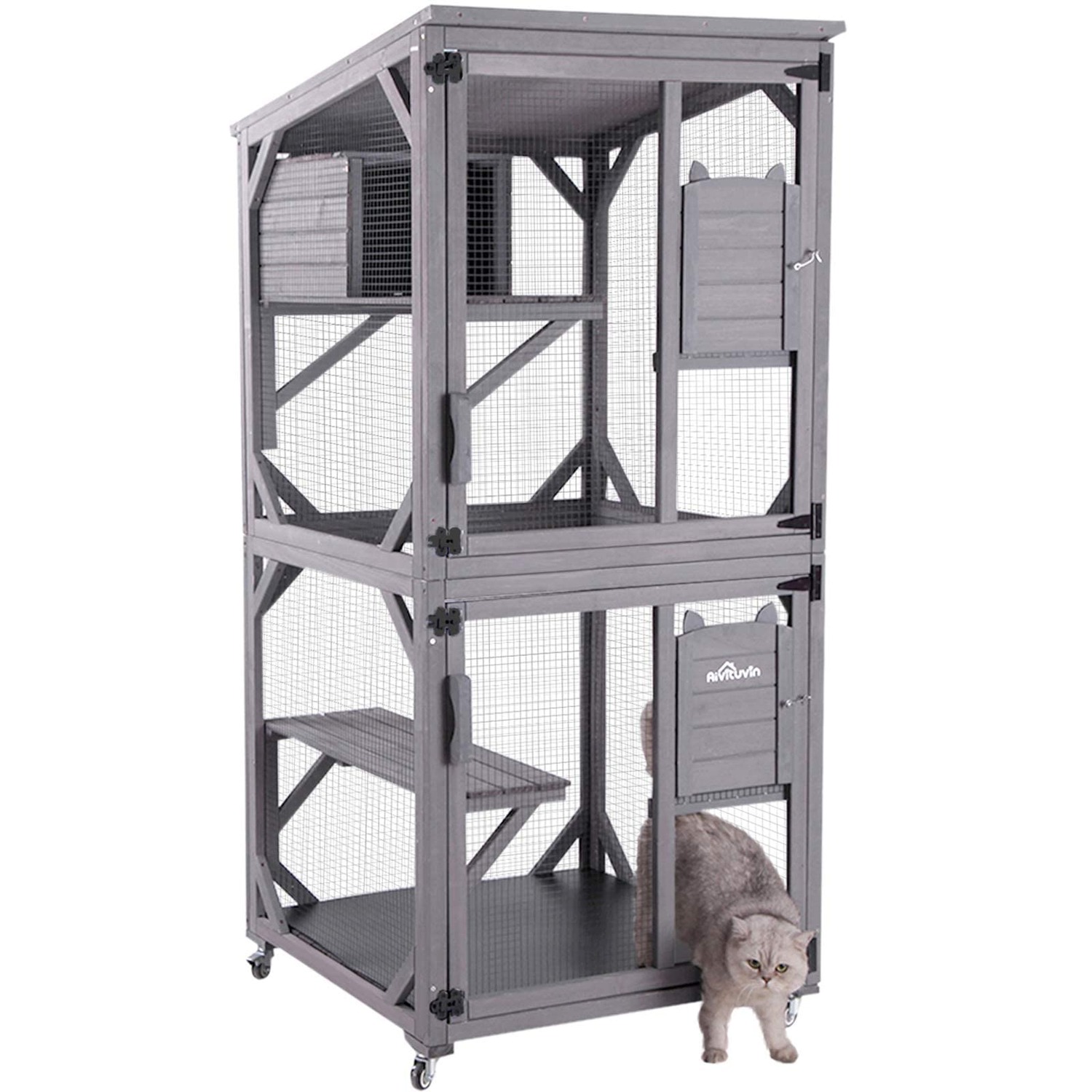
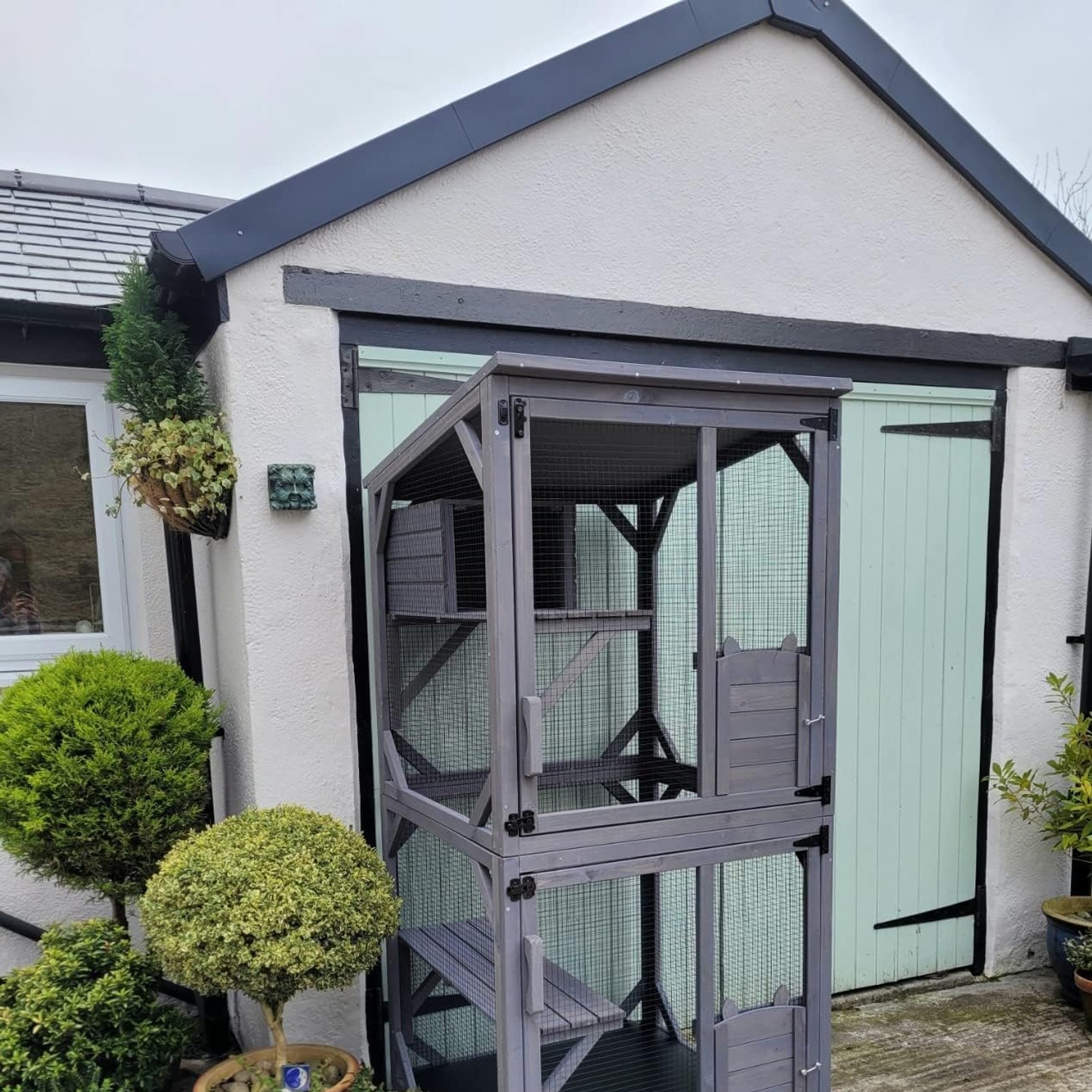
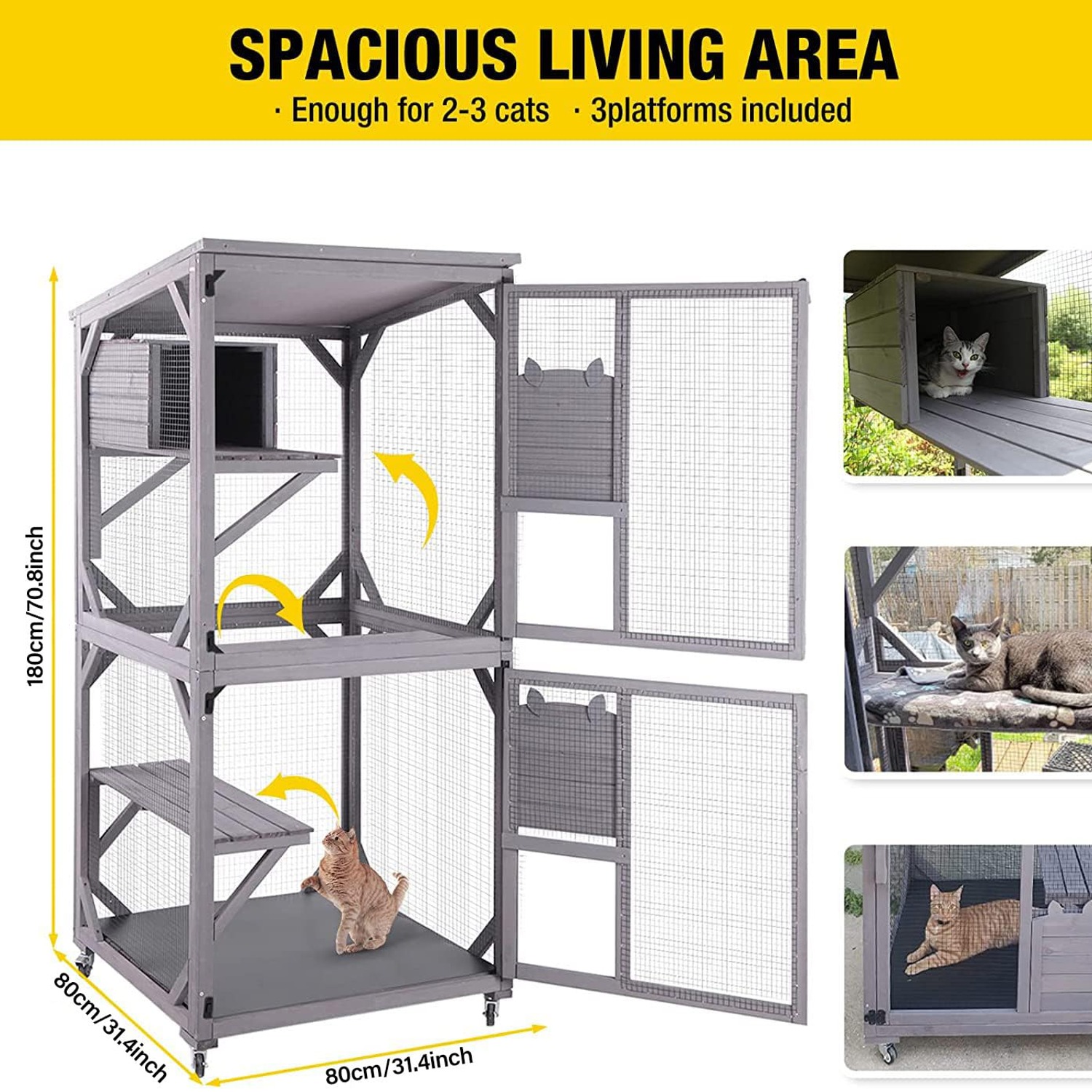
The difference is height. At 180cm tall this enclosure is something you step into, not something you crouch beside with your arm through a hatch. Anyone who has tried to clean a low cat run knows exactly how much that matters.
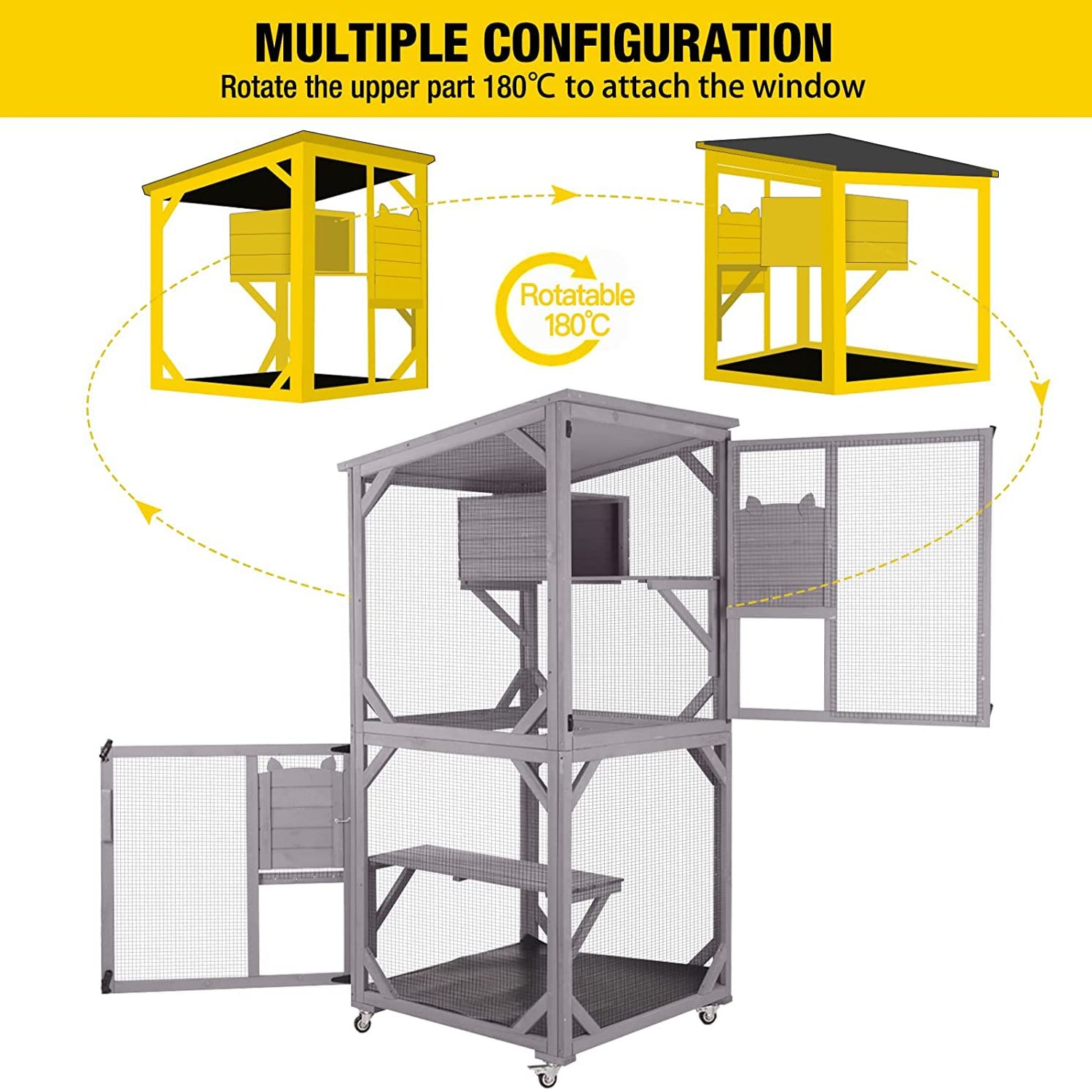
Height also changes how the cat uses it. Cats measure territory vertically as much as horizontally. An 80cm by 80cm floor sounds modest until you add two levels of platforms, at which point a cat has a ground zone, a mid perch and the climb between them. That is three distinct places to be, inside a footprint smaller than a dining chair pushed under a table.
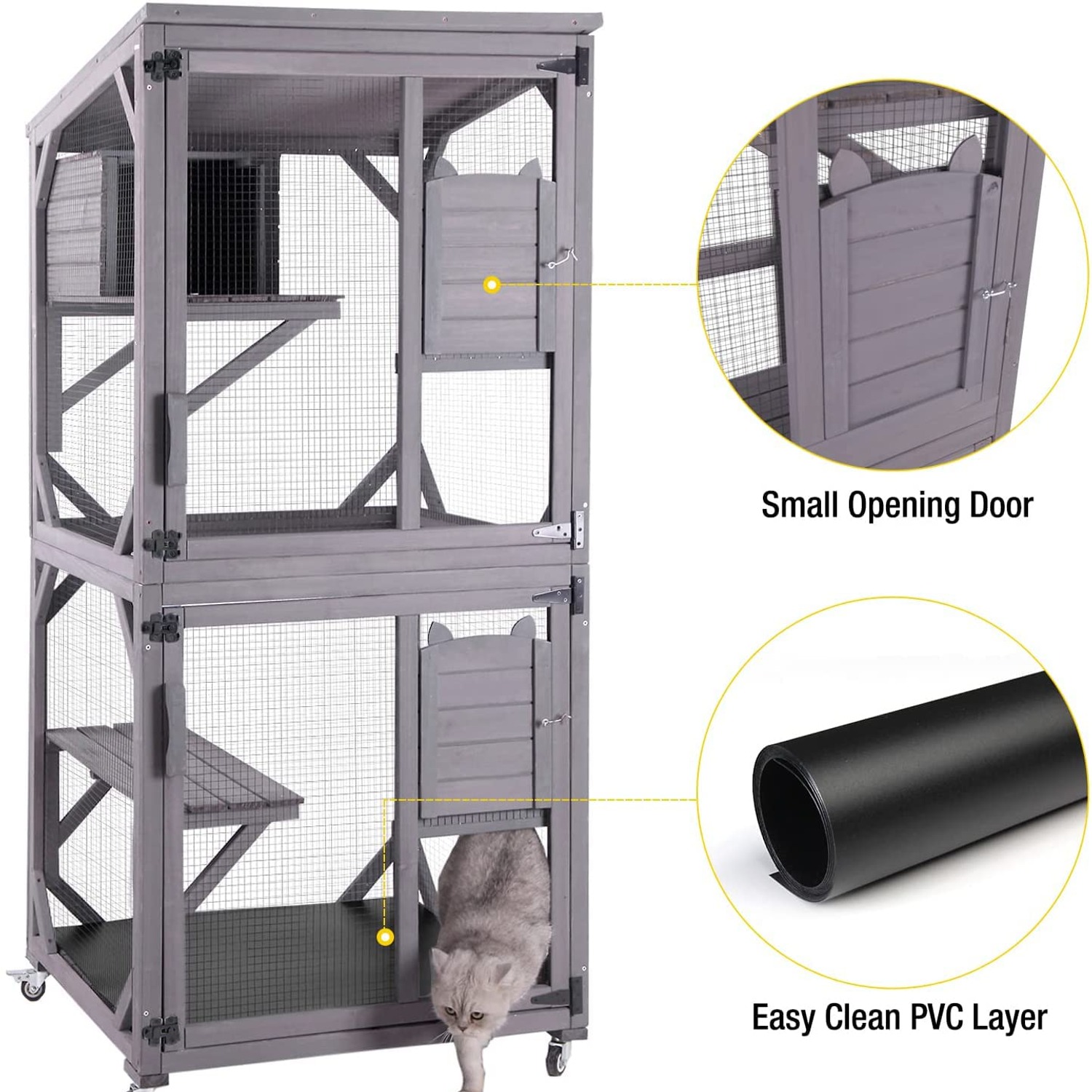
The build pairs a timber frame with PVC. Wood gives the structure and the warmth that cats like to lie against. PVC handles the part that gets wet and messy, in the form of a removable cleaning board at the base.
Two doors round it out. One would do the job. Two means you can open the far side when you are hosing out the tray, or reach a cat who has wedged herself behind the nesting box, without contorting yourself through a single opening.
Why wheels change how you use it
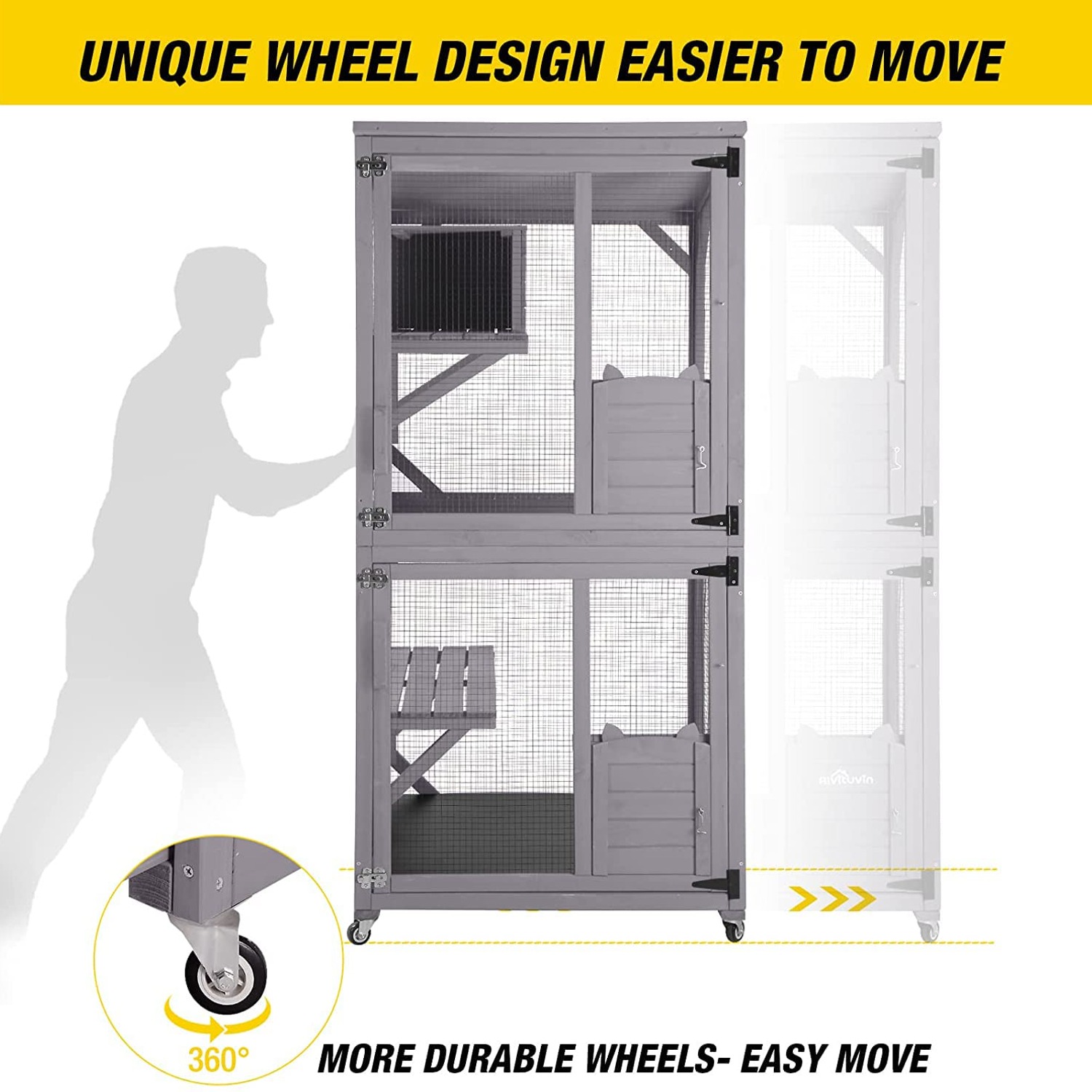
Most outdoor cat enclosures sit where you build them and stay there for years. This one is mobile, and that is worth more in daily life than it sounds on a spec sheet.
The sun moves. A spot that is lovely at nine in the morning is a glare trap by two in the afternoon. With brake wheels you roll the whole thing into shade, then roll it back tomorrow. When a storm front arrives you push it under the eaves rather than hoping for the best.
It also matters if you rent. Nothing is bolted to the ground, nothing is dug in, and when you move house the enclosure comes with you. Renters are often the people who most want a catio and are least able to commit to a permanent structure.
One practical note. At 26.8kg it rolls easily on pavers, decking or smooth concrete. On soft lawn the wheels will sink a little, so a paver or offcut of board under each one keeps it level and stops the frame twisting.
Who it suits, and who should look elsewhere
This size works best for one or two cats who will use it for stretches during the day. A pair will sort out who takes the top perch within a week.
It suits indoor cats who have never been out and need a safe introduction, cats recovering from surgery who need confinement but hate it, and cats in busy suburbs where roaming is simply too dangerous. It also suits apartment dwellers, since the 80cm square footprint fits on many balconies. Check your building rules and the floor loading first.
If you have four cats, or a cat who sprints for hours, this is a day space rather than a full solution. You would want a larger backyard catio or two units arranged together. And if you need somewhere a cat can sleep outdoors all night through cold or wet weather, this is not it. Treat it as a daytime run and bring them in at dusk.
Getting your cat to actually use it
Owners are sometimes disappointed on day one when the cat walks in, sniffs, and walks straight out. That is normal and it is not a verdict.
Put the enclosure somewhere your cat already feels safe, near a wall or the back door rather than stranded in the middle of the lawn. Open both doors. Put a blanket that smells like home on the lower level, scatter a few treats and then walk away. Cats accept new things on their own schedule, and the fastest way to slow that down is to stand over them watching.
Within a few days most cats start taking short trips in. Within a week or two the top perch usually becomes someone's spot. Feeding a meal inside speeds things along if your cat is food-motivated.
Supervise the first several sessions. You are checking that the latches hold, that nothing has worked loose during assembly, and that your particular cat is not an escape artist with a talent for door handles.
Keeping it in good shape
Outdoor timber needs a small amount of attention, and almost none if you keep it sheltered.
The cleaning board is the main job. Slide it out, rinse it with warm water and a pet-safe cleaner, let it dry fully, slide it back. Weekly is plenty for most households, more often in hot weather or if a litter tray lives inside.
Wipe the timber with a damp cloth rather than hosing the whole structure. Water sitting in joints is what shortens the life of any wooden catio. If the surface starts to look dry or chalky after a season or two, a coat of pet-safe exterior finish brings the protection back.
Every few weeks, run your hand over the hardware. Screws loosen as timber expands and contracts. A quick tighten on hinges, latches and wheel mounts takes two minutes and keeps everything square. Check the brakes at the same time.
What is and is not listed
Worth being straight about this. The product record lists the materials as wood and PVC, the colour as grey, the dimensions as 80 by 80 by 180cm and the weight as 26.8kg. It confirms two levels, two doors, a nesting box, mobile wheels and a 6 month warranty.
What it does not specify is the timber species, the paint formulation, country of origin or a stated weight limit for the platforms. If any of those details decide the purchase for you, ask before ordering rather than after. We would rather answer a question than process a return.
The short version
If your cat wants outside and you want them safe, a walk-in catio closes the gap. This one is tall enough to step into, small enough in footprint to fit a balcony or courtyard, and built on wheels so it follows the shade around your yard instead of sitting in one compromise position forever.
Two levels, two doors and a nesting box give one or two cats plenty to work with. The removable PVC board keeps cleaning from becoming a weekend project. Keep it sheltered, tighten the hardware now and then, and bring the cat in at night.
Measure your space first. Then let them watch the garden properly, with you not listening for the sound of the gate.