

The complete guide
Choosing a Portable Catio, A Practical Buyer's Guide
The problem with indoor cats and the great outdoors
Indoor cats live longer. That is well established, and it is why so many of us keep them in. But it comes with a trade-off that anyone who has watched a cat stare out a window for an hour understands. Cats want air moving over their whiskers. They want the smell of wet grass, the flicker of a bird, a warm patch of concrete to flop onto. A window gives them the view and none of the rest.
A portable catio bridges that gap. It is a contained outdoor space you can put up when the weather is right and pack away when it is not. Your cat gets the sun and the smells. You get to stop worrying about the road, the neighbour's dog, or the cat who runs the block and does not want company.
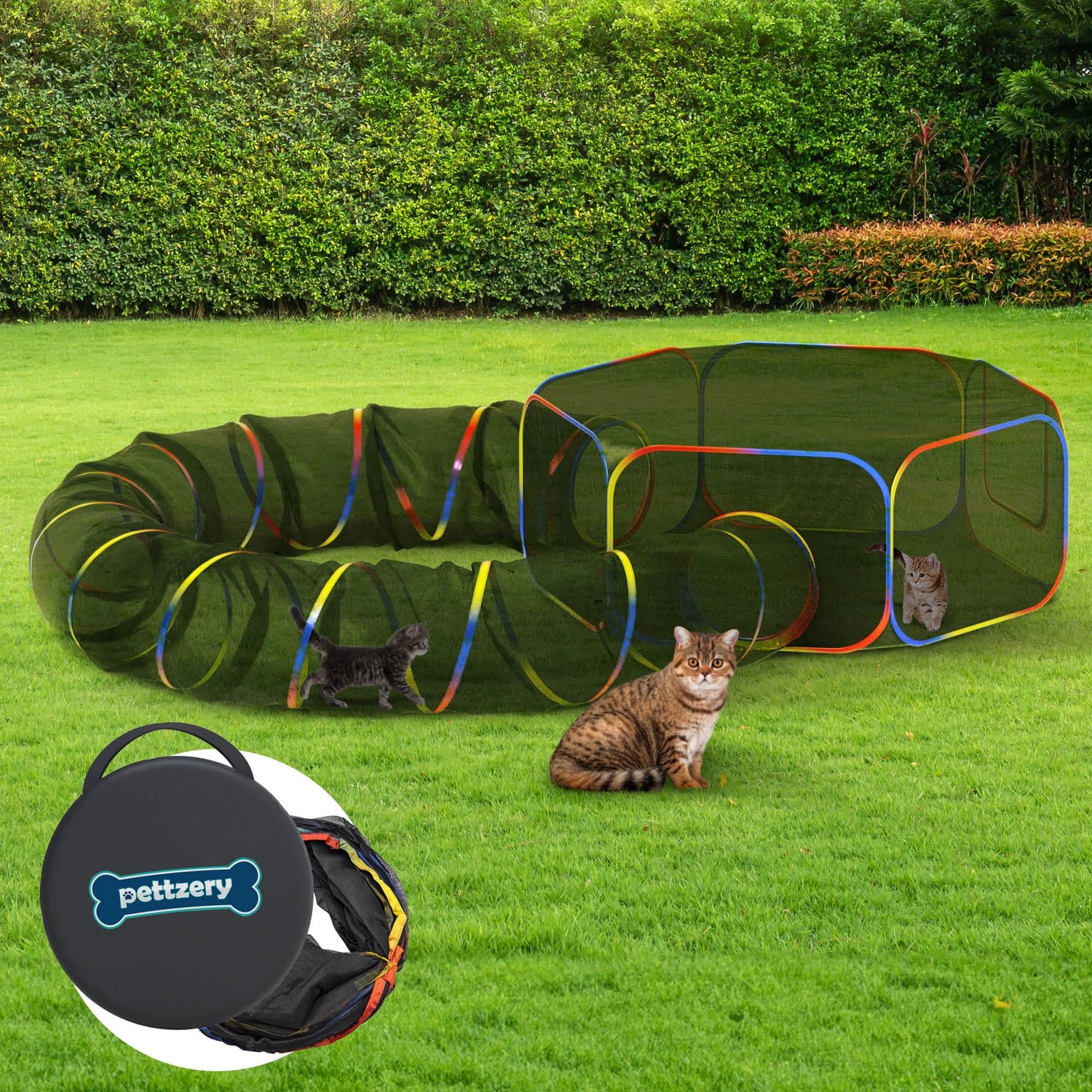
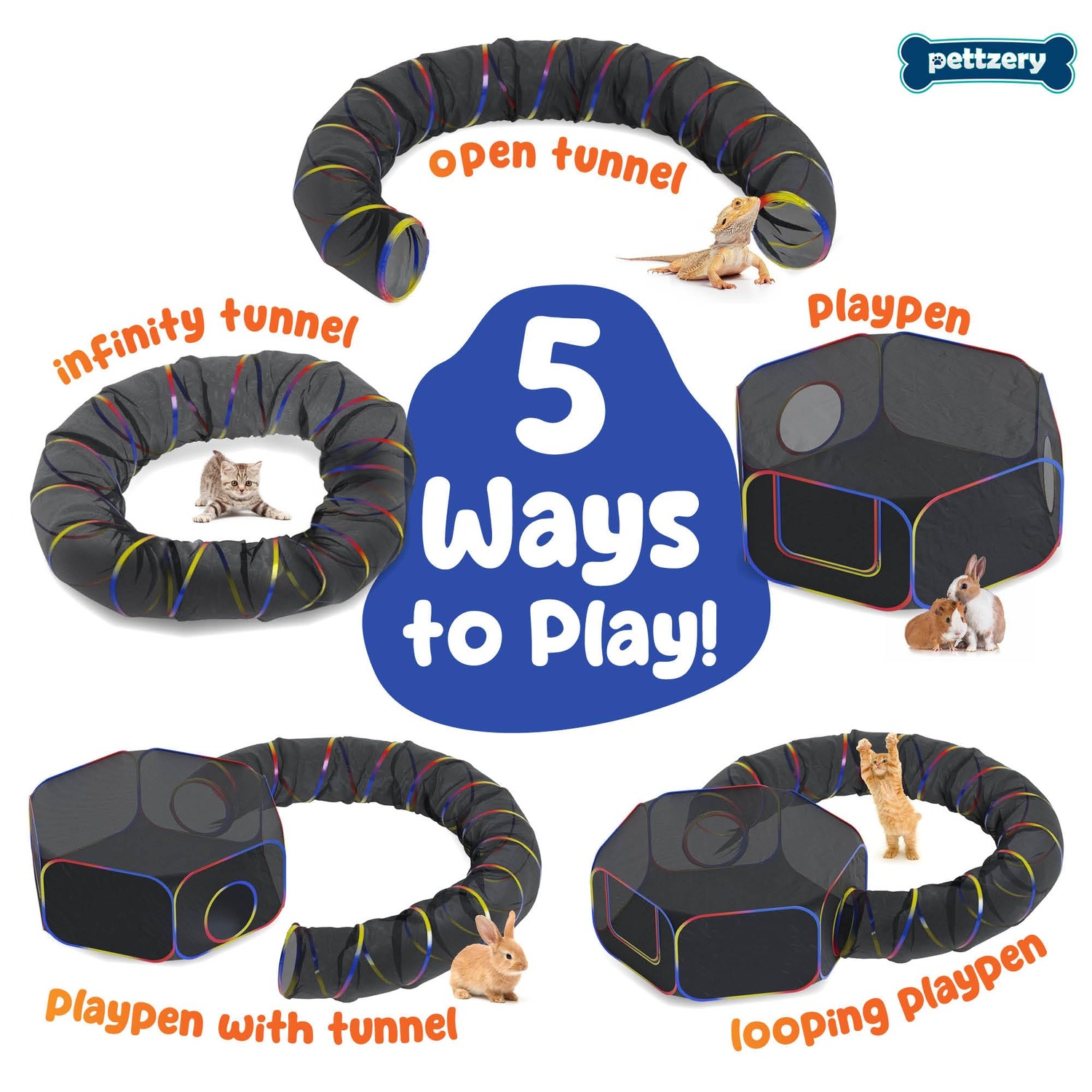
This particular enclosure is a two-piece set. There is a square tent measuring 119.4cm on each side and 45.7cm tall, made of Oxford cloth with mesh panels, and there is a play tunnel that zips on. You can use either piece alone or join them.
How a pop-up enclosure actually works
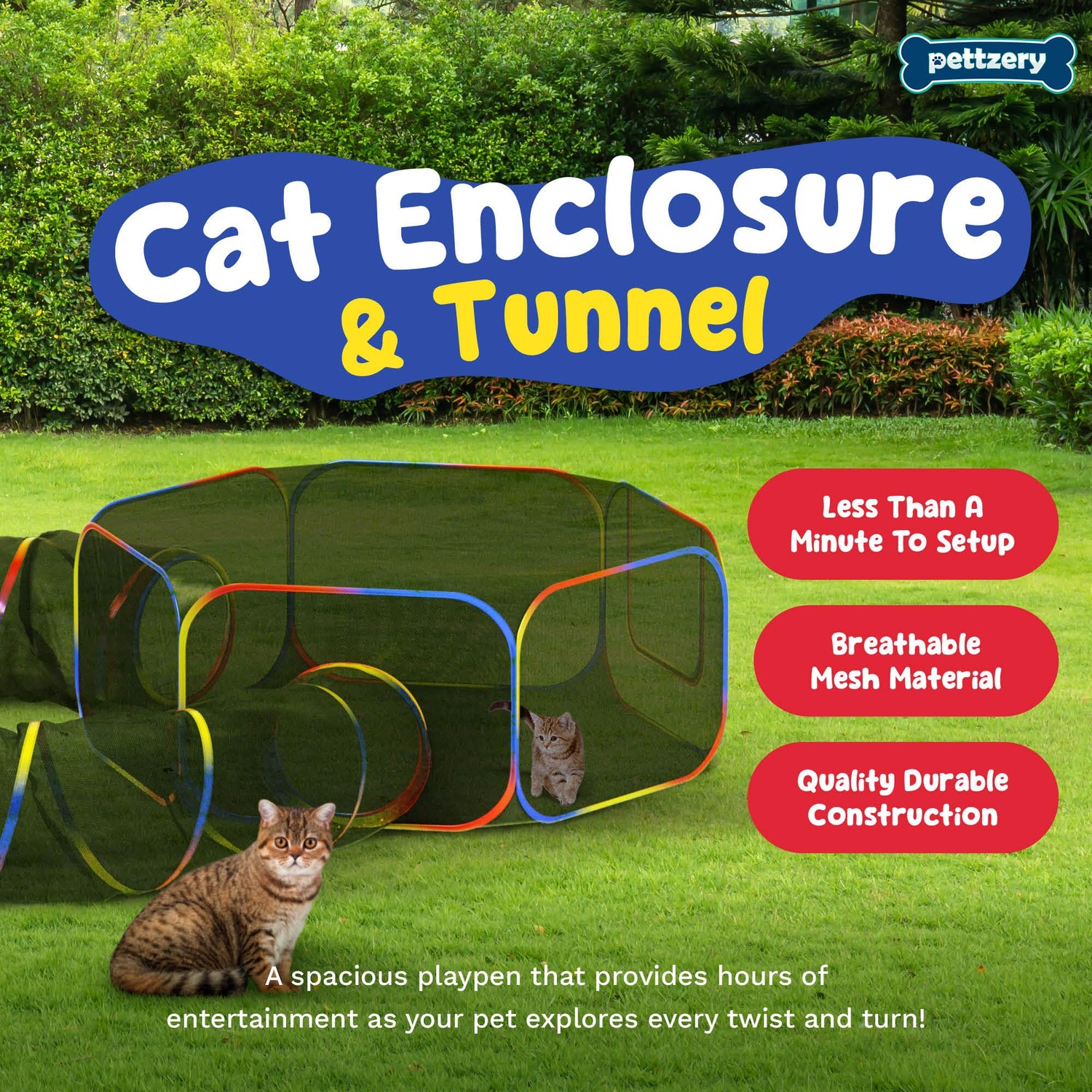
The appeal here is that nothing needs building. There are no poles to slot together, no instruction sheet, no missing part that turns a pleasant afternoon into a hardware run. You lift it out of the carry bag, it opens out, and you are done. The listing records assembly as not required and setup at about a minute, which matches how pop-up fabric structures behave in practice.
Zips do the rest of the work. The entry points close with zippers, and the tunnel joins to the tent with a zip run. That matters more than it sounds. Zips are easy to check at a glance, they do not come undone the way clips and ties can, and a cat cannot nose one open from the inside.
The mesh is the other half of the design. Solid fabric would trap heat and block your view. Mesh lets air through, keeps the inside closer to ambient temperature, and means you can see your cat from the back step without walking over. Cats can see out too, which is the point. A cat watching a bird through mesh is getting the enrichment you bought the thing for.
Who this suits
Apartment and townhouse owners get the most out of a setup like this. If your outdoor space is a balcony or a small courtyard, a permanent build is out of the question, but a square metre and a bit of fabric is manageable. Fold it away when guests come over.
Renters are in the same boat. You cannot bolt a structure to a wall you do not own, and you do not want to leave anything behind when you move. A foldable catio comes with you.
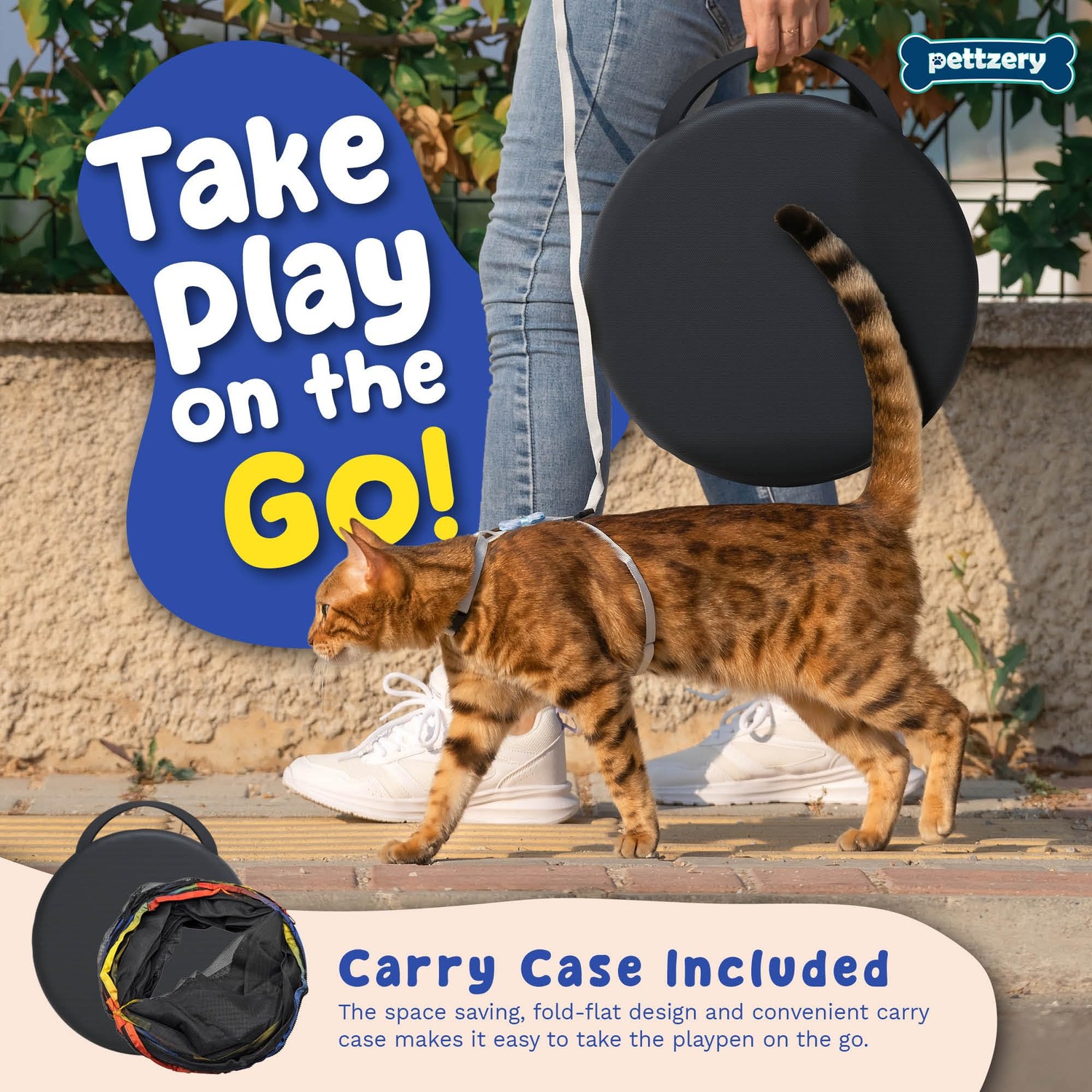
Travellers and campers are the third group. Taking a cat to a holiday house or a campsite is stressful for the animal, mostly because everything smells wrong. A travel catio gives them a contained outdoor patch in an unfamiliar place, and the carry bag means it does not eat your boot space.
It also suits households with more than one kind of small pet. The target species list covers cats, ferrets, guinea pigs and rabbits. Rabbits and guinea pigs need closer watching on grass because some of them will try to dig, but the enclosure itself is rated for them.
Working out whether the size fits
Before you buy anything, get a tape measure out. The tent needs a clear square of 119.4cm by 119.4cm, so call it 1.2 metres each way. Add a bit of margin so the fabric is not pressed against a railing or a wall.
The tunnel changes the picture. If you have the length available, the tunnel is where most cats spend their time, so give it room to stretch out straight rather than curving it tight into a corner. If your space will not take both, the tent alone is still a proper enclosure, and you can use the tunnel separately indoors on another day.
Height is 45.7cm. That is comfortable for a cat to sit upright, turn around and lie down. It is not a structure a cat stands tall in, and it is not meant to be. A low profile is part of what makes it pack down small.
Two cats can share the space for a short session if they are already friendly. If yours bicker, run them separately. Nobody enjoys a scrap inside a fabric tent.
Getting your cat to use it
Some cats march straight in. Others circle it for two days first. Both are normal.
The fastest way to win over a cautious cat is to make the inside smell like home. Put a blanket they already sleep on inside, add a toy they like, and scatter a few treats. Leave the enclosure set up somewhere familiar, even indoors, and let them investigate on their own terms. Do not pick a cat up and post them in.
Keep the first few sessions short. Ten or fifteen minutes with you sitting nearby does more than an hour of them feeling abandoned in an odd new box. Once they associate it with pleasant things, you will find them heading for it on their own.
The tunnel usually does the heavy lifting. Covered runs trigger something fairly deep in cats, and a cat that shows no interest in an open lawn will often trot a tunnel back and forth happily.
Safety habits worth keeping
Supervision is not optional. No fabric enclosure is escape-proof against a cat that decides to commit, and more to the point, an unsupervised cat outdoors can be bothered by other animals even inside a tent. Stay within sight.
Check every zip before you step away from it. A half-closed zip is the single most common way a cat gets out.
Watch the sun. Even with mesh ventilation, direct midday sun on fabric builds heat. Put it in shade, offer water, and bring the session forward to the morning or back to late afternoon in summer.
Mind the wind. A light pop-up structure will move in a gust. Weigh the corners with bricks, garden weights or filled bottles, or peg it if the ground allows. On a genuinely windy day, skip it.
Looking after it
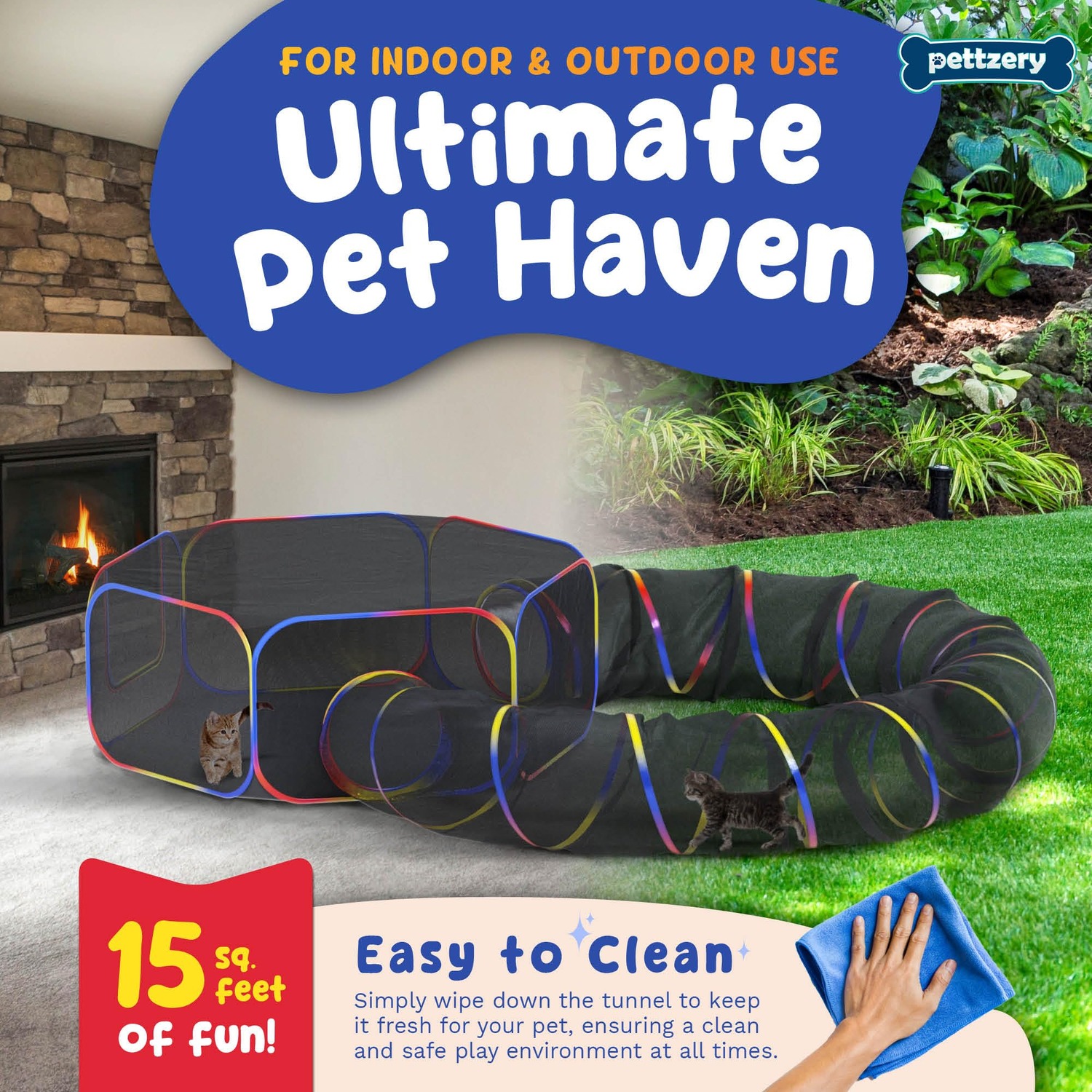
Fabric and mesh last well if you treat them sensibly. Shake out fur and grass after each session. Spot clean with warm water and a mild detergent when it needs it, and let it dry all the way through before folding. Never machine wash or tumble dry it.
The one rule people break is packing it away damp. Mesh holds moisture, and a wet mesh cat tent zipped into a bag will come out smelling bad and may develop mould. Open it in a dry spot and give it a few hours.
Keep grit out of the zips. A quick wipe along the teeth stops the slow grinding that eventually makes a zip stick. Store it in the carry bag, out of direct sun.
The short version
If you have an indoor cat and a small outdoor space, this does the job without a build, without tools and without a permanent change to the property. The set gives you a 119.4cm square Oxford cloth and mesh tent plus a zip-on play tunnel, it pops up in about a minute, and it folds into a carry bag when you are done.
Measure your space first. Supervise every session. Dry it before you pack it. Do those three things and an outdoor cat playpen like this will give your cat a lot of good afternoons.