
The complete guide
Choosing a Pop-Up Cat Enclosure, A Practical Buyer's Guide
The problem with keeping cats indoors
Keeping a cat inside is the right call in most places. The reasons are well known. Cars, dogs, other cats, snakes, ticks, poisoned bait and the damage cats do to native wildlife all stack up against free roaming. Councils in plenty of areas now have curfews or containment rules, and vets have been making the same argument for years.
The trouble is that an indoor cat still has an animal's nervous system. It wants sun on its back, air moving through its whiskers, the smell of wet grass and a bird three metres away that it will never catch. Take all of that out and you get a cat that yowls at the door, bolts past your ankles and sits on the windowsill looking faintly disappointed in you.
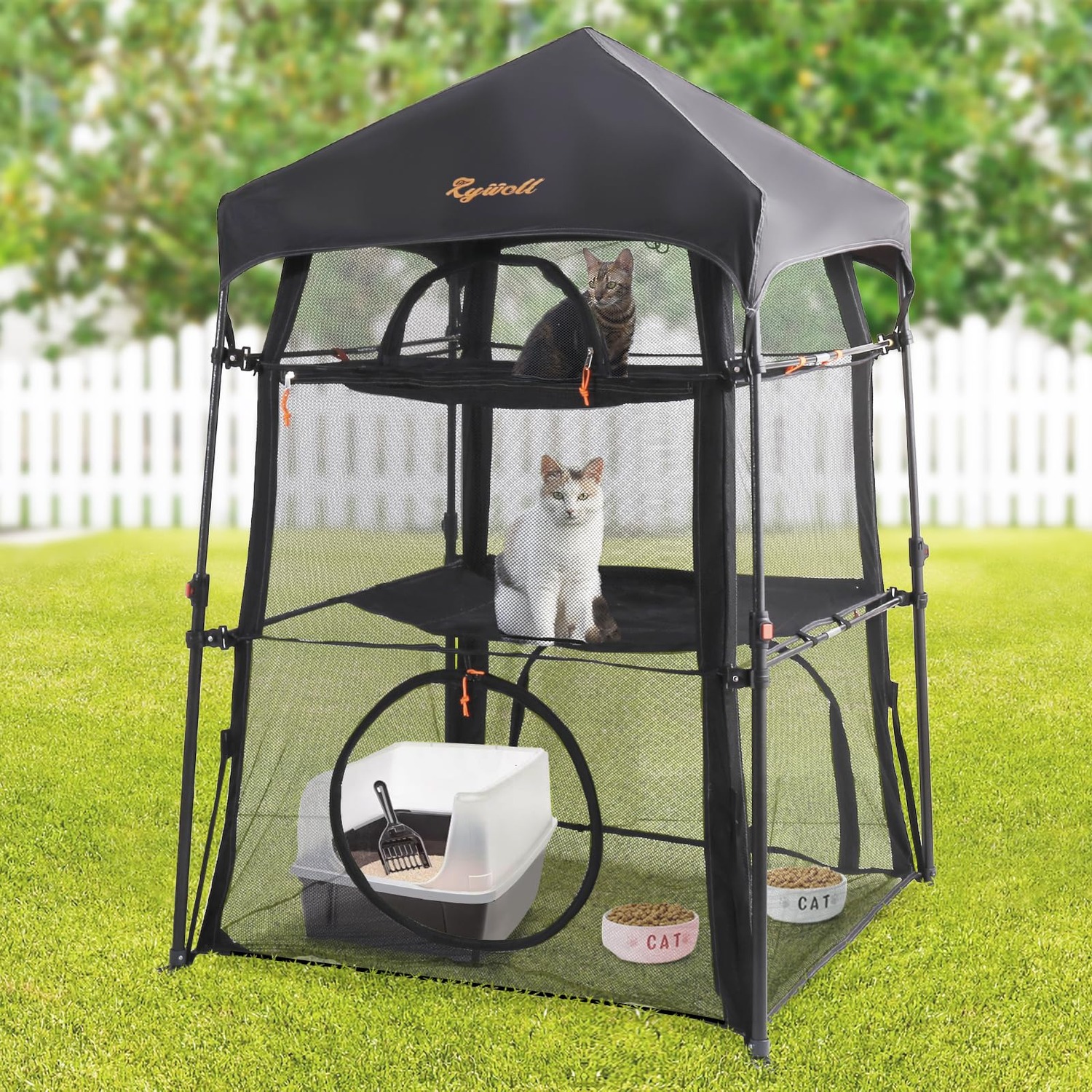
A pop-up cat enclosure is a middle path. It is a tent with mesh walls, a zip and a floor, and it gives the cat the sensory half of the outdoors without the dangerous half. Put it on the lawn, unzip it, put the cat in, zip it closed, and the cat is outside. Nothing can get in and the cat cannot get out.
How a pop-up catio actually works
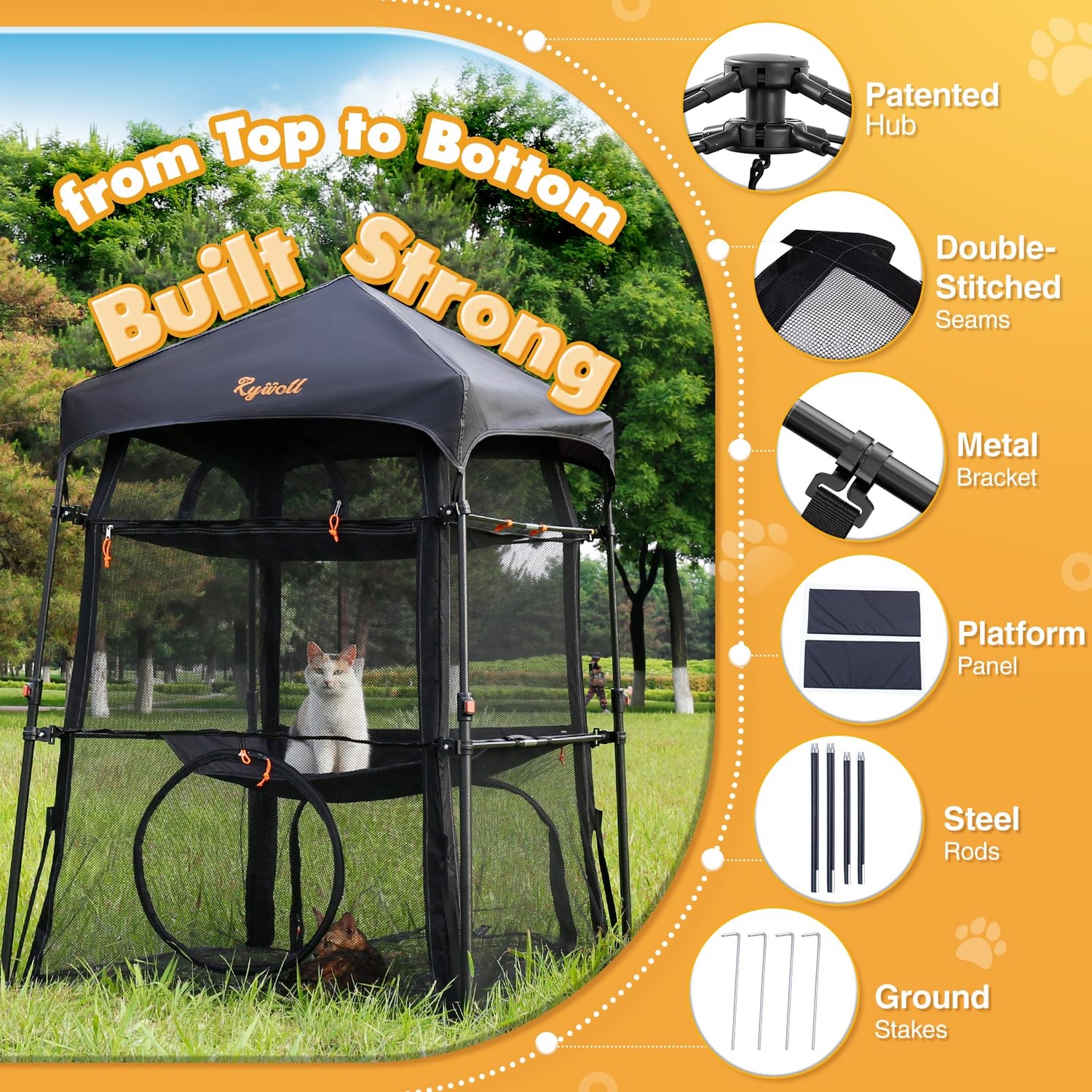
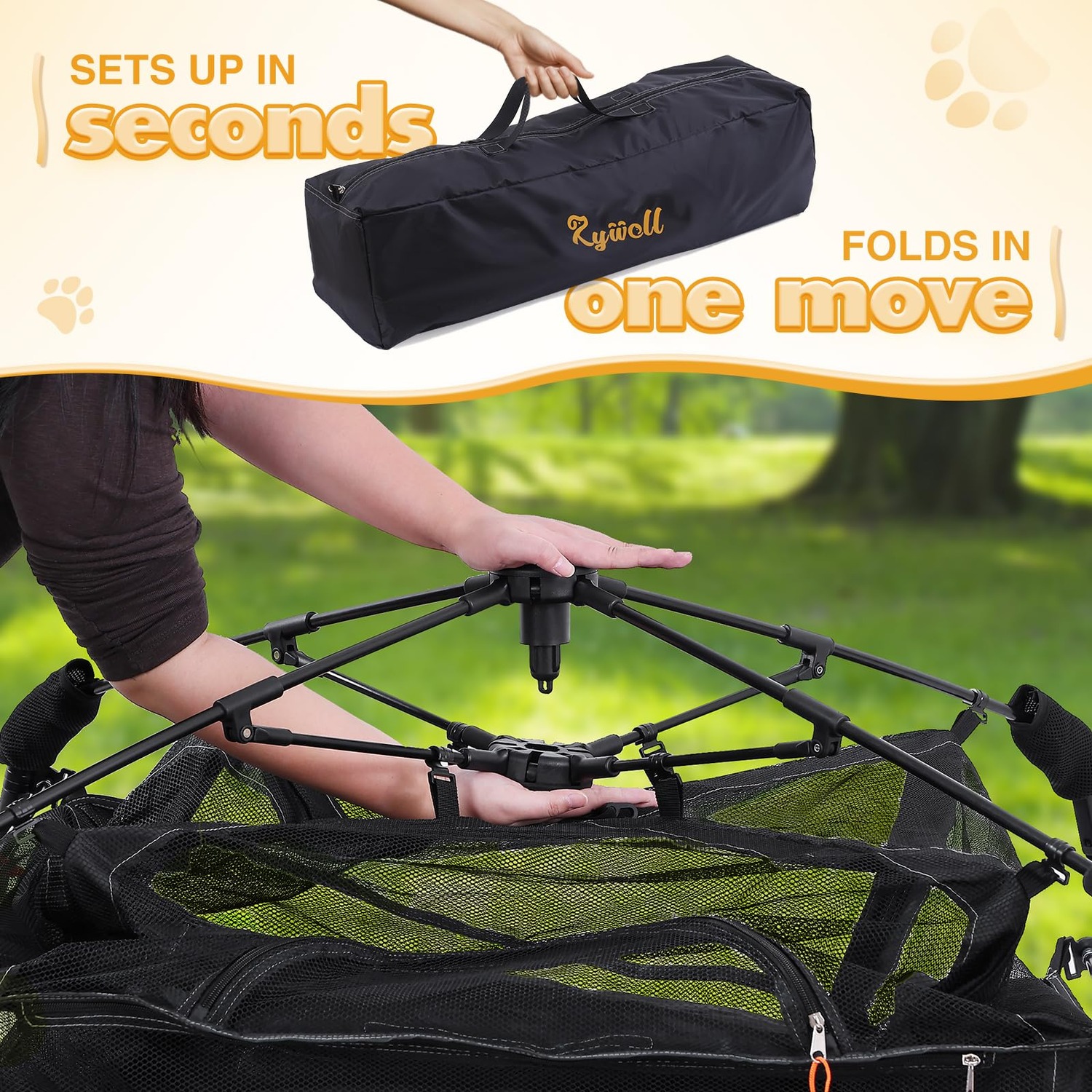
The mechanism matters because it decides whether you will use the thing or leave it in the shed. Fixed catios are great, but they are a weekend of work and they live in one place forever. A portable catio takes a different approach. The frame is steel with a hub in the middle, and the whole structure springs open when you press the hub sections together.
This model opens from the hub. You hold the base, press the top into its slot and the frame pops out. To close it, you press the bottom support rods together with both hands and it collapses back down. Once you have done it twice, it is a few seconds of work in either direction.
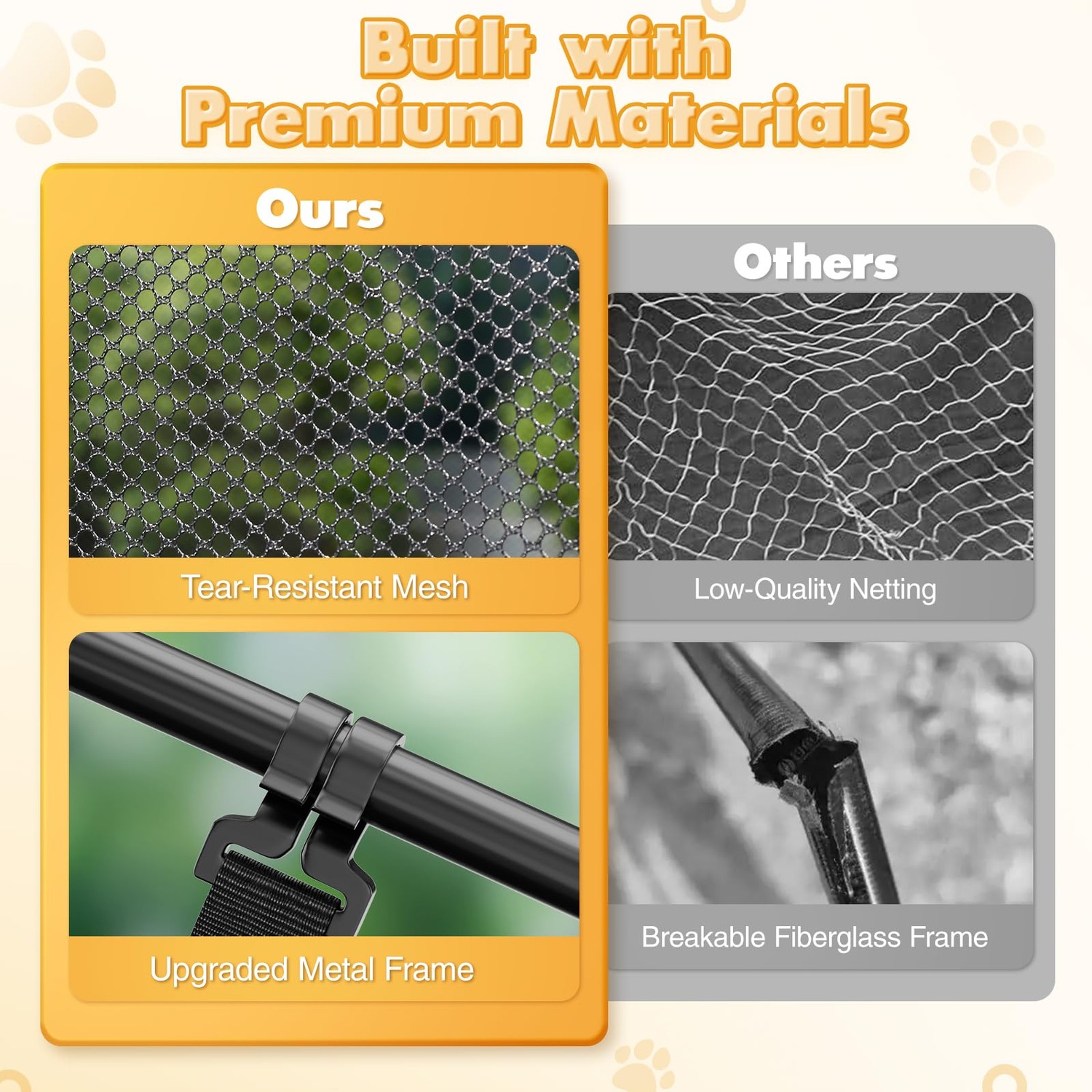
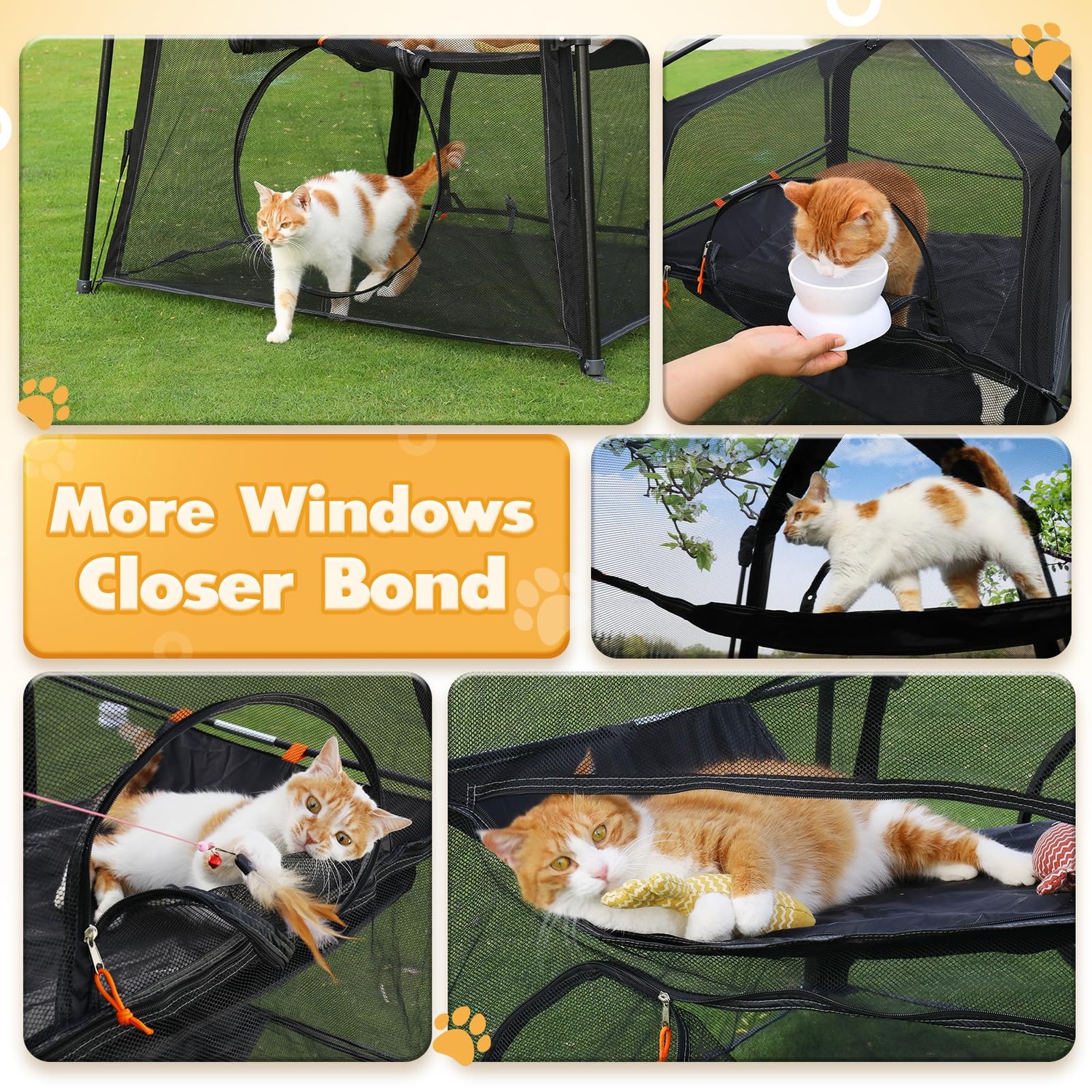
The body is Oxford cloth with mesh panels. Mesh does two jobs. It lets air through, which matters a lot in warm weather, and it lets the cat see out, which is most of the entertainment. Zips handle access, including a big lower panel that is wide enough to reach well inside for cleaning or for retrieving a cat that has flattened itself against the far corner.
Where this one differs from a basic cat tent outdoor setup is the height and the tiers. It stands 145 cm tall with a 110 cm square footprint, and the interior is split into three levels. That is the single feature most worth paying attention to.
Why height beats floor space
Cats are climbers. Watch a cat in a new room and it will go up before it goes across. It wants a vantage point, and a high perch is where a cat relaxes properly rather than staying on alert.
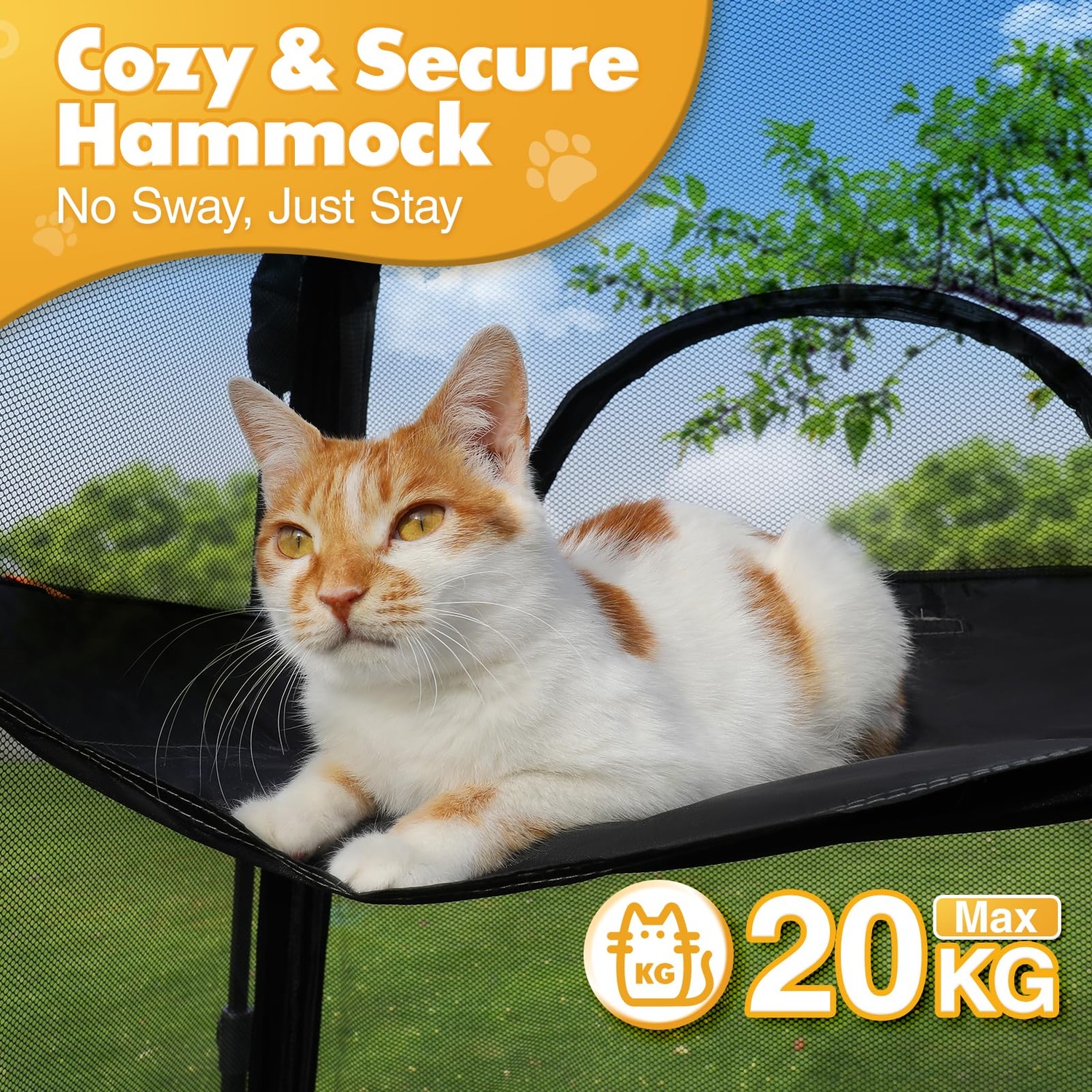
A flat run gives a cat two metres of pacing. A tiered enclosure gives it somewhere to be. In practice, cats in a triple cat tent settle on the top level and stay there, watching, dozing, occasionally making that strange chattering noise at birds. That is the behaviour you are paying for.
The lower tier earns its keep differently. It is where the litter tray, the water bowl and a couple of toys go. If you want a session that lasts a few hours rather than twenty minutes, that ground-floor space is what makes it possible.
Anchoring, and why it is not optional
This is the part people skip, and it is the part that decides whether your cat enjoys the enclosure or distrusts it.
The platforms inside are fabric, not rigid shelves. If the frame is loose, the shelves have slack in them, and a cat landing on a slack shelf gets a bounce it did not ask for. Some cats shrug that off. Nervous cats decide the whole structure is suspicious and refuse to go above ground level.
Pegging the four corners into grass pulls everything taut. Tent pegs come in the box and they take about thirty seconds to drive in. On a balcony, a deck, tiles or indoors, pegs are useless, so you weight the corners instead. Sandbags, small dumbbells, bottles of water, bricks, anything with a few kilos of mass on each corner. A weighted enclosure feels completely different to a cat than an unweighted one.
Some movement is still normal. Pop-up frames flex by design, that is how they fold. The goal is not zero movement, it is enough tension that the levels feel solid underfoot.
Who this suits
Apartment and balcony owners. A cat enclosure for balcony use turns a two by three metre concrete slab into usable cat territory. Weight the corners, keep it clear of the railing, and never leave the cat alone out there.
People with gardens who cannot let the cat roam. Peg it on the lawn, move it to follow the shade, pack it away at dusk. The cat gets grass smells and sunlight with none of the road risk.
Campers and travellers. At 5.9 kg folded into a carry bag, this works as a travel cat enclosure. It fits in a boot alongside the rest of the camping gear. A cat in a strange campsite with no containment is a lost cat, so a mesh cat enclosure solves a real problem there.
rescue carers and multi-cat homes. Mesh is the ideal introduction medium. A new cat inside, the residents outside, everyone can see and smell each other without anyone getting hurt. It also works as a recovery space for a cat that needs to be kept quiet after surgery.
How to choose between enclosures
Check the height. Anything under a metre is a pen, not a catio. You want enough vertical space for at least one real perch.
Count the levels. One level is floor space. Two or three levels is a space a cat chooses to stay in.
Look at how it secures. Pegs for soft ground, corner anchor points for weights. An enclosure with no anchoring plan is one gust of wind away from a bad afternoon.
Think about the carry bag. It sounds trivial. It is not. An enclosure that does not pack away neatly stops leaving the house within a month.
Consider the access panels. You will be reaching inside more than you expect, for litter trays, dropped toys and reluctant cats. A large lower opening saves a lot of frustration.
Getting your cat to use it
Do not start outside. Open the enclosure in the living room, unzip the door and leave it there. Put a blanket that smells like your cat on the middle tier. Scatter a few treats. Then ignore it for a day or two.
Most cats investigate on their own schedule. Once your cat is going in and out freely indoors, close the zip for a minute, then five, then longer. After that, move the whole thing outside and repeat the short sessions.
Wand toys through the interactive windows are useful here, because you are giving the cat good experiences inside the enclosure rather than simply confining it. Food works too. Feeding a meal inside the tent does more for acceptance than any amount of coaxing.
Patience is the whole trick. A week or two of short, boring, positive sessions beats one long session that goes badly.
Care and storage
Shake out fur, grass and litter after each use. Spot clean the fabric with warm water and mild soap, then let it dry fully in the air. Do not put any of it in a washing machine or dryer, and skip the bleach and the iron.
Dry the steel frame if it has been rained on. Steel and standing moisture are not friends. Then fold it down and put it in the carry bag somewhere dry. Packing a damp enclosure away is the fastest route to mildew smell, and cats notice smells long before people do.
Leaving it set up outdoors permanently will shorten its life. Sun fades and weakens fabric, and repeated wet-dry cycles are hard on fittings. The fold-down design exists so you can put it away, so put it away.
The short version
This is a 110 x 110 x 145 cm pop-up cat enclosure with a steel frame, mesh and Oxford cloth panels, three internal levels, zip access and a tunnel connector at the base. It weighs 5.9 kg, comes with tent pegs and a carry bag, needs assembly the first time, and carries a 12 month warranty from Rywell.
It suits indoor cats that want outside, balcony flats, camping trips and rescue-cat setups. Anchor all four corners every single time, supervise your cat while it is in there, and give a nervous cat a fortnight to come round. Done properly, it buys your cat a genuinely better life for the cost of an afternoon's setup.