
The complete guide
How To Choose A Modular Catio That Suits Your Cat And Your Space
The problem with cats and the outdoors
Cats want out. Not always, not constantly, but most cats spend a good part of the day sitting at a window with their whiskers twitching at something you cannot see. That urge does not go away because you live in an apartment or on a busy road.
The usual answers both have downsides. Let the cat roam and you take on traffic, fights, missing-cat posters and, in many places, real pressure from neighbours and wildlife rules. Keep the cat strictly indoors and you have a safe cat who is often a bored cat. Boredom in cats looks like overgrooming, night yowling, food obsession and furniture that no longer has corners.
A catio sits in the gap. It is an enclosed outdoor space, usually mesh walled, where a cat gets sun, air, grass smells and insect watching with a boundary around it. A modular catio takes that one step further by letting the structure change shape as your needs change.
How this enclosure actually works
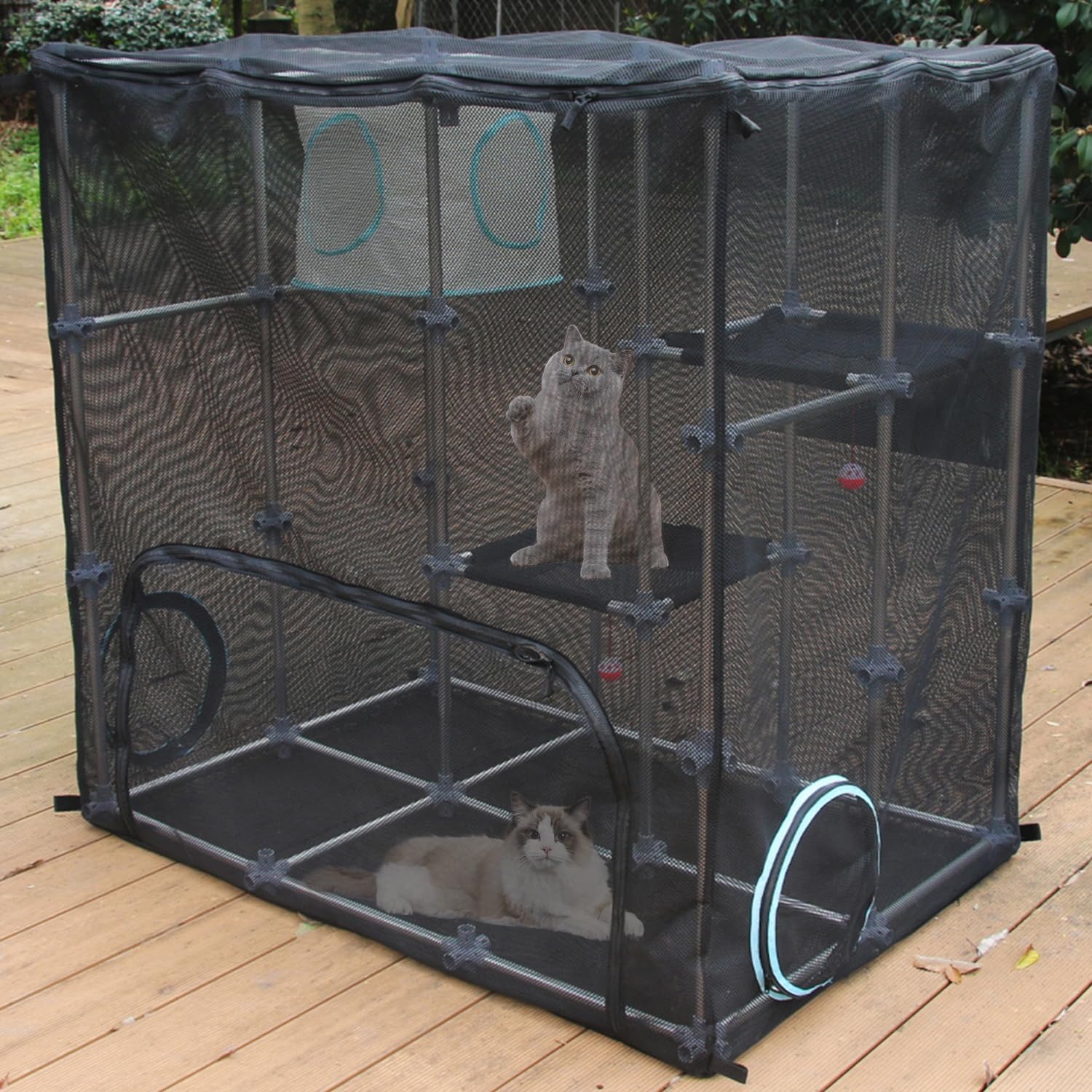
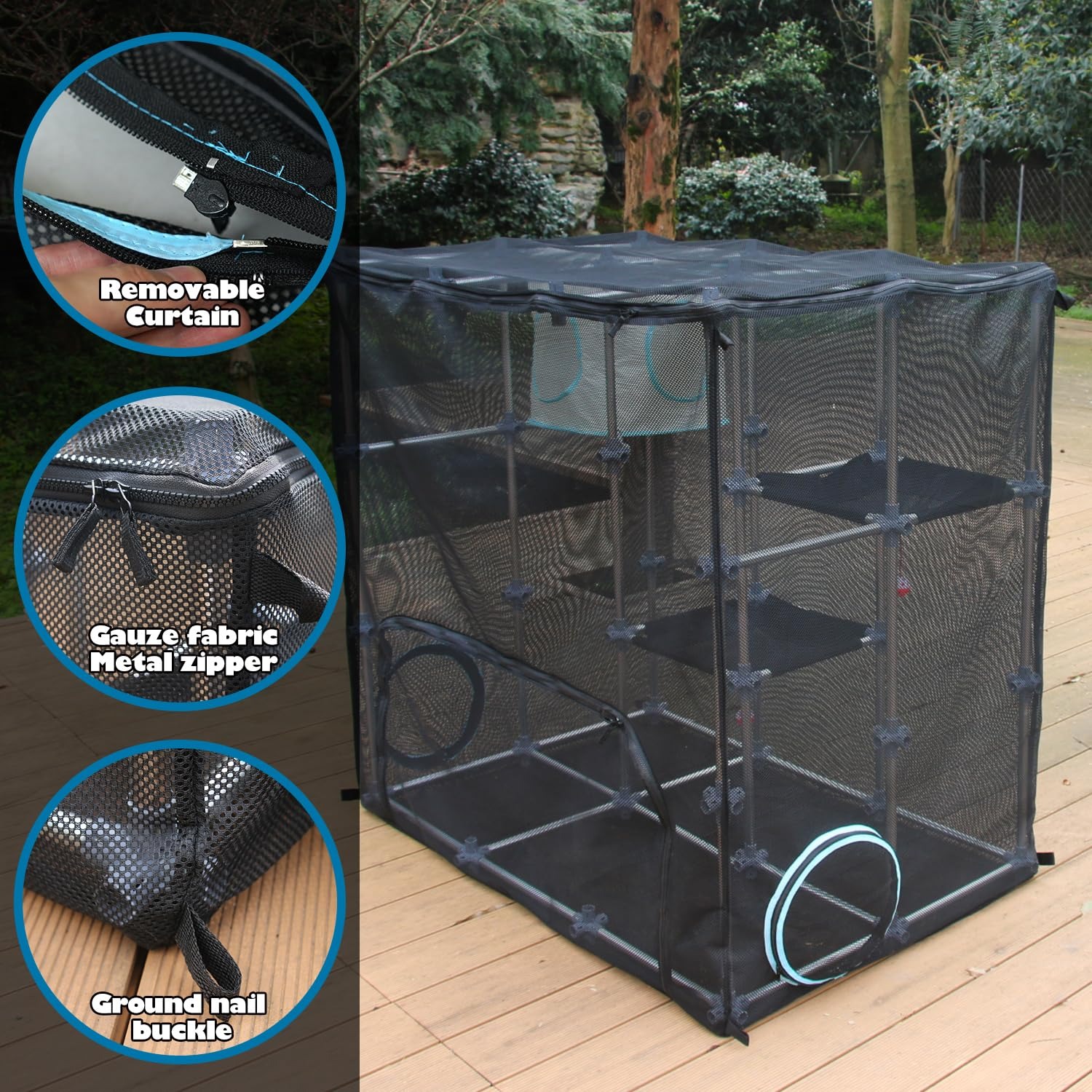
The basic build is simple. Aluminium bars form the frame. Nylon mesh forms the walls and roof. Zips hold it closed. That combination is what makes the thing both sturdy and light, which is a harder balance than it sounds.
Aluminium matters because the alternative framing materials are either heavy or prone to rust. A steel frame of this size would be a two-person lift. Plastic would flex too much. Aluminium holds its shape while staying light enough that one person can pick up the assembled enclosure and shift it two metres to chase the shade.
The mesh matters for airflow and for sight lines. Breathable nylon lets a breeze through the whole structure, so even on a warm afternoon the inside does not become an oven. It also means you can glance out the kitchen window and see exactly what your cat is doing, which is more reassuring than it sounds until you have owned an opaque pet tent and spent five minutes wondering if it is still occupied.
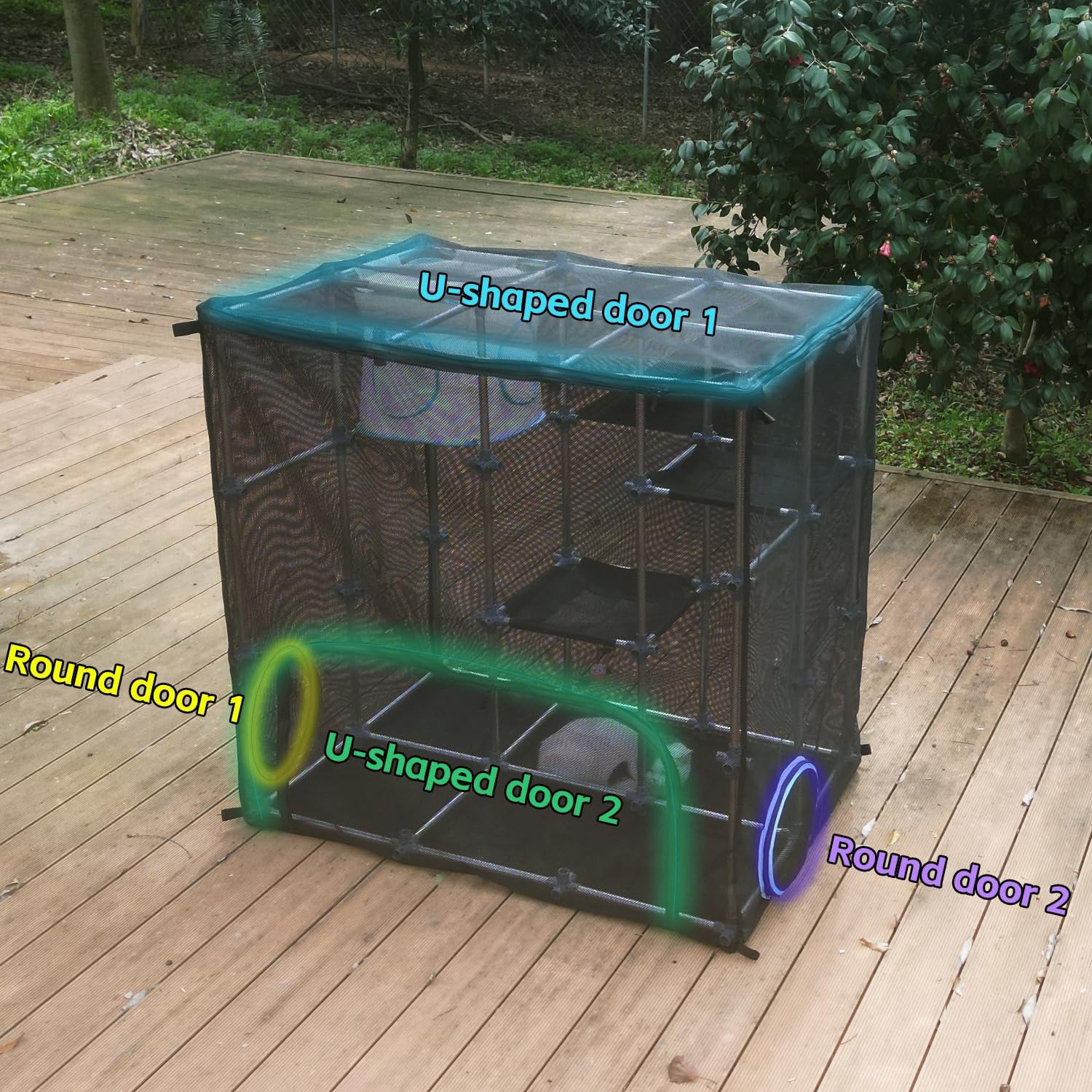
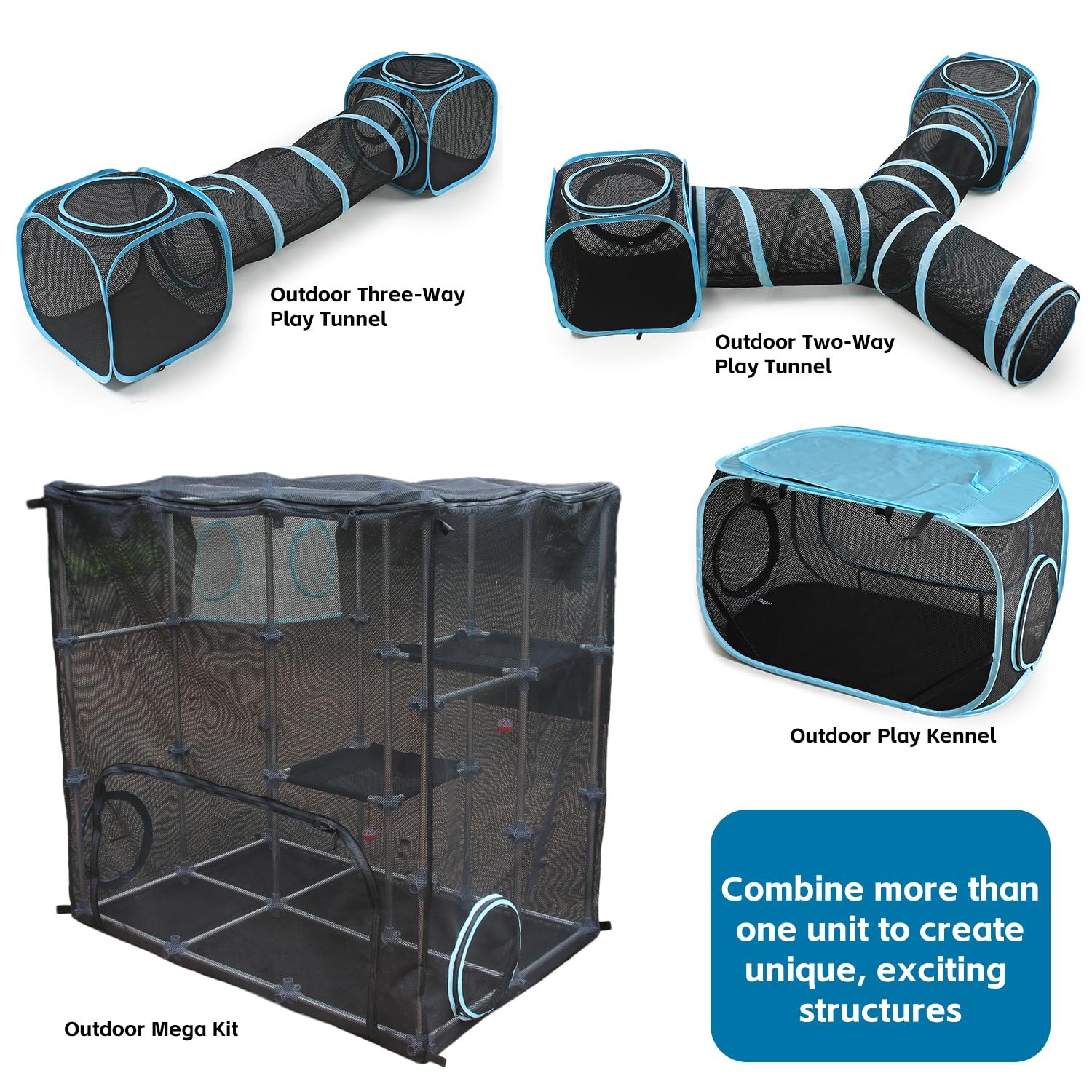
The clever part is the doors. There are double zip doors on both sides. Each one opens as a normal entry point, but each one is also a connector. Unzip a door on this unit, line it up with a matching INTURN product, and zip the two together so the opening becomes a passage between them. That is how you end up with an outdoor cat enclosure with tunnels, side runs and separate zones instead of one square box.
Who this suits
Apartment dwellers get the most obvious benefit. A catio for apartments turns a balcony from a hazard into usable cat territory. The 119.4 cm square footprint fits a lot of balconies, and because it packs down, you are not permanently sacrificing the space.
Renters do well with it for the same reason. Nothing is drilled, bolted or built. You set it up, use it, and take it with you when the lease ends.
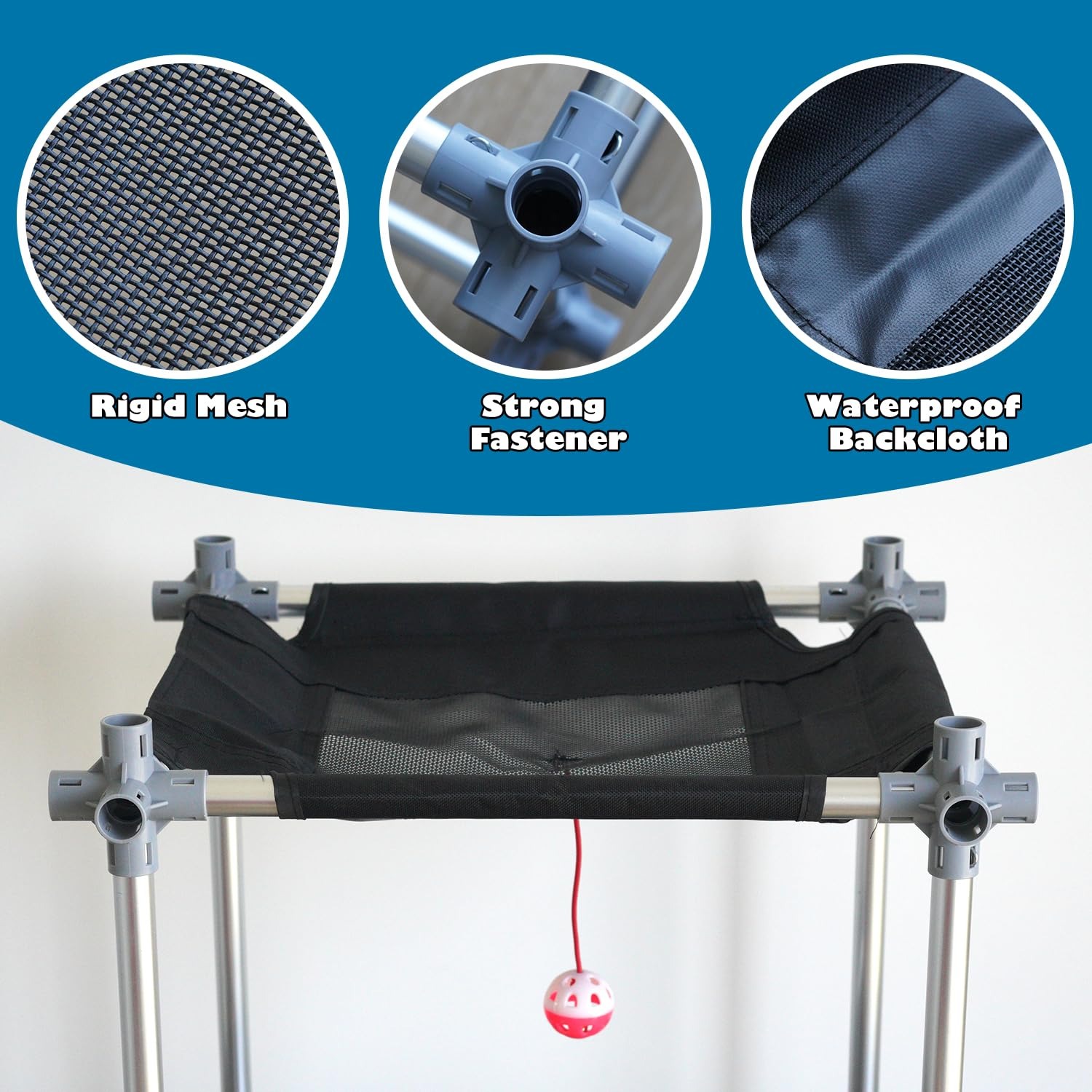
Multi-cat households benefit from the floor area. Two cats in a cramped carrier get tense. Two cats in a space this size can sit apart, ignore each other with dignity, and still both be outside. Add a hammock and one cat can be up while the other is down, which cuts friction a lot.
Owners of nervous or recently rehomed cats often use an enclosure as a halfway step. A cat who has never been outdoors can meet the outdoors from inside a safe boundary, and build confidence over weeks rather than in one alarming afternoon.
Finally, people who travel with their cats find a portable catio useful at holiday houses and campsites, where an unfamiliar yard is not somewhere you want a cat loose.
How to choose and set up
Start with measurement, not enthusiasm. Mark out 119.4 cm by 119.4 cm on the floor of the space you have in mind. Walk around it. Can you still open the door, get to the washing line, reach the barbecue? If the answer is no, you want a different spot or a different size.
Then think about sun. The single most common setup mistake is putting an enclosure in full afternoon sun with no shade option. Cats will sunbake, but they need the choice to move out of it. Position the catio so part of it falls under a tree, an awning or a wall shadow for some of the day, or plan to move it as the sun shifts.
Surface comes next. Grass is lovely and cats enjoy it, but it will yellow if the enclosure sits in one place for a week. Move it regularly. Decking and concrete are stable and easy to clean, though they heat up, so put a mat or bed down. Balconies need a level surface and a quick check that nothing sharp is underneath the mesh floor area.
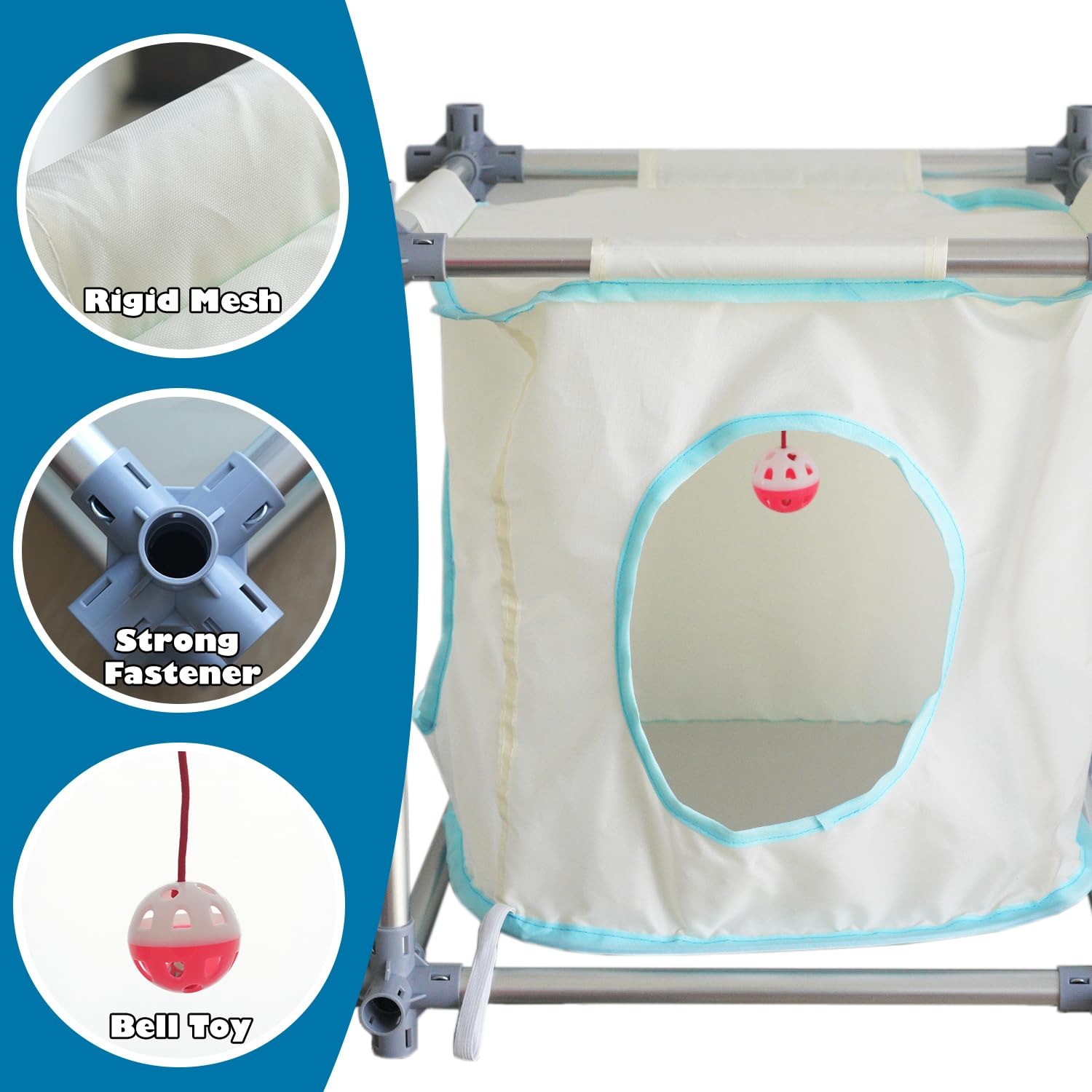
Furnish it like you mean it. An empty enclosure is a cage. The same enclosure with a bed, a water bowl, a scratcher and a hiding spot is a destination. Hammocks and tents work well, and they let you tune the space to each cat's personality. A bold cat wants height and a view. A shy cat wants a covered corner to retreat to before deciding the world is acceptable.
Introduce it slowly. Put something that smells like home inside. Sit with your cat for the first few sessions. Keep them short, end them before your cat asks to leave, and build from there. Most cats settle within a handful of visits once they work out the boundary is theirs rather than a trap.
Looking after it
Maintenance is light but it is not nothing. Spot clean the mesh with warm water and a mild pet-safe detergent when it needs it, and let it dry fully. Skip the bleach and strong solvents, which break down nylon over time.
Wipe the aluminium down after rain or a dusty week. Check the zips every so often and clear grit out of the teeth, since a gritty zip is the part most likely to fail on any cat tent enclosure.
Weather is the main thing to respect. This is a lightweight structure, not a shed. Take it down before heavy wind, hail or a serious storm. The upside of a frame this light is that moving it takes minutes.
When you store it, dry everything first. Damp mesh packed into a dark cupboard comes out smelling like a swamp. Store the poles together so you are not hunting for a missing bar next spring.
Growing the setup later
One reason to pick a modular design over a fixed one is that your needs will change. You might start with a single cube on a balcony, then move house and have a lawn. You might get a second cat. You might find your cat spends two hours a day in there and deserves more room.
Because the zip doors connect, you can add sections rather than replace the whole thing. A tunnel linking two cubes gives a cat something to run through, which is more interesting than more floor area of the same shape. Over time this is how a single unit becomes a proper cat enclosure system shaped to your yard.
The short version
If you have a cat who stares out windows and a space you can give over for part of the day, this is a practical answer. Aluminium frame, breathable mesh, 119.4 by 119.4 by 78.7 cm, zip doors on both sides that let you connect more sections later. Assembly is required and it packs down for storage and travel.
Measure your space first, plan for shade, put something comfortable inside, and introduce your cat gradually. Do those four things and most cats take to it quickly. Then you get the thing every indoor-cat owner wants, which is a cat who has had a proper afternoon outside and comes in tired, warm and entirely safe.