
The complete guide
How to Choose a Foldable Cat Enclosure That Your Cat Will Actually Use
The problem with letting a cat outside
Cats want the outdoors badly. You can see it in the window-sitting, the door-dashing, the way a house cat goes wide-eyed at a bird on the fence. The trouble is that the outdoors is full of things that hurt cats. Cars, dogs, other cats, ticks, snakes, baited bins and long drops from balconies. In a lot of places there are also curfews or outright bans on free roaming, and plenty of rental agreements say no.
So owners get stuck between two bad options. Keep the cat inside permanently and watch them get bored and heavy. Or let them out and spend every evening counting the hours until they come home.
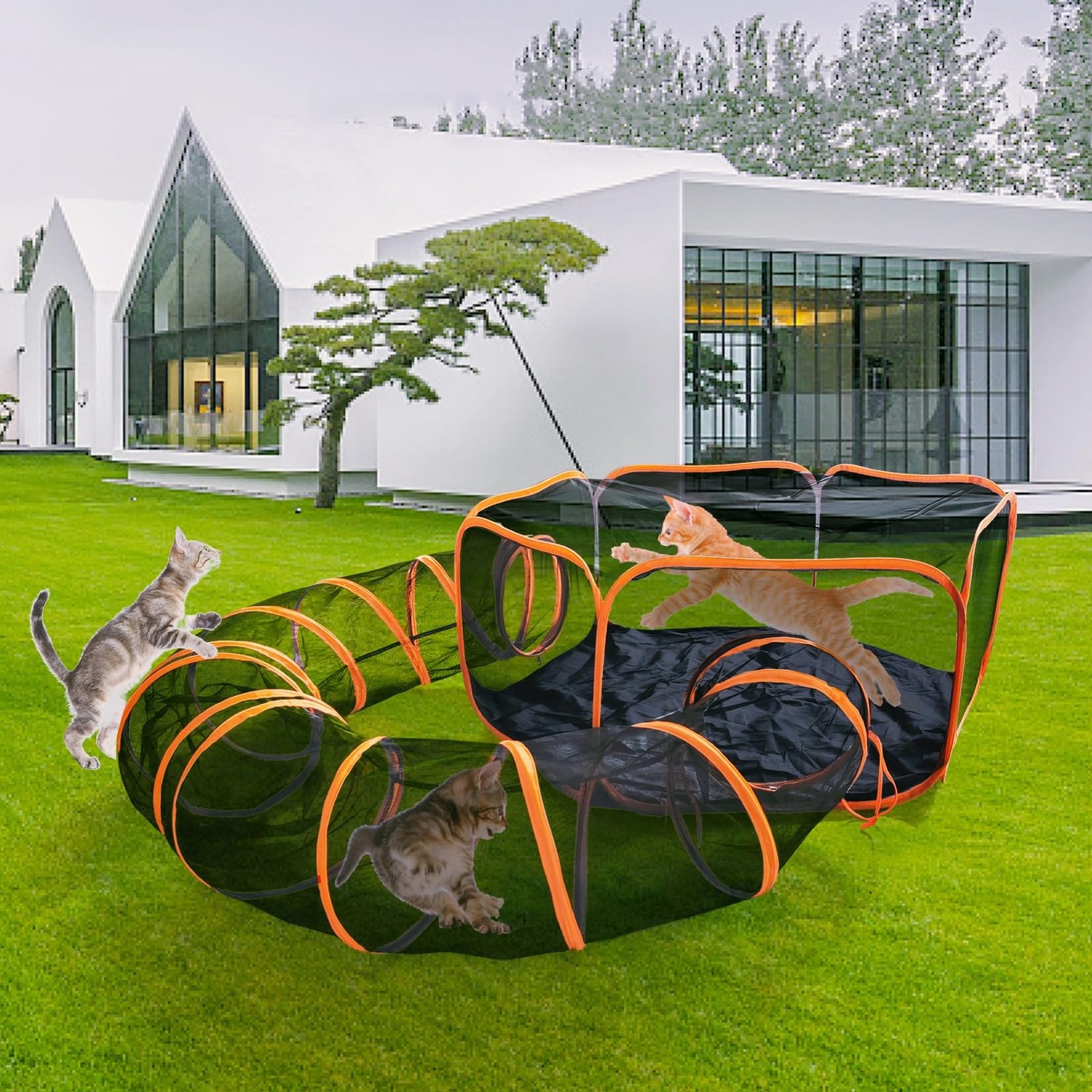
A foldable cat enclosure is the middle path. It is a contained space with mesh walls and a solid floor that you set up on grass, concrete, decking or a campsite. Your cat gets the smells, the breeze, the warmth and the sounds. You get to sit nearby and relax instead of scanning the street.
How this type of enclosure works
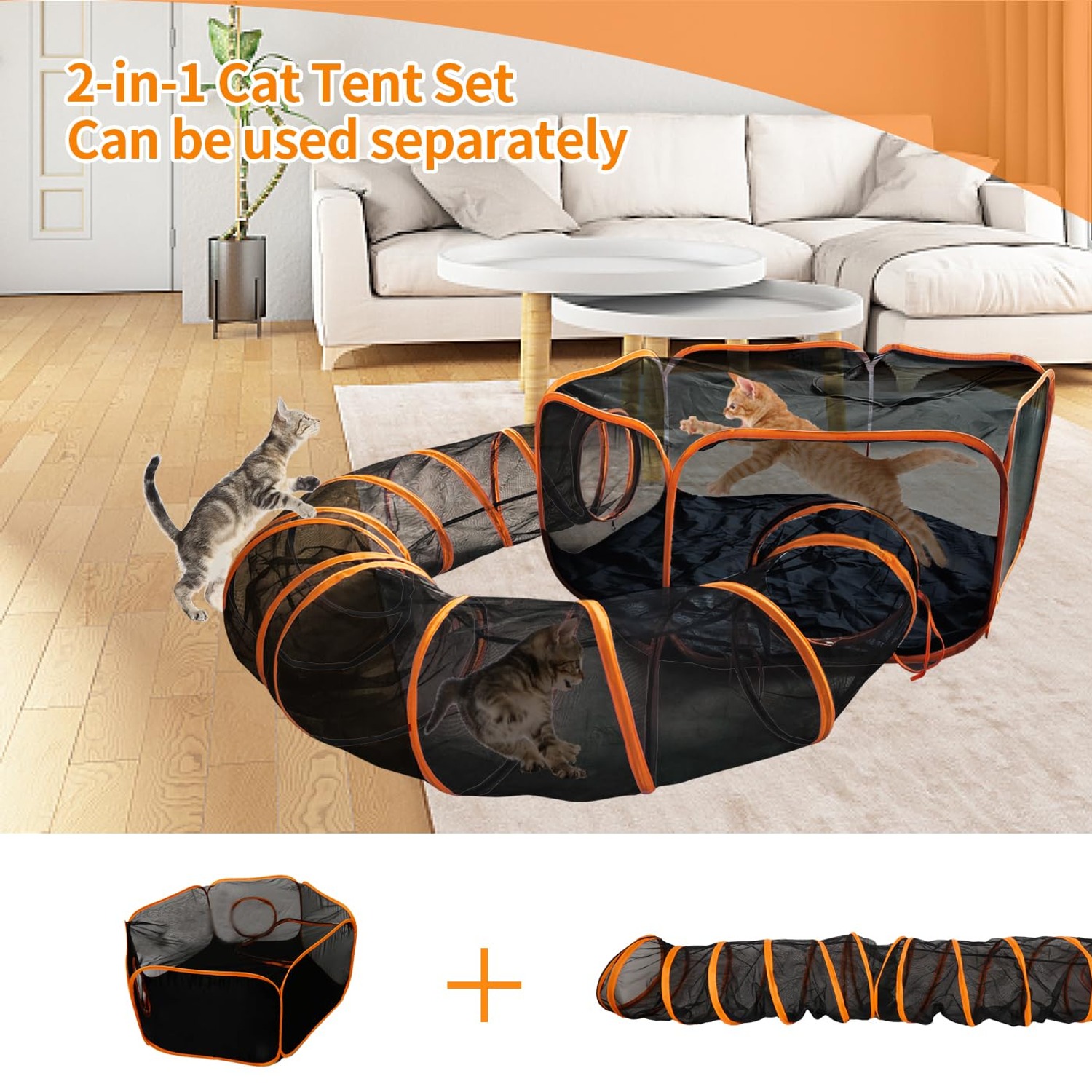
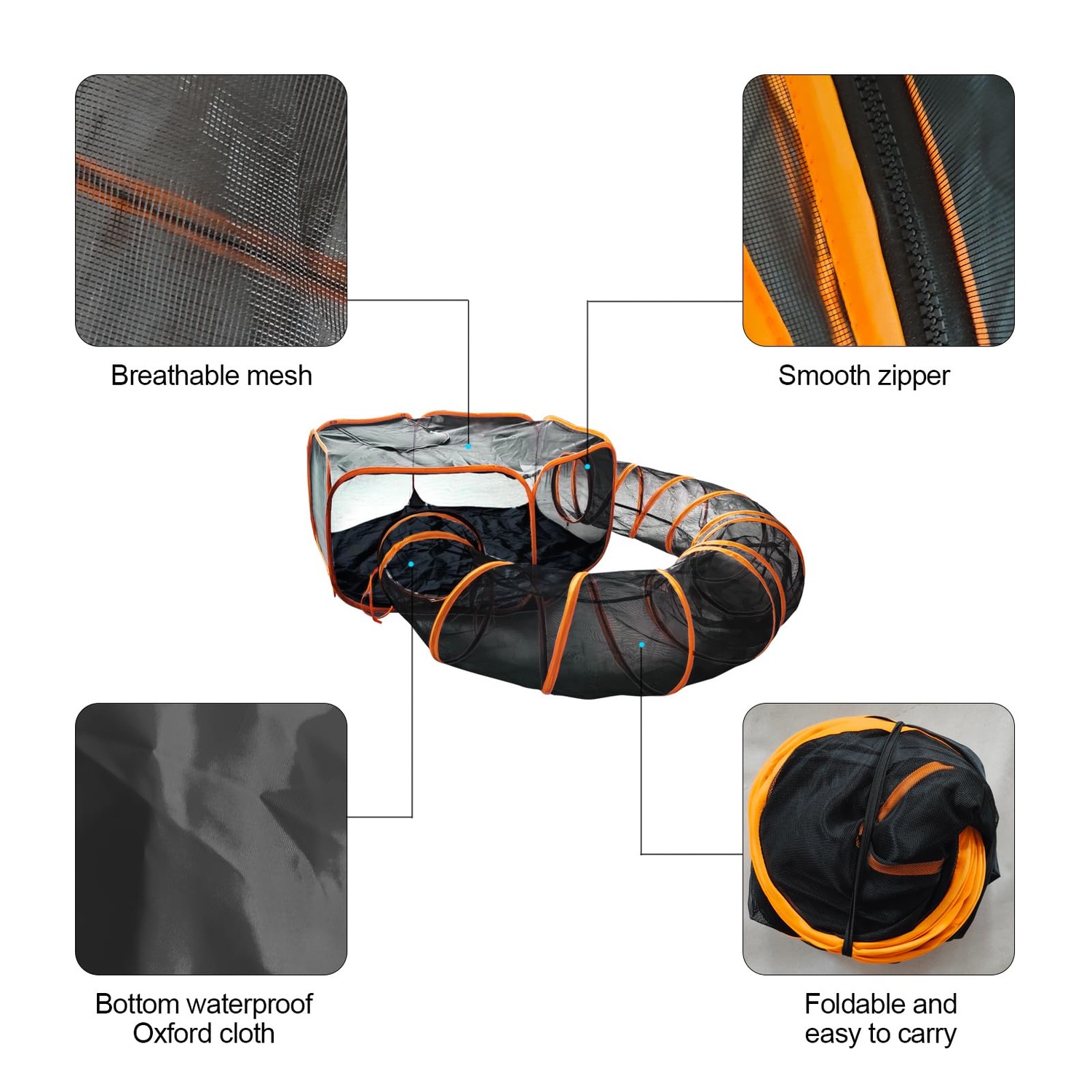
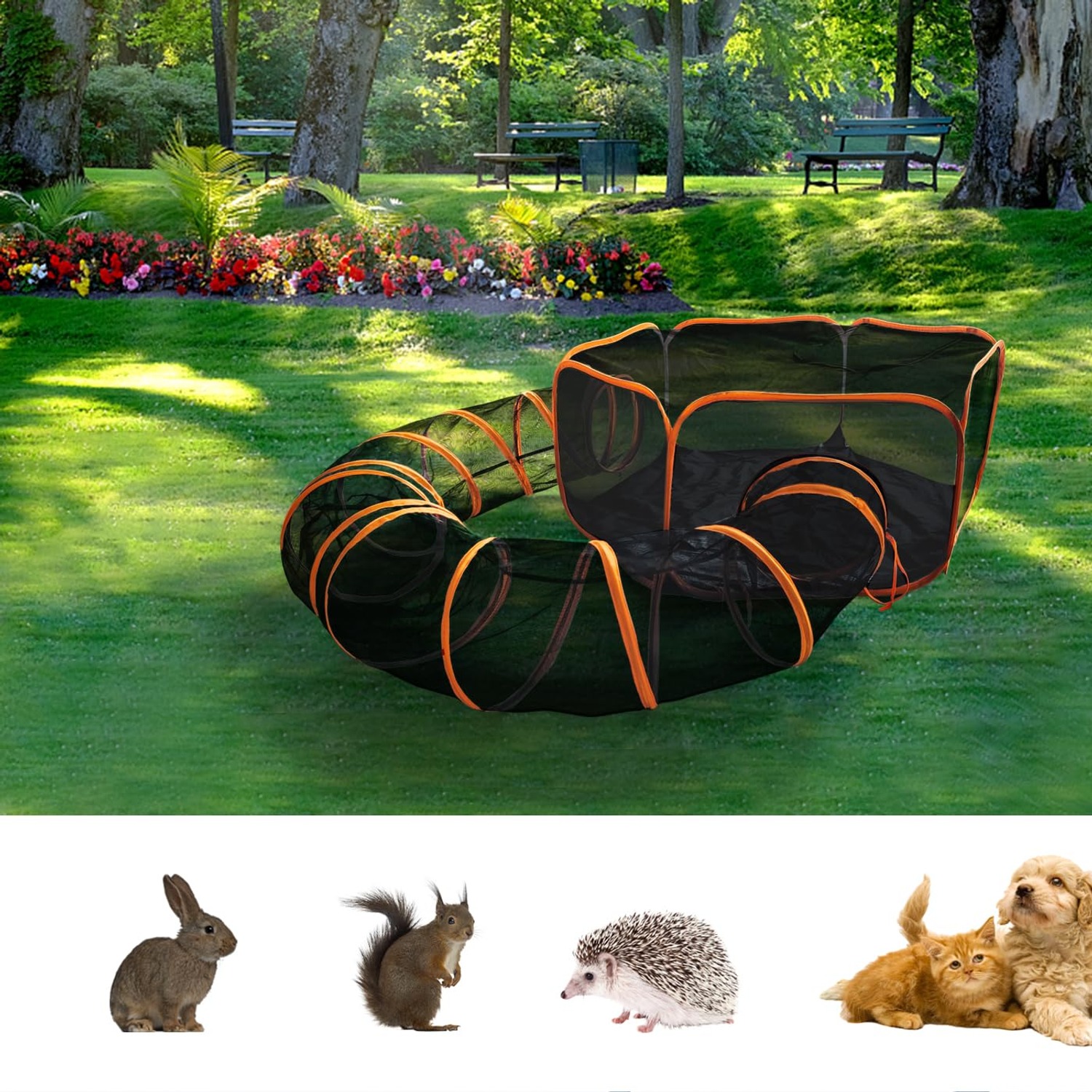
The design here is a two-part system. There is a square tent measuring 120 long by 120 wide by 45 centimetres high, and there is a wrap-around tunnel that zips onto one of the tent's doors.
That second part is what makes the difference. A plain box, no matter how big, is still a box. Cats get bored of a static space quickly. Add a tunnel and suddenly there is somewhere to go, somewhere to hide, somewhere to burst out from. A cat tunnel tent gives the same enclosure far more play value because it has a route rather than a corner.
The build matters too. The frame is alloy steel, which is stiffer than the thin fibreglass rods you find in budget pop ups. That stiffness means the walls stay put when a cat shoulders into them at speed. The base is waterproof Oxford fabric, which does two useful jobs. It keeps wet grass and morning dew off paws, and it gives claws something firm to push against instead of a saggy mesh floor that can catch a toe.
The rest is mesh. Mesh on the sides means air moves through on a warm afternoon, and your cat gets a clear 360 degree view. That view is a big part of why cats settle in these things. A solid-sided pen feels like a trap. A mesh cat tent feels like being outside with a line drawn around it.
Who this suits
The obvious group is apartment and townhouse owners. If you have a balcony and a cat that stares at the railing, a balcony cat tent solves the problem in about one minute. Your cat gets sun, you get no gaps to worry about.
Renters are the second group. You cannot bolt a permanent catio to someone else's wall. A portable cat enclosure asks for nothing except flat ground, and it leaves with you when the lease ends.
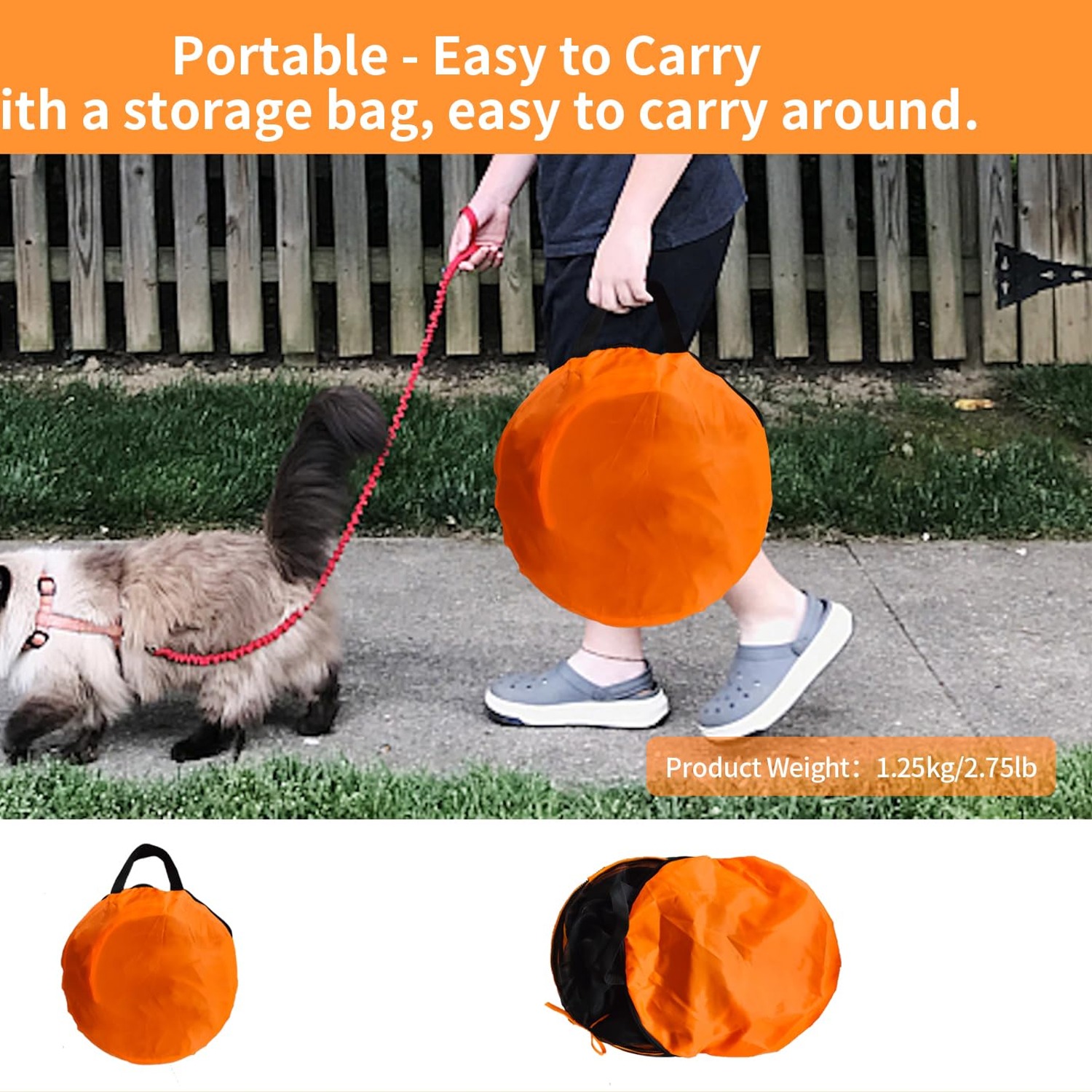
Then there are travellers. Taking a cat to a holiday house or a campsite usually means a carrier, a walking lead, or a lot of stress. A travel catio changes that. You set it up in the shade, put in a familiar blanket, and your cat has a known space in an unknown place. Families who caravan or camp use these constantly.
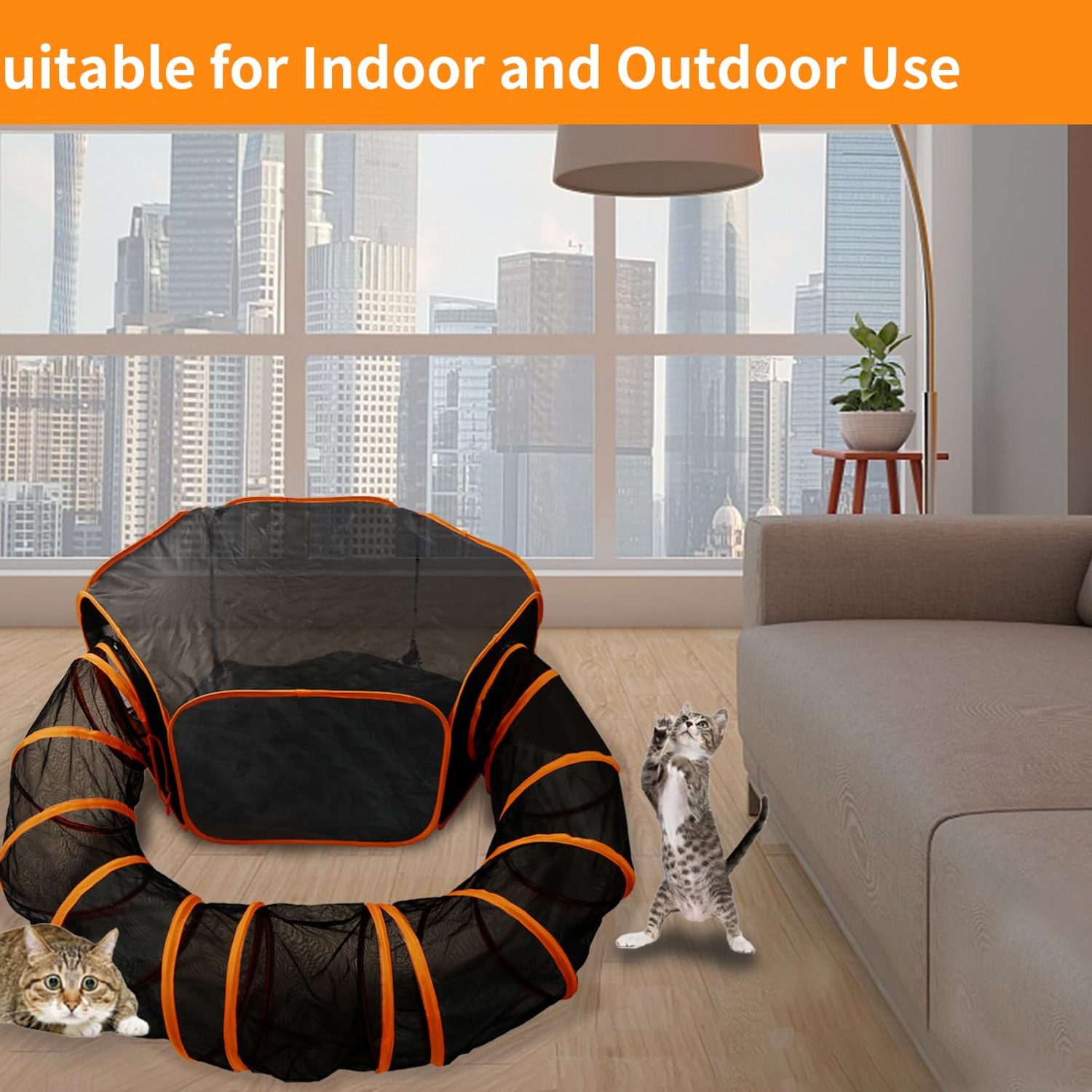
Finally, there is the indoor use case that people forget about. The same enclosure makes a good recovery pen after surgery, a safe zone during a house party, or a separation space when you are introducing a new pet. Because the walls are mesh, the animals can see and smell each other without any contact. That is the gentlest way to run an introduction.
It also suits rabbits and similar small pets, which the manufacturer lists as a target species. Just keep a close eye, because rabbits dig and fabric does not stop a determined one.
How to choose the right one
Start with your floor space. Measure before you buy. This tent needs 120 by 120 centimetres of flat ground, and more again if you want the tunnel laid out properly. A sloping lawn or a cluttered balcony will fight you.
Look at how the parts join. Zips are the weak point in any outdoor cat pen. Big, chunky zips with a smooth run are what you want, and here both tent doors are large zip openings with the tunnel connecting through one of them. Small fiddly zips tear and jam.
Check the floor. A lot of cheap enclosures either have no floor at all or use the same mesh as the walls. No floor means wet paws and an escape route if your cat digs. Mesh flooring means snagged claws. A waterproof Oxford base avoids both.
Think about pack-down. If it is annoying to fold, you will stop using it. Anything sold as a cat tent foldable should go back into its bag without a fight. A storage bag is included here, which is a small thing that matters a lot over a year of use.
Be honest about supervision. Nothing in this category is a substitute for being present. These are supervised-play products. If you want something a cat can live in unattended, you are looking at a permanent fixed catio with a hard frame, not a pop up.
Getting your cat to use it
Do not carry your cat outside and put them in a strange tent. That is the fastest way to get a refusal.
Set it up indoors first with both doors open. Put a blanket inside that already smells like your cat. Leave it alone. Within a day or two most cats will have investigated, sat in it, and probably slept in it. Feed a treat or two inside the tent while you are at it.
Once the enclosure smells like home, move the whole thing outside with the cat already in it. Stay nearby. Keep the first outdoor session short, maybe fifteen minutes, and bring them in before they ask. Build up from there.
Nervous cats like having the tunnel attached from the start, because it gives them a place to retreat to. Confident cats often prefer the open tent. Watch which one yours is and set up accordingly.
Looking after it
Care is simple and mostly about habit. Shake out fur, grass and litter after each use. Wipe the mesh and the base with a damp cloth and a mild soap when they need it, then let everything air dry completely before you fold. Packing damp fabric into a bag is how you end up with a musty cat enclosure outdoor setup that nobody wants to use.
Do not machine wash it, bleach it, or put any part in a dryer. Those will wreck the mesh and the waterproof coating.
Before each outing, run your eye over the frame joints and both zips. Catching a fraying zip early is cheaper than replacing the whole thing. Store it in the bag somewhere dry, out of direct sun, because UV is what eventually kills mesh.
Avoid leaving it set up outdoors permanently. Sun fades the fabric, rain soaks in and wind works on the frame week after week. Pack it away between sessions and it will last years instead of a season.
The short version
If you have a cat that wants outside and a world that is not safe for them, a foldable cat enclosure is a practical fix rather than a compromise. This one gives you a 120 by 120 by 45 centimetre mesh tent on an alloy steel frame, a wrap-around tunnel that zips on for extra running room, a waterproof Oxford base and a storage bag so the whole lot travels.
Use it on the lawn, on the balcony, in the lounge room during a vet recovery, or pegged into a shady corner of a campsite. Introduce it indoors first, stay nearby when it is in use, and pack it away dry.
Your cat gets sun and fresh air. You get to stop worrying about the road.