
The complete guide
Choosing a Catio Kit, A Practical Buyer's Guide
The problem with cats and the outdoors
Cats want outside. Not all the time, but most days, for at least a little while. They want the warm paving, the bugs in the grass, the smell of next door's barbecue and the birds they will never catch.
The trouble is that outside does not want to keep them. Fences are suggestions. Balcony rails are ladders. A cat that goes out the back door is a cat that could turn up three streets over, or not turn up at all. In a lot of places, letting cats roam is also discouraged or outright restricted, for the sake of local wildlife and the cats themselves.
So owners end up picking between two bad options. Keep the cat inside and watch them sulk at the window, or let them out and spend the evening calling their name. A catio kit is the third option, and it is the reason these enclosures have become so popular over the last few years.
What a catio kit actually does
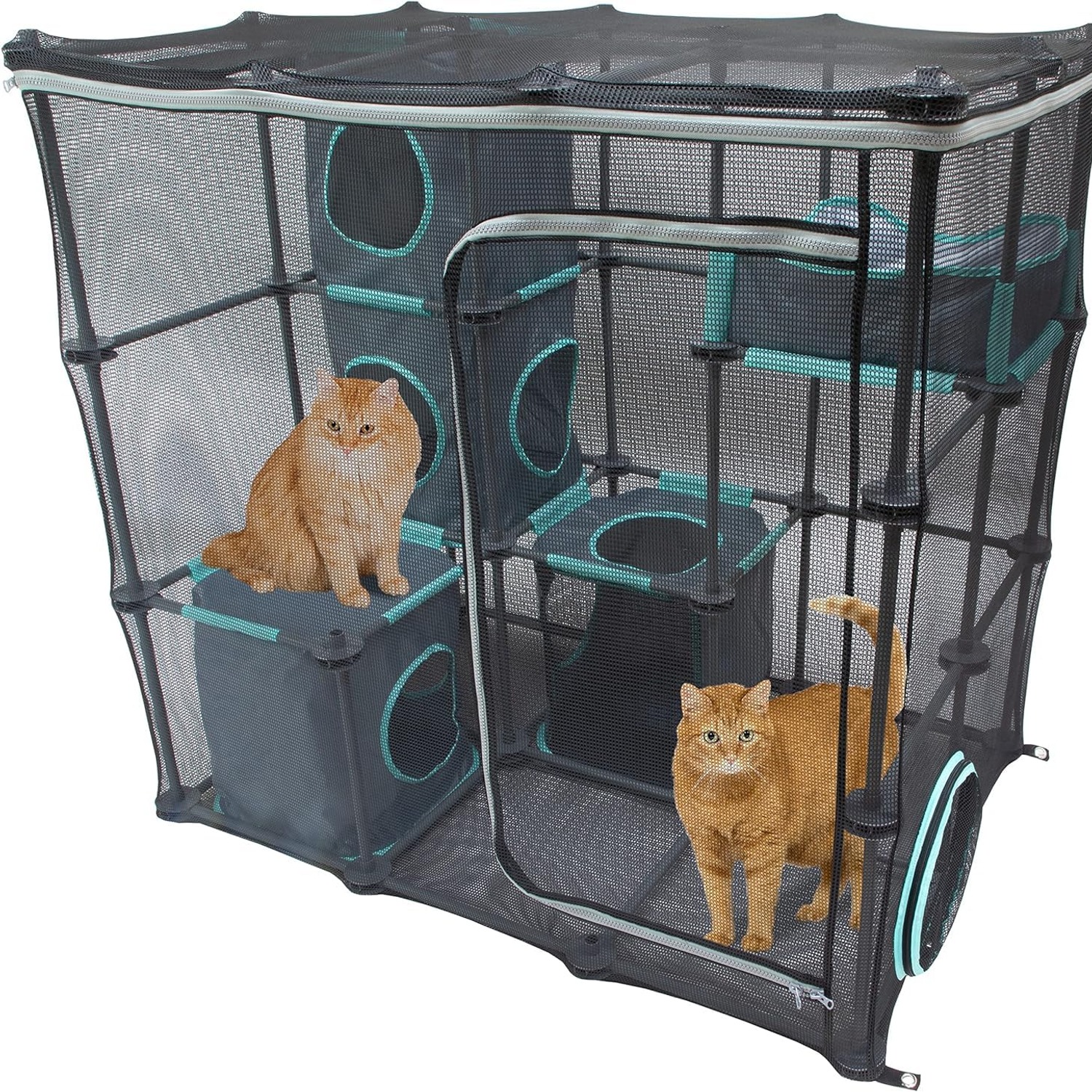
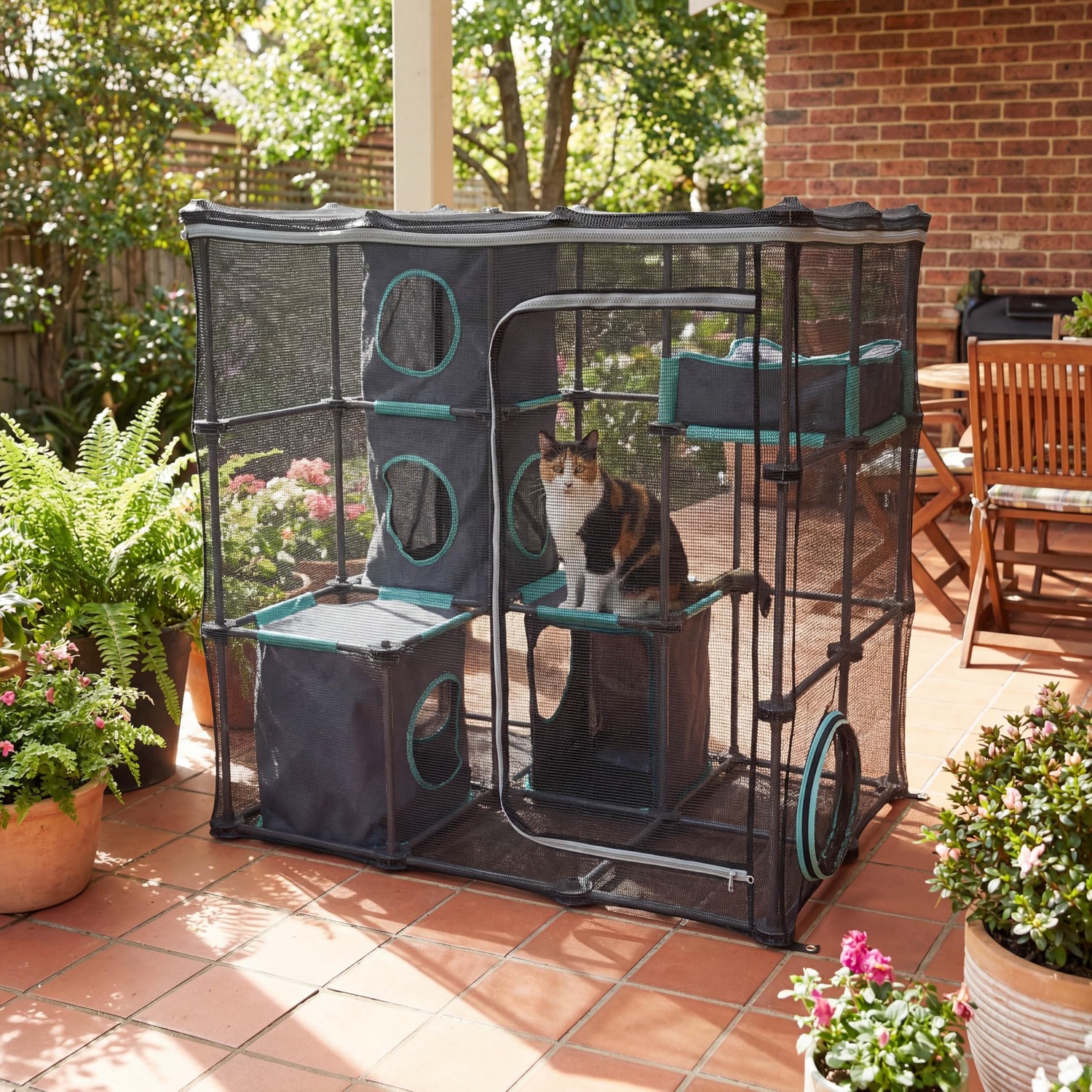
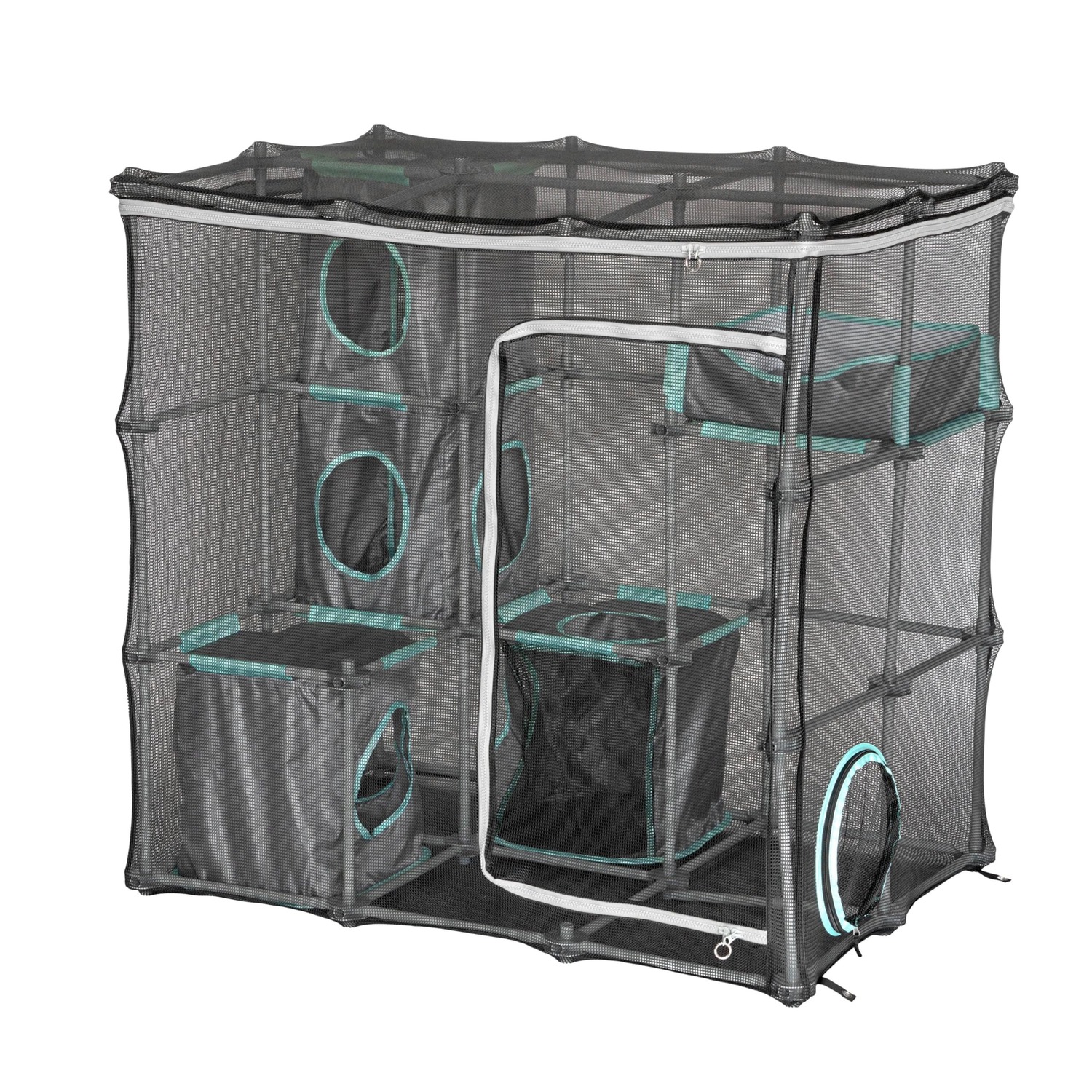
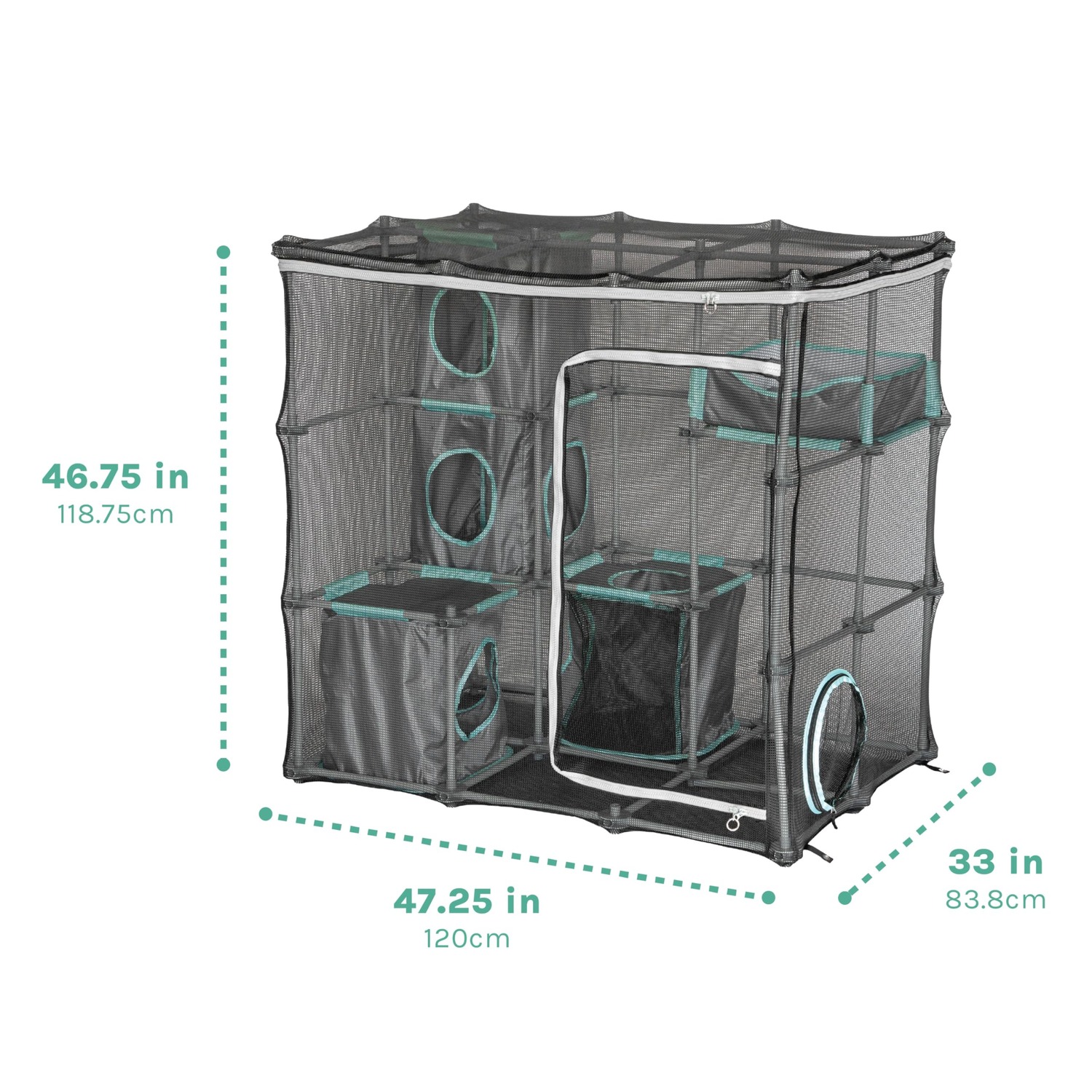
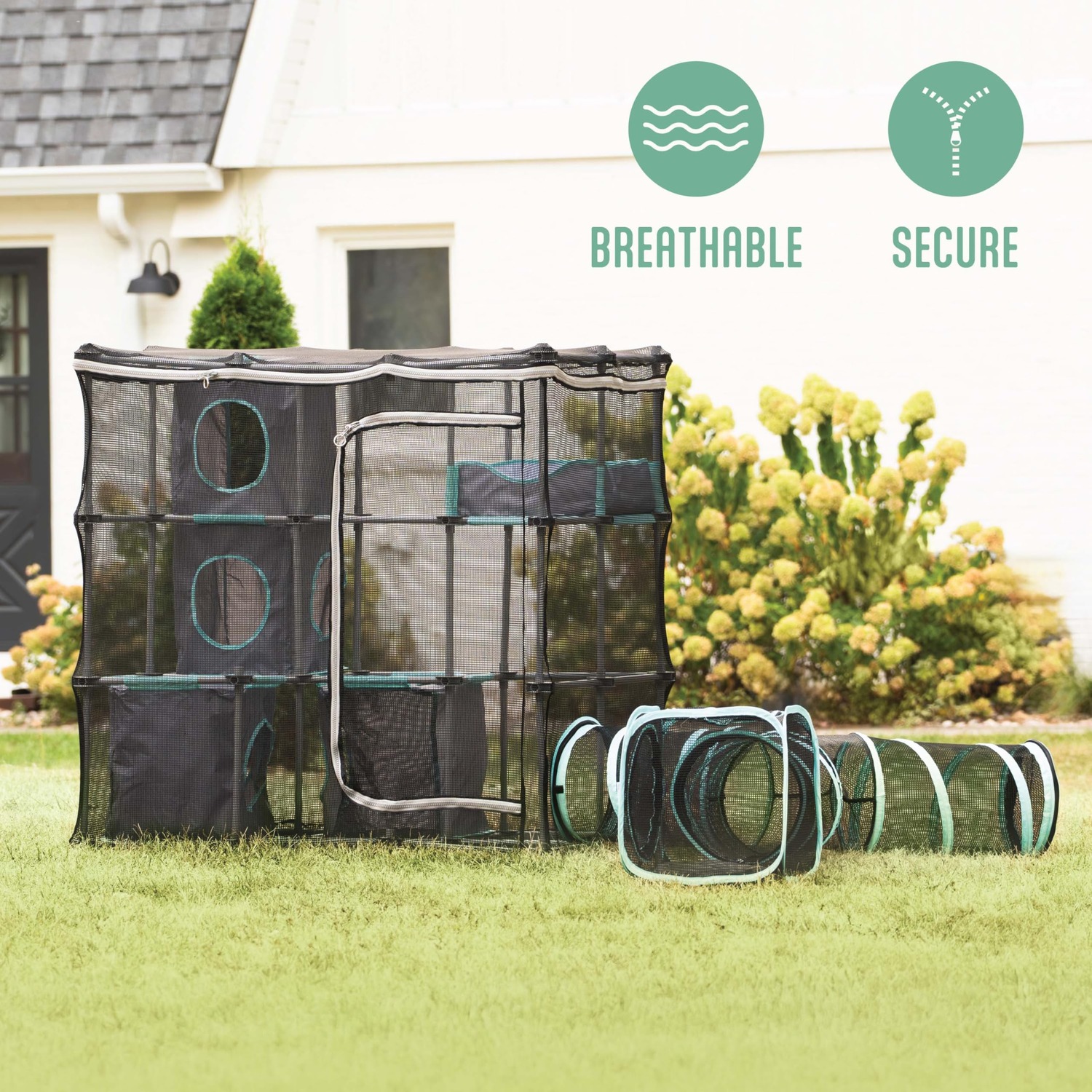
A catio is a contained outdoor space for a cat. This one is a mesh-walled structure measuring 120 cm long, 83.8 cm wide and 118.7 cm high, with three levels inside and a roof over the top. You put it on your lawn, your deck, your patio or your balcony. The cat goes in. The cat cannot get out, and nothing much can get in.
The walls are nylon mesh, which matters more than it sounds. Solid panels would make a box. Mesh makes a window. Air moves through it, sun comes through it, and the cat gets all the sensory information of being outdoors, which is really what they are after. You also get a clear view in, so you can glance out the kitchen window and see exactly where your cat is and what they are doing.
Inside are cubby coves. These are soft enclosed spots where a cat can curl up out of the sun or out of reach of a housemate who wants to play. They are not fixed in place, so you can move them around whenever you feel like refreshing the layout.
Why height matters more than floor space
Most people shopping for an outdoor cat pen think in square metres. Cats think in levels.
A cat's instinct is to get up high, find a perch and survey the ground. That is where they feel safest and that is where they are happiest to sit for an hour. An enclosure that is wide and flat gives a cat one thing to do, which is walk around. An enclosure with three levels gives them climbing, perching, jumping down, and choosing between a high spot and a low spot depending on mood.
This kit is close to 1.2 metres tall, which is enough to build real vertical interest. If you are comparing a few mesh cat enclosure options, look at the height and the number of levels before you look at the footprint.
Who it suits
Apartment and unit dwellers get the most obvious benefit. A balcony is unusable for a cat as it stands, but a pop up catio on that balcony turns it into safe territory. Just check the 120 by 83.8 cm footprint against your actual space first, and keep the enclosure back from the railing.
Renters do well with it too. There is nothing to screw into a wall and nothing to leave behind. At 5.35 kg the whole thing moves with you.
Multi-cat households are a good fit because of the coves and the levels. Two or three cats in a flat open run will annoy each other. Give them separate heights and separate hiding spots and they sort themselves out.
It also works for anyone with a cat who is recovering, newly adopted, or being introduced to a second animal. An indoor setup in a bright room gives a nervous cat a defined territory that other pets cannot walk into.
How to choose between catio options
There are three broad categories on the market.
Fixed timber and wire builds are the most durable and the most expensive. They are permanent, so they only suit people who own their home and have a settled spot for it. You will usually be building it yourself or paying someone.
Wire panel kennels and runs are sturdy but heavy, visually bulky, and awkward to move. They work in a large yard and are overkill on a deck.
Mesh enclosure kits like this one trade some brute strength for weight, price and flexibility. They go up fast, move easily, pack away and can be joined to other units. For the majority of households, that flexibility is worth more than the extra durability of timber.
The question to ask yourself is simple. Will this live in one spot forever, or do you want to shift it, store it and take it with you? If it is the second, a portable cat run is the right category.
The tunnel port, and why it changes things
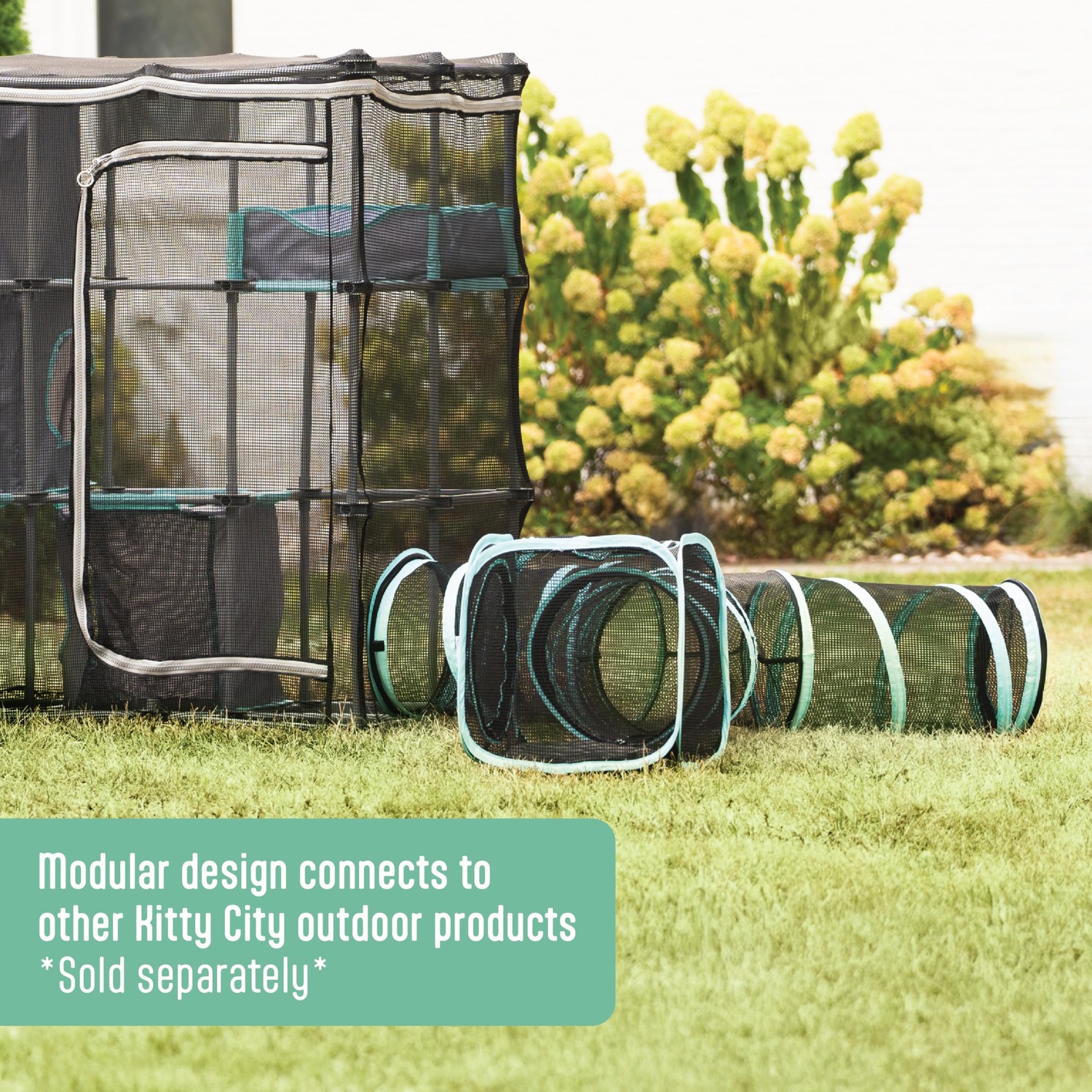
One side of this kit has a tunnel door. That lets you connect it to other Kitty City mesh playsets with tunnel sections, which are sold separately.
This is the part people underestimate. A single enclosure is a destination you carry your cat to. A connected cat enclosure system is a route your cat chooses to take. Run a tunnel from a back door or a window out to the main enclosure, and your cat decides when they want to go outside and when they want to come back in. No lifting, no escorting, no door-watching.
You can also chain units around a tree, along a fence line, or down the side of a house. Start with one and add as your budget or your cat population grows.
Setting it up well
Pick your spot with the sun in mind. A cat will roast in an enclosure that sits in full afternoon sun with no cover, so set up under a tree, an awning or a shade sail, or be prepared to move it through the day. Water should always be in there, in a wide bowl that will not tip.
Put something that smells like home inside. A used blanket or a bed from indoors does more to get a cat using the space than any toy will. Leave the zip door open for the first session so the cat learns it is not a trap.
Keep the first visits short. Ten minutes, with you sitting nearby, is plenty. Build up over a week or two. Cats that have never been outside often find it overwhelming at first and then become completely addicted to it.
Never leave a cat in an enclosure unattended at height on a balcony, and bring them in at dusk.
Looking after it
Care is hand wash only. Spot clean the mesh with warm water and a mild pet-safe detergent, rinse it off and let the whole thing air dry before you fold it. Skip the washing machine, the bleach and the pressure washer, all of which will chew through mesh and stitching.
Shake out fur and leaves regularly. Run your hand over the zips and seams every few weeks to catch wear early, because a small hole in mesh gets big fast once a cat finds it.
The biggest factor in how long a fabric enclosure lasts is UV exposure. Leaving it baking in full sun year-round will make the mesh brittle within a couple of seasons. Store it under cover when it is not in use and it will last far longer.
The short version
If you have a cat who wants outside and a situation where free roaming is not safe or not allowed, a mesh catio is the practical answer. This one gives you a 120 by 83.8 cm footprint, nearly 1.2 metres of height, three levels, movable cubby coves, a side zip door for you and a tunnel port for later expansion. It weighs 5.35 kg, so you can move it, store it or take it away with you.
It will not last like a timber build and it is not a waterproof shelter. What it is, is a fast way to give your cat real outdoor time this weekend, with the option to grow it into something bigger whenever you are ready.