
The complete guide
How to Choose a Cat Cube and Tunnel Set That Your Cat Will Actually Use
The problem with a bored indoor cat
An indoor cat that has nowhere to run will find somewhere. Usually it is the hallway at 4am, or your ankles, or the curtains. The behaviour is not naughtiness. It is a hunting animal with energy and no outlet, doing what it can with the space available.
Toys help, but most toys only work while you are holding them. The moment you put the wand down, the game stops. What changes things is structure: something your cat can use on its own terms, at the hours it chooses, without you being involved.
That is where a cat cube tunnel set comes in. It is not a toy so much as terrain. It gives your cat places to hide, corners to peer around, and routes to sprint through. A cat will use a tunnel at midnight whether or not you are awake to admire it.
How a cube and tunnel system works
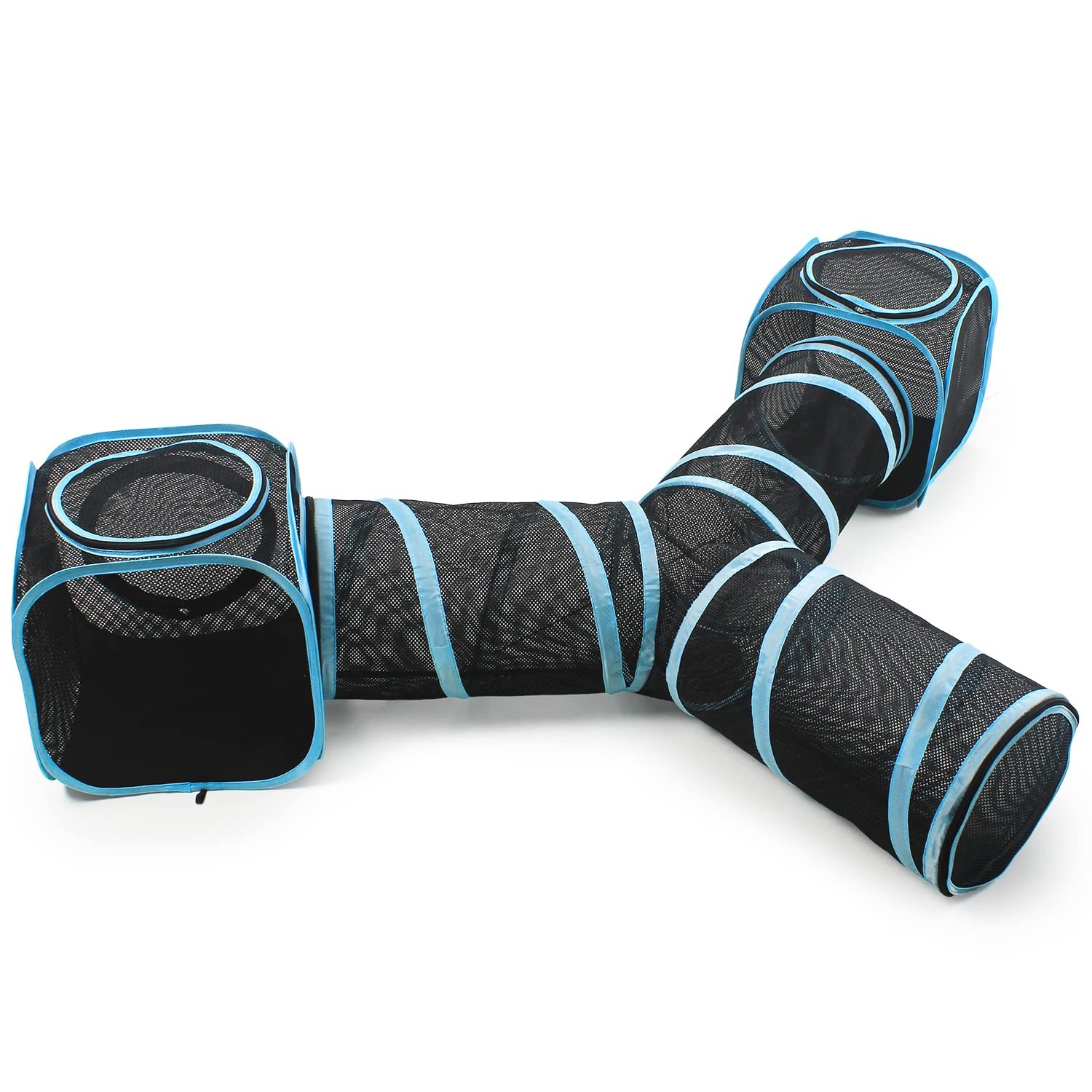
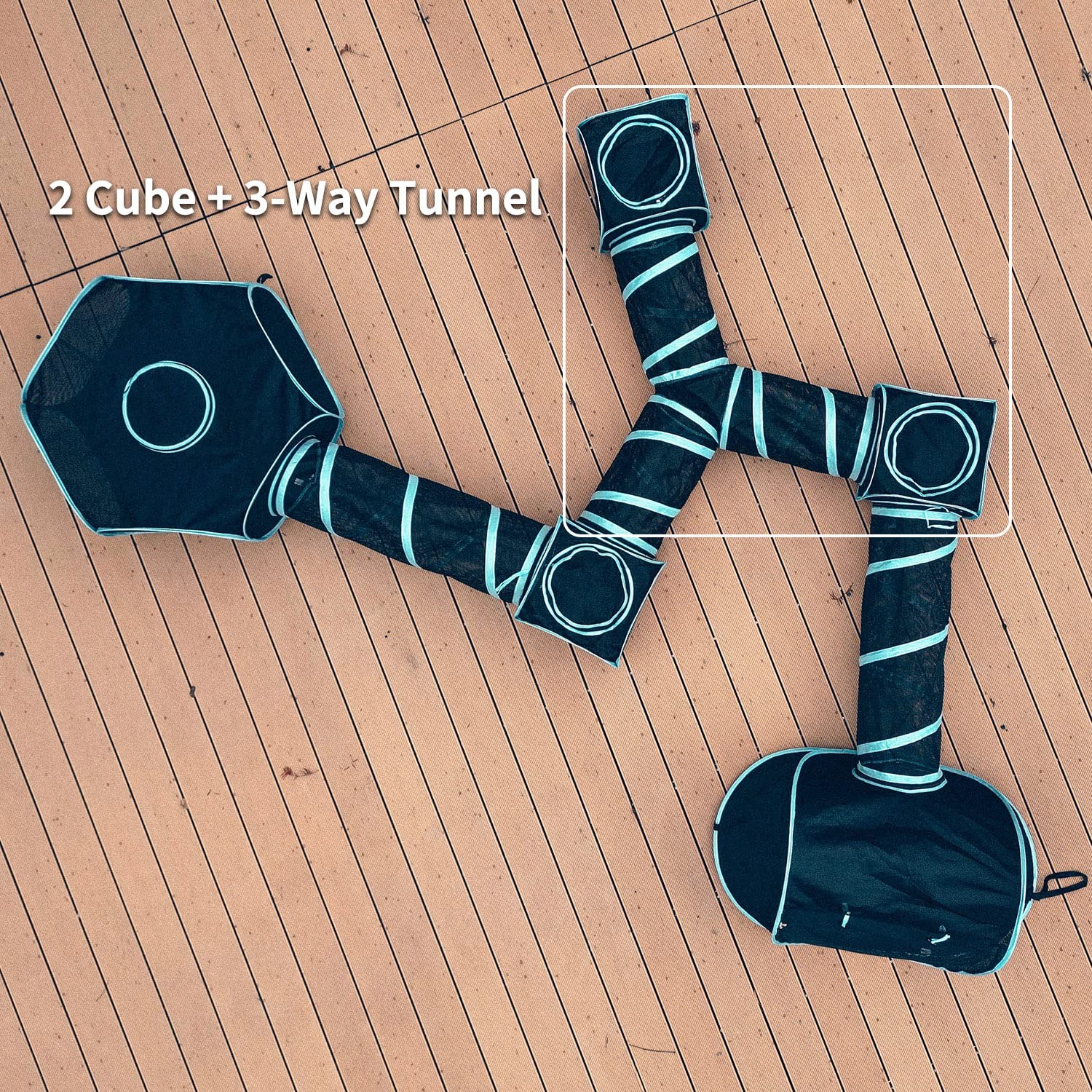
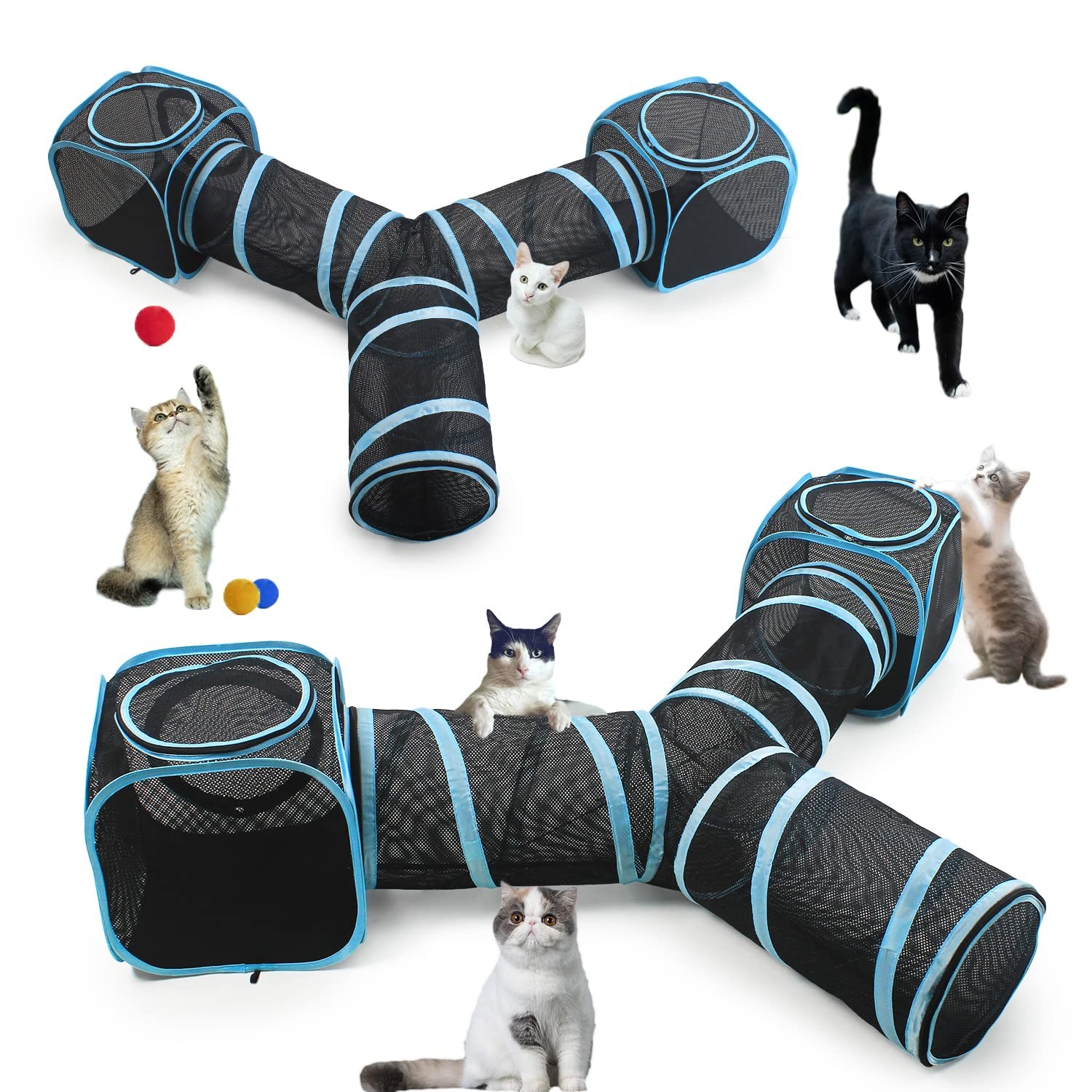
The basic idea is simple. You have cubes, which are small enclosed spaces, and you have tunnels, which connect them. The pieces join through zipper doors set into the panels, so you unzip one opening, line it up with another, and zip them together.
This set uses a 3-way tunnel, which matters more than it sounds. A straight tube has two ends. If one cat goes in each end, someone has to back out. A three-way tunnel has a junction, so there is always a third route. In a multi-cat house, that single design detail cuts down an enormous amount of squabbling.
The panels are mesh rather than solid fabric. Two things follow from that. Air moves through, so a cube does not turn into a warm pocket on a sunny day. And you can see in. When your cat vanishes, you know where it went, which is genuinely useful when you are trying to leave the house.
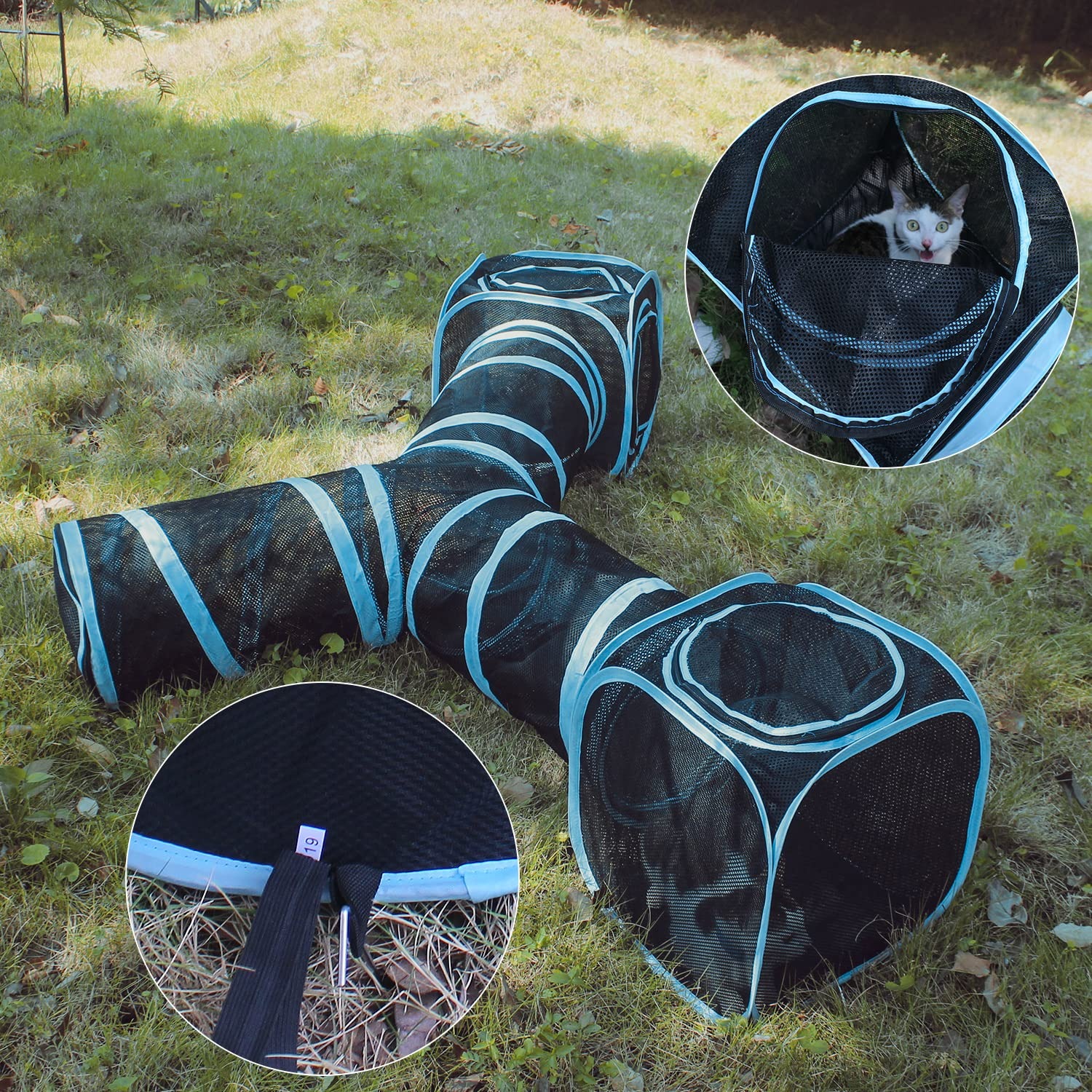
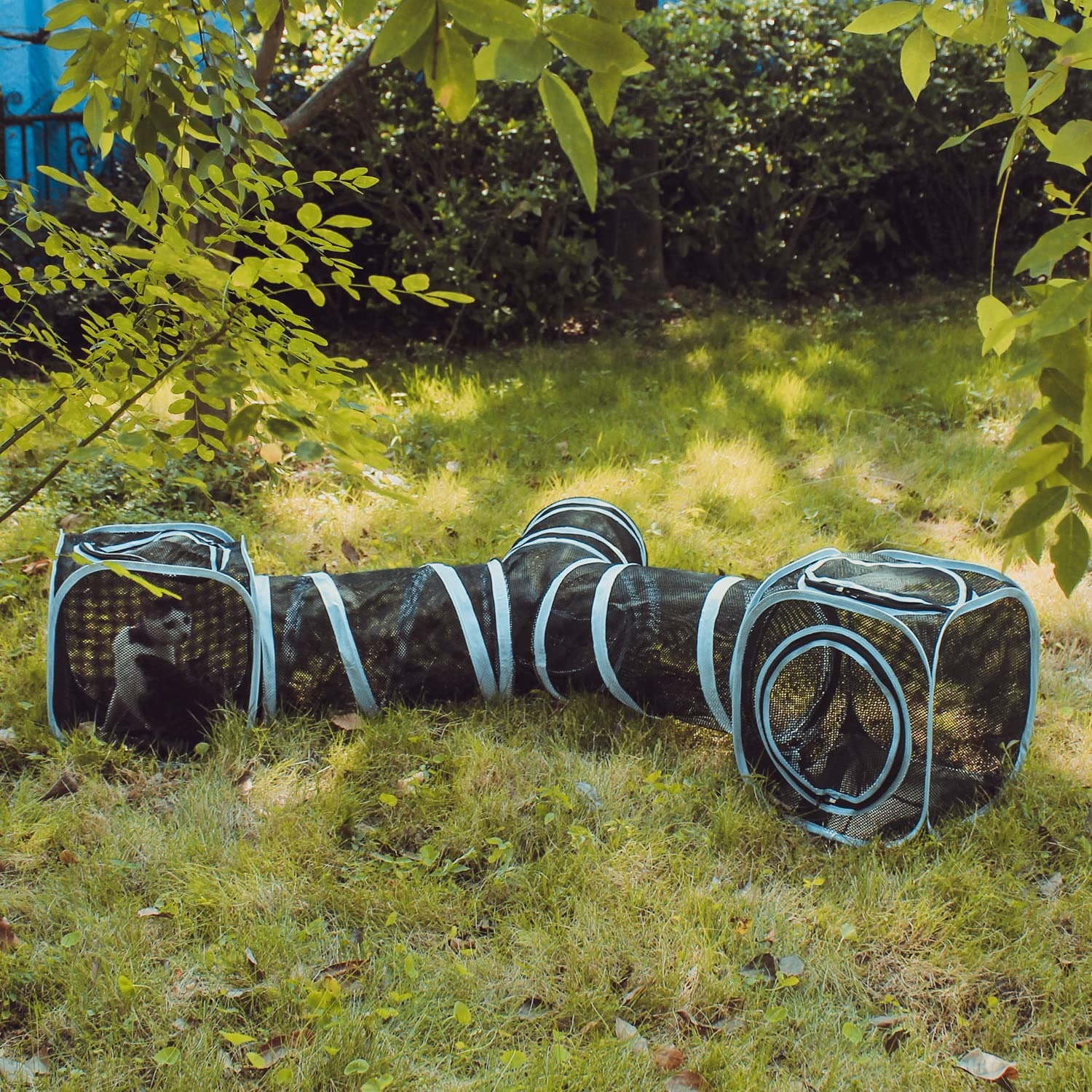
Ground pegs come in the box. Push them through the corner loops into grass and the set holds its position while a cat sprints through it. Without pegs, an enthusiastic run can drag a lightweight structure a metre across the lawn.
Who this kind of set suits
Indoor cats with no outdoor access. These are the cats that benefit most. A mesh cat tunnel gives them something to do with the energy they cannot spend outside, and the cubes become napping spots between bursts.
Multi-cat households. More exits means fewer standoffs. Cats that get along will chase each other through it for ages, and cats that merely tolerate each other can each claim a cube.
People who want supervised outdoor time. If you are nervous about letting your cat roam but feel guilty keeping it in, pegging a set down on the grass is a middle path. Your cat gets grass, air and smells. You get to keep an eye on things.
Renters and small-space living. Nothing is mounted to a wall, nothing is permanent, and the whole thing folds flat when guests come over.
Travellers and anyone who uses a sitter. A portable cat tunnel that your cat already knows is one of the better things to pack for a stay somewhere new. Familiar scent and familiar shape do a lot for an anxious cat.
What to look at before you buy
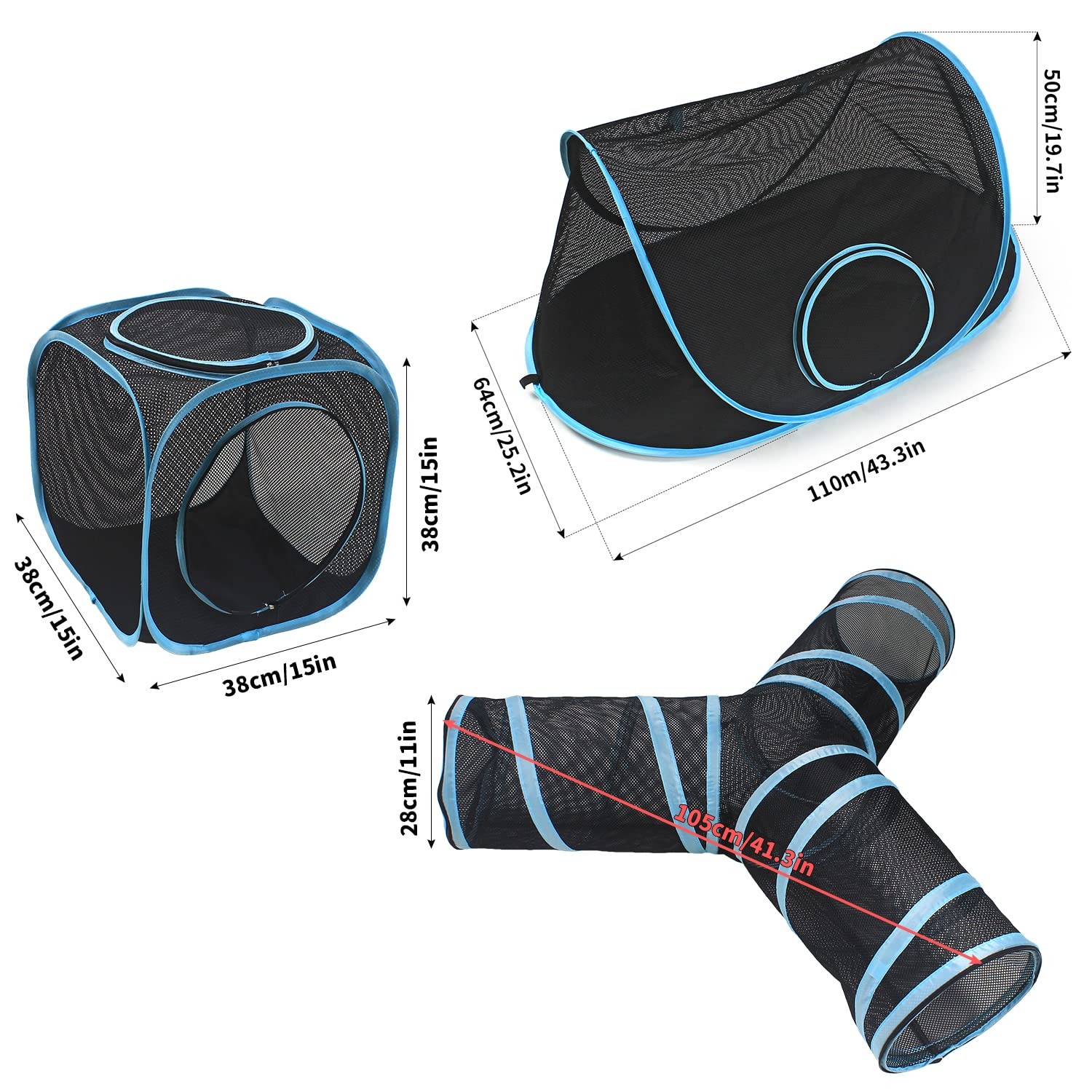
Floor space. Measure the run you are planning before you commit. A long layout down a hallway needs a clear path, and a square layout in a lounge needs a corner that does not block a doorway. The listed item dimensions here are 38.1 x 35.6 x 20.3 centimetres, which gives you a sense of the piece size, though the joined footprint depends on how you arrange it.
Your cat's build. This set is pitched at cats and small pets. A compact adult cat has no trouble. If you have a very large breed, measure across the shoulders and compare it against the opening size before ordering.
Whether you will use it outside. If the answer is yes, included ground pegs are not optional extras, they are the difference between a set that stays put and one that slides. This set includes them, which is worth checking on any cat tunnel outdoor product you compare.
How easy it is to change. A fixed shape gets boring. Zipper doors on the top and sides mean you can rebuild the layout in a few minutes, and a new shape often revives a cat's interest in something it had started walking past.
Setup time. Assembly is listed as not required here. That sounds minor until you have wrestled with a pop-up structure that refuses to fold back down. A set that opens and closes without a fight gets used far more often.
Setting it up so your cat takes to it
Do not put it in the middle of a room and wait. Cats are suspicious of new objects in open space. Put it along a wall, near a spot your cat already naps in, and leave it alone for a day.
Then make it worth investigating. Scatter a few treats inside the cubes. Run a wand toy through the tunnel so it disappears and reappears at the other end. That vanishing movement triggers a chase response in almost every cat.
Scent helps a lot. Put a worn t-shirt or a blanket from your cat's usual bed inside a cube. The set stops smelling like a factory and starts smelling like home.
Give it time. Confident cats are in within an hour. Shy cats can take a fortnight, and that is normal. Forcing a cat into a tunnel is the fastest way to make sure it never goes back.
Outdoor sessions, done safely
Pick a calm day. Choose flat grass, not a slope. Peg all the anchor points, not just two, because a half-pegged set will twist when a cat hits it at speed.
Stay outside with your cat. A mesh set is a play structure, not an enclosure, and it will not stop a cat that truly decides to leave. Think of it as a way to shape outdoor time, not to replace a fence.
Watch the temperature. Mesh breathes well, but a cat in direct summer sun still overheats. Set up in part shade and keep water nearby.
Bring it in afterwards. Damp grass and overnight dew are what turn a good cat tunnel set into a musty one.
Keeping it in good shape
Shake it out after outdoor use to get rid of grass, grit and fur. Grit in a zipper is the usual reason a zip starts sticking.
Spot clean with warm water and a mild detergent. Skip the washing machine, since the framing and stitching in a collapsible cat tunnel do not react well to a hot wash cycle. Let everything air dry completely before folding.
Keep claws trimmed. Mesh handles ordinary play, but a cat that treats a panel like a scratching post will eventually win. If you see your cat hooking in, redirect it to a proper scratcher.
Store it flat and dry. Behind a door, under a bed, or in a cupboard all work.
The short version
A cat cube tunnel set gives an indoor cat somewhere to run, hide and ambush from without you having to hold a toy. This one pairs two cubes with a 3-way tunnel, joins through zipper doors on the top and sides, and includes ground pegs so it works on the lawn as well as the lounge floor.
Mesh panels keep air moving and let you see in. Nothing needs assembling, and it folds flat when you are done. Rearrange the layout every so often, clean it after outdoor sessions, and supervise any time it is outside. Do that and you have a play space your cat will keep coming back to long after a basic tube has been pushed under the couch.